

A vintage cigarette vending machine can be worth hundreds of dollars, but there is no single price that applies to every machine. Its value depends on the manufacturer, model, age, condition, originality, and interest from collectors. Shipping and repair costs can also change whether a machine is a good purchase.
Documented auction results show how much prices can vary. A vintage Rowe tabletop machine sold for $325 on October 3, 2026, despite having cracked glass. Other recorded sales include a Rowe machine sold for $300 in 2021 and a machine sold for $144 in 2018. These are individual sales, not a guaranteed price range for every vintage cigarette vending machine.
If you’re planning to buy one for a home bar, collection, restoration project, or art display, compare the machine’s condition and total cost before making an offer. The asking price is only the starting point.
Direct Answer
A vintage cigarette vending machine is an older coin-operated dispenser originally made to sell cigarette packs. Its present value depends on the model, condition, originality, buyer demand, and total costs of purchase, transport, and repairs.
Experience
Compare completed sales for the same or a similar model, not just the seller’s asking price. Before buying, add shipping, any auction premium, applicable tax, and likely repairs; if the machine cannot be tested, treat its condition as uncertain.
What Is a Vintage Cigarette Vending Machine Worth?
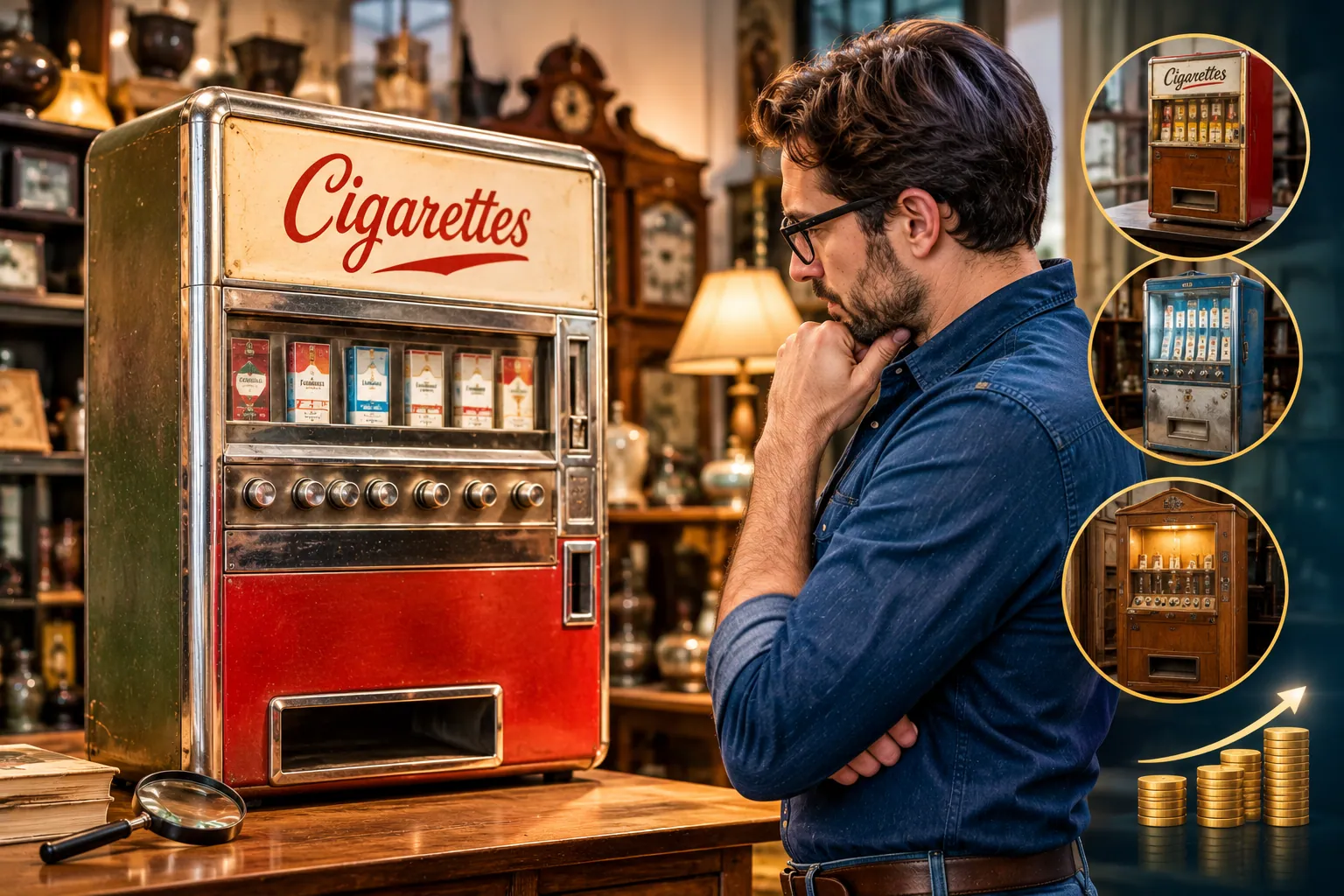 A vintage cigarette vending machine’s value is best estimated by comparing it with similar machines that have actually sold. The manufacturer, model, size, working condition, and original parts should match as closely as possible. A seller’s asking price can help you understand current expectations, but it does not prove what a buyer will pay.
Here are several documented examples from different years.
| Machine or listing | Reported price | Important details |
| Rowe tabletop vending machine | $325 | Sold October 3, 2026; listing notes cracked glass |
| Steel Rowe cigarette vending machine | $300 | Reported sale in December 2021 |
| Vintage cigarette vending machine | $144 | Reported sale in 2018; original-condition machine with illumination |
| Working 1975 cigarette vending machine | $160 | Reported winning auction bid; transport arranged separately |
| Dial-A-Smoke machine offered on eBay | $439 | Observed asking price on October 26, 2026, with $230.01 shipping displayed separately |
These examples serve different purposes. The tabletop machine is much smaller than a full-size floor model. The eBay figure is an asking price, while the auction figures describe reported completed sales or winning bids. They should not be combined into a single market average.
Listings can also change or disappear. Before relying on any example, check the original sale details and compare the machine with your intended purchase.
Why are some machines listed for much more?
A rare design, attractive original finish, unusual manufacturer, or well-documented history may interest collectors. A fully restored machine may also appeal to buyers who want a display piece without undertaking repairs.
However, a high price does not automatically mean a machine is rare or fairly valued. Some sellers may price their machines above recently completed sales because they are willing to wait for a particular buyer.
Use three checks when judging a price:
- Find completed sales for the same or a closely related model.
- Compare condition, dimensions, and included parts.
- Calculate the full purchase cost, including shipping and likely repairs.
If you cannot find comparable sales, treat the valuation as uncertain rather than assuming the seller’s price is correct.
What Affects a Vintage Cigarette Machine’s Value?
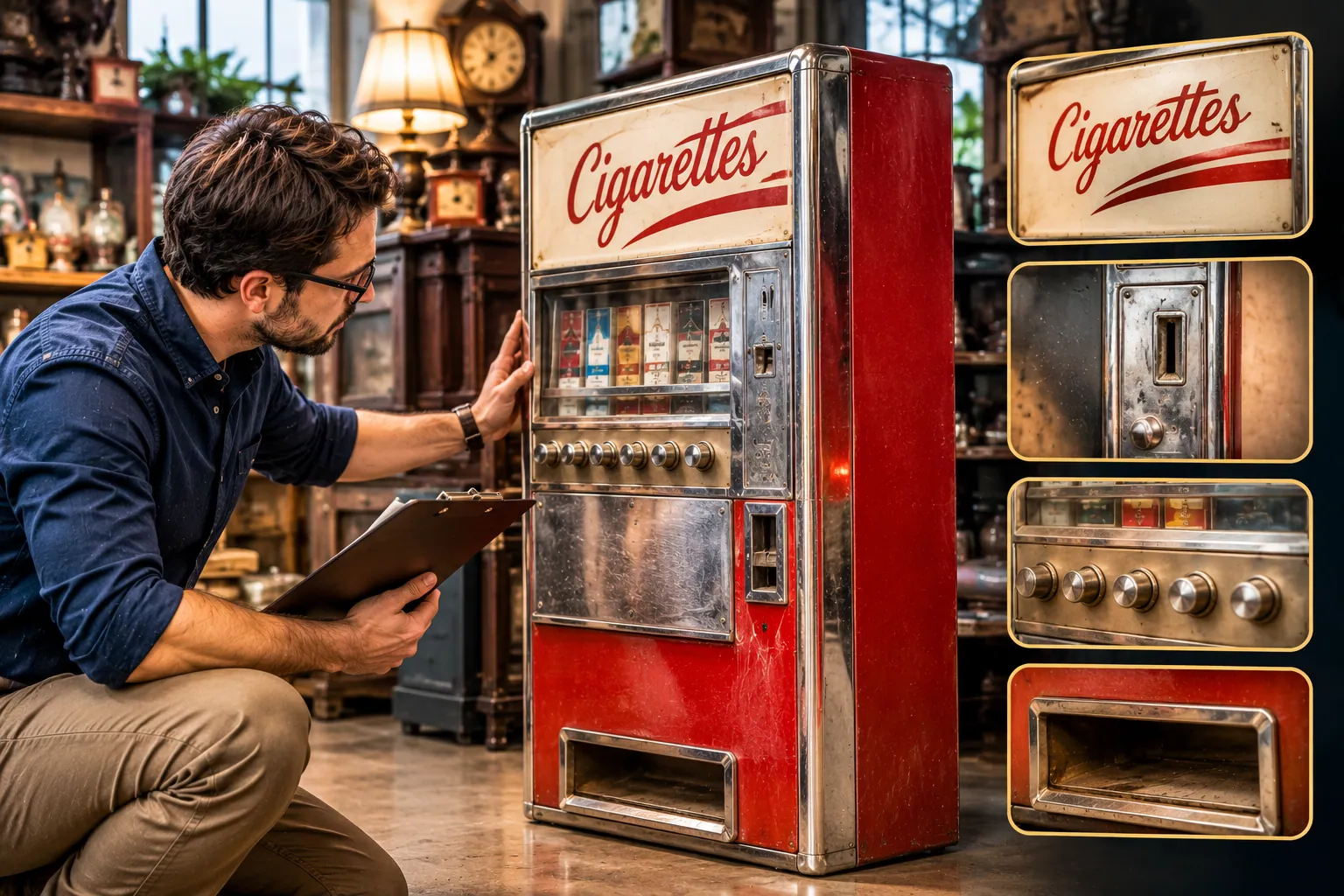 Several details can change how attractive a machine is to collectors. Two machines from the same manufacturer may have different values if one is complete and the other has damaged glass, missing keys, or a broken dispensing mechanism.
Manufacturer, model, and age
Start by identifying the machine. Makers associated with vintage cigarette vending machines include Rowe, National Vendors, Dial-A-Smoke, Du Grenier, and U-Need-A-Pak.
Look for a manufacturer’s plate, model number, serial number, original label, or other identifying mark. These details can help you find historical information and compare the machine with other listings.
Do not rely on appearance alone to establish the exact manufacturing year. Similar designs may have been produced over several years, and sellers may use approximate dates when records are incomplete.
A model that interests collectors may command more attention than an ordinary machine, but the manufacturer’s name alone does not establish its value.
Original parts and overall condition
Originality matters to some collectors, especially those interested in historical design. Check whether the cabinet, paint, labels, glass, locks, and other visible components appear original.
Important condition details include:
- Cracked or missing glass.
- Rust, dents, and damaged cabinet panels.
- Faded, repainted, or missing labels.
- Missing keys or damaged locks.
- Replaced parts that do not match the original design.
- Internal components that are incomplete or heavily worn.
A machine with its original finish may appeal to a collector who values authenticity. Another buyer may prefer a clean restoration for display. Neither preference means every original machine is worth more than every restored one.
Does the machine still work?
A machine that lights up may still have a broken coin mechanism or a dispensing system that fails under normal use. Similarly, an attractive cabinet does not prove that its original mechanism is complete.
Ask the seller to demonstrate the functions that matter to your intended use. Depending on the model, these may include the lights, lock, coin mechanism, selection mechanism, and dispensing action.
If the seller cannot test the machine, price it as an unverified project rather than assuming it is fully operational. A repairable machine can still be a suitable purchase, but the unknown repair cost should influence your offer.
Size and display appeal
A small tabletop machine can suit a shelf or home bar, while a full-size model may be a stronger visual feature in a game room or collection.
Measure the available space before purchasing. Include room for the door to open, access to the back if needed, and safe movement through doorways or stairs.
Large machines may also require more costly transport and handling. A lower item price does not always make a full-size machine cheaper to own.
Where Can You Find Vintage Cigarette Vending Machines for Sale?
Buyers in the United States can search online marketplaces, auction platforms, antique dealers, estate sales, and collector communities. Each option has different benefits and risks.
Online marketplaces
Platforms such as eBay can help you compare current offerings across different locations. Search using the maker, approximate age, machine type, and phrases such as “vintage cigarette vending machine for sale” or “used cigarette machine.”
Read the full listing carefully. Search results may include small dispensers, advertising signs, spare parts, and memorabilia instead of complete machines.
Pay attention to whether the seller has included shipping in the price. At the time of this research, an eBay listing displayed a $439 machine price and $230.01 shipping. That produced a displayed subtotal of $669.01 before applicable tax or any additional charges, assuming those listing terms remained unchanged.
The example illustrates why buyers should compare total cost rather than the headline price.
Auctions and estate sales
Auction sites can provide useful records of completed transactions. They may also offer machines from estates or collections that are no longer needed.
However, the winning bid might not be the final amount you pay. Some auctions charge a buyer’s premium, an additional fee calculated as a percentage of the winning bid. You may also need to arrange collection or pay a separate shipping company.
Check the terms before bidding. Confirm the buyer’s premium for your bidding method, payment deadlines, collection rules, and any restrictions on shipping.
Antique shops and local listings
Search local antique dealers, estate-sale notices, and classified listings if you want to inspect a machine in person.
Local buying can let you examine damage, test the mechanism, and discuss pickup arrangements before paying. It may also reduce the distance the machine must travel.
Still, local purchases are not automatically safer. Ask for proof of condition, agree on the price and collection arrangements, and get written confirmation of any promises the seller makes.
Specialist dealers and collector communities
Specialist sellers may know more about the model, its history, and its common repair needs. Collector communities can help you identify a machine or locate compatible parts.
Treat advice from other collectors as guidance rather than a formal appraisal. Opinions can differ, and a price estimate from a discussion does not prove what a particular machine will sell for.
If a specialist offers restoration, ask which parts will be replaced, whether original components will be retained, and what the quoted price includes.
How to Inspect a Vintage Cigarette Vending Machine Before Buying
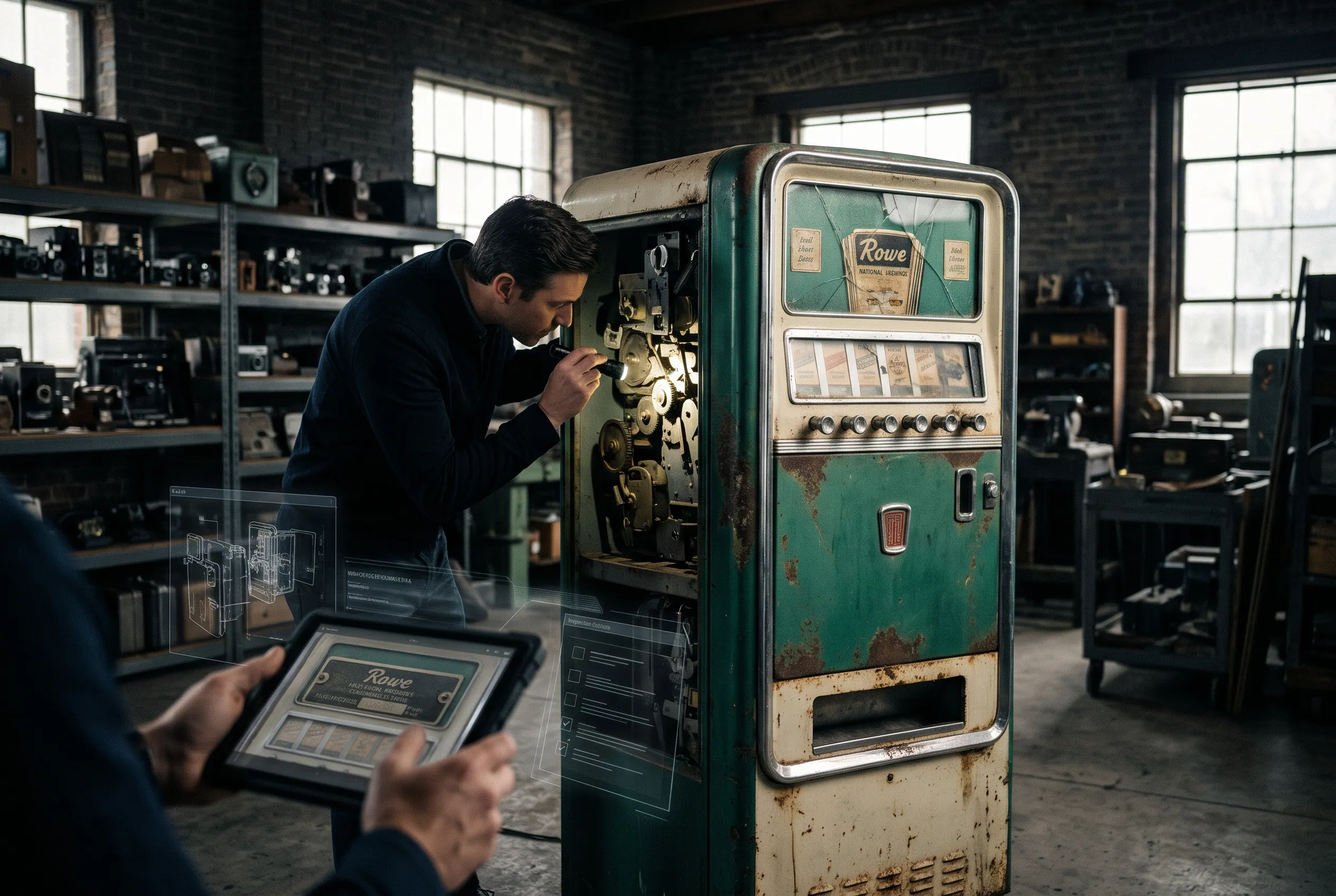 A careful inspection can help you avoid paying too much for a machine with hidden damage or missing components. Follow these steps before agreeing to a purchase.
1. Confirm the machine’s identity
Ask for clear photographs of the front, sides, back, inside, manufacturer’s plate, and any model or serial markings.
Record the approximate dimensions and verify whether the description matches the photographs. If the seller claims a specific age or model, ask what evidence supports that identification.
2. Examine the physical condition
Look closely at the glass, cabinet, corners, paint, labels, and visible metal parts. Ask for additional photographs of areas that are scratched, rusted, cracked, or difficult to see.
Check whether the seller has photographed the actual machine rather than relying on general product images. A few clear close-ups can reveal damage that is difficult to notice in a wide photograph.
3. Ask for a working demonstration
Request a short video showing the machine’s relevant functions, where practical. The demonstration should match your intended use, whether that means lighting, locking, turning a mechanism, or dispensing a harmless test item.
If it does not work, ask which parts have failed and whether a repair estimate exists. Avoid assuming that a simple-looking fault will be inexpensive to fix.
4. Confirm keys and included parts
Ask whether the original keys, locks, shelves, mechanisms, wiring, and other necessary components are included. The exact list depends on the model.
Missing keys may be manageable, but replacing or repairing a lock can still cost money. Missing internal parts may be more difficult to source, especially if their compatibility is uncertain.
5. Check seller terms and collection arrangements
Before paying, confirm the accepted payment method, collection date, return terms, and responsibility for packaging or delivery.
For a remote purchase, ask who is arranging transport and what happens if the machine arrives with damage. Keep the listing, messages, photographs, and invoice so you can refer to the agreed terms.
If the machine cannot be inspected or demonstrated, decide whether the discount is enough to justify the additional uncertainty. You may prefer to wait for a better-documented listing.
How Much Does It Really Cost to Buy and Restore One?
The full cost includes more than the seller’s price. Depending on the transaction, you may need to pay auction fees, shipping, sales tax, handling charges, and restoration expenses.
A useful calculation is:
Total purchase cost = machine price + buyer’s premium + shipping and handling + applicable tax + planned repair costs
This is a budgeting formula, not a quote. Some costs may not apply, and others may need to be estimated before you buy.
Example: a machine bought at auction
Imagine you win an auction with a bid of $325. Suppose the applicable buyer’s premium is 23%.
- Winning bid: $325.00
- Buyer’s premium: $74.75
- Subtotal before shipping, tax, and repairs: $399.75
The premium calculation is $325 × 0.23 = $74.75.
This example is hypothetical. The HiBid listing for the $325 Rowe tabletop machine described a 23% buyer’s premium for one bidding arrangement and a lower premium for direct bidding through the auctioneer’s website. Check the exact terms for the auction you use before applying this calculation. The example does not include shipping, tax, or repairs.
Get repair and shipping quotes before committing
Transport costs can be important because vintage machines may be heavy, bulky, fragile, or difficult to package. Ask for a written shipping quote based on the actual dimensions, weight, pickup location, and delivery address.
If the machine needs work, make a list of known problems and ask a restoration specialist to estimate the cost. Confirm whether the quote covers labor, parts, testing, and any additional work that might be needed.
Do not invent a repair budget based on the price of a different machine. A replacement part may be easy to find for one model and difficult to source for another.
Compare the full cost with another listing
Suppose one machine costs less but needs new glass, a lock, and mechanism repairs. Another machine costs more but includes the necessary parts and a working mechanism.
The second machine may be the more practical purchase if the difference in price is smaller than the expected repair and transport costs. But its condition should still be verified, and its higher price should be supported by comparable listings.
Before you pay, ask yourself whether the total cost fits your budget and the value you place on the machine. A collectible does not need to generate a financial return to be worthwhile, but it should not depend on an unsupported resale-profit assumption.
Are Vintage Cigarette Vending Machines Legal in the United States?
Owning a vintage cigarette vending machine for collecting or display is different from using it to sell tobacco. Federal rules restrict cigarette vending-machine sales in facilities where people under 21 are present or permitted to enter at any time.
The U.S. Food and Drug Administration’s retail-sales guidance explains the applicable federal restrictions, including the minimum sales age and the rule against selling cigarettes individually rather than in the required package.
Before operating a machine commercially, check the rules for your state and locality, as well as any requirements that apply to the location and type of business. Do not assume that a machine is legal to operate simply because it was used decades ago.
If your goal is home decor or a collection, you may not need to operate the original mechanism at all. You can preserve the exterior and leave the machine disconnected, provided the way it is stored or displayed complies with any relevant rules.
For a commercial project, verify the legal requirements before spending money on restoration or conversion. An antique machine’s historical design does not exempt its current use from applicable rules.
Can You Repurpose a Vintage Cigarette Vending Machine?
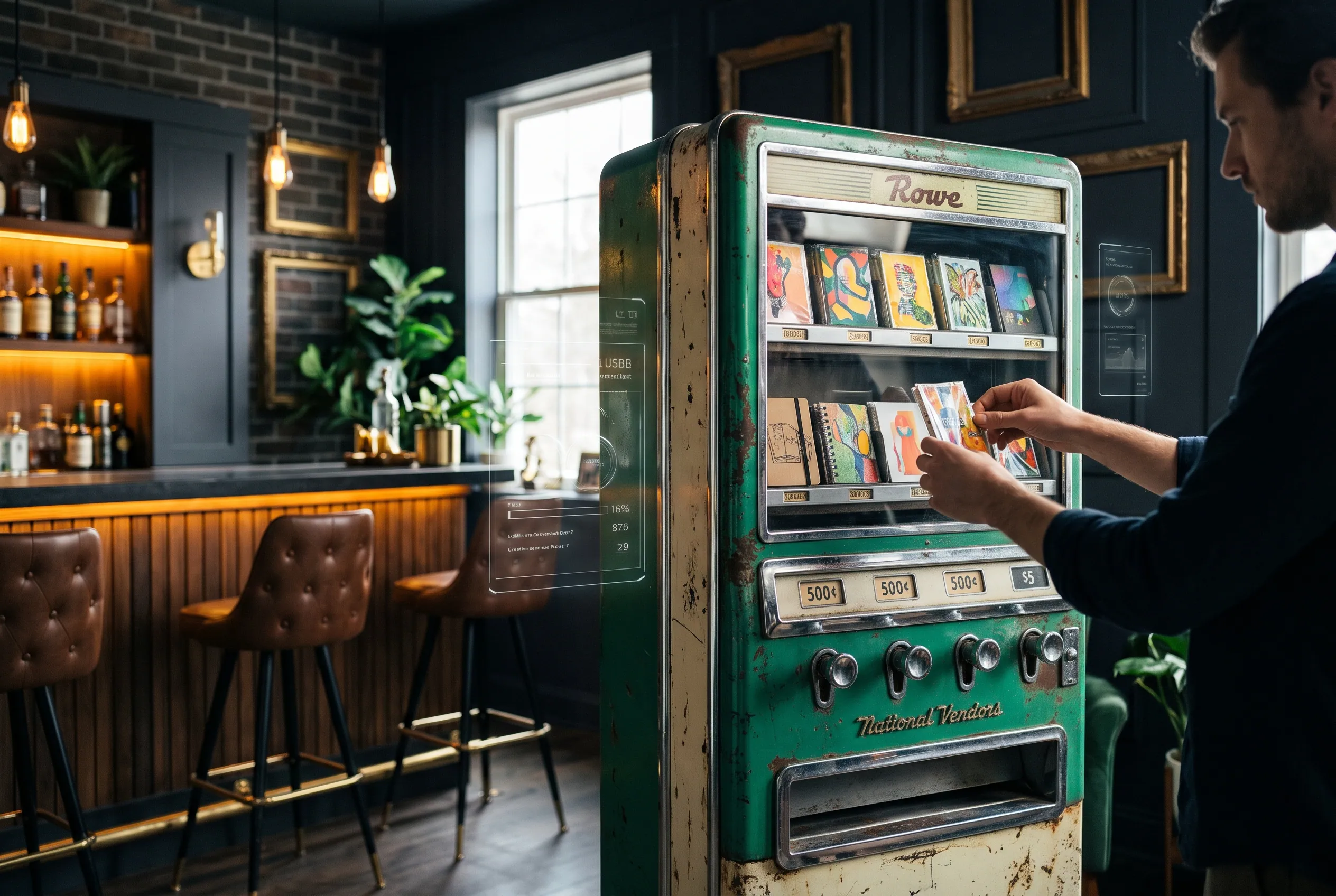 Yes. Some vintage cigarette vending machines are used as home decor, display pieces, or creative vending systems. Repurposing may appeal to buyers who like the design but do not want to sell tobacco.
Home bars and game rooms
A restored machine can serve as a decorative feature in a home bar, entertainment area, or vintage-themed room. You may choose to display it without operating its original dispensing mechanism.
Check its size, weight, stability, and electrical condition before installation. If the machine has old wiring or damaged electrical components, have the relevant work assessed by a qualified repair professional rather than simply connecting it to a power outlet.
Art and creative products Vintage Cigarette Vending Machine: Value, Prices, and Buying Tips
Art-o-Mat provides a documented example of an alternative use. According to the organization’s account, artist Clark Whittington used a retired cigarette machine to sell small photographic artworks at a café in Winston-Salem, North Carolina, in June 1997.
Access Gallery also describes an Art-o-Mat that dispenses pocket-sized artworks for $5 per piece (Access Gallery). That figure describes artwork sold through this particular project, not the purchase price of a machine or a typical profit margin.
A similar conversion may require changes to the dispensing system, product dimensions, payment method, or internal supports. Ask whether the machine is suitable for your intended product and obtain estimates for any custom work.
Is repurposing financially worthwhile?
That depends on the purchase price, conversion cost, ongoing maintenance, and your purpose. A machine bought for personal display may be worthwhile even if it never earns income.
For a business project, estimate the full startup cost and test whether the planned products fit the mechanism. Do not assume that an art-vending conversion will recover the purchase and restoration costs or increase the machine’s resale value.
Common Mistakes to Avoid When Buying a Vintage Cigarette Machine
A few checks can help you avoid preventable costs and disappointment.
Paying based on the asking price alone. A seller may ask more than comparable machines have sold for. Compare recent completed sales and account for condition differences.
Assuming the machine works. An attractive exterior does not prove that the coin mechanism, locks, lights, or dispensing parts function correctly. Ask for a demonstration or budget for an unverified machine.
Ignoring transport costs. A low-priced machine may become expensive once pickup, packaging, delivery, and handling are included. Get a quote before making a commitment.
Buying parts before confirming compatibility. Similar-looking machines may use different components. Identify the model and check part compatibility before ordering replacements.
Treating a restoration as guaranteed added value. The cost of restoration may exceed the increase in the machine’s resale value. Decide whether the work serves your personal goal, rather than assuming it will produce a profit.
Ignoring commercial-use restrictions. If you plan to sell tobacco, check federal, state, and local requirements first. A machine’s age does not make current operation automatically lawful.
Frequently Asked Questions
Are old cigarette vending machines worth anything?
Yes, some vintage cigarette vending machines have collectible value. The amount depends on the maker, model, condition, originality, and buyer demand. Compare completed sales for similar machines instead of relying only on seller estimates.
Where can I find a vintage cigarette vending machine near me?
Search local antique shops, estate sales, classified listings, auction houses, and collector communities. Inspect the machine in person when possible, and confirm the pickup arrangements and total cost before paying.
How can I tell how old my vintage cigarette vending machine is?
Start with the manufacturer’s plate, model number, serial number, original labels, and documented design features. Cross-check those details against reliable historical information or a specialist who knows the manufacturer. Appearance alone may not establish an exact production year.
Is a restored cigarette vending machine worth more than an original one?
Not always. A restoration can improve appearance and function, but it can also replace original parts or alter features that some collectors value. The best comparison depends on the machine and the preferences of likely buyers.
What happened to old cigarette vending machines?
As tobacco vending became more restricted and retail habits changed, many older machines stopped being used for their original purpose. Some were kept by collectors, restored as display pieces, sold through auctions, or adapted for creative projects such as art vending.
A Practical Checklist Before You Buy
Before committing to a vintage cigarette vending machine, make sure you can answer these questions:
- Have I identified the manufacturer, model, and approximate age?
- Have I compared prices for similar machines that actually sold?
- Do I know which parts are original, missing, damaged, or untested?
- Have I checked the keys, locks, mechanism, and other functions that matter to me?
- Have I included the buyer’s premium, shipping, tax, and likely repairs in my budget?
- Have I confirmed that replacement parts and specialist help are available if needed?
- Have I checked applicable legal requirements for my intended use?
- Am I comfortable with the total cost even if the machine does not increase in value?
The right purchase is not necessarily the cheapest or the most polished machine. It is the one whose documented condition, total cost, and intended use make sense for your needs. Compare the evidence, ask questions before paying, and leave room in your budget for costs that a listing may not show.
Disclaimer
This article provides general educational information, not personalized financial, investment, legal, or tax advice. Prices, restoration costs, applicable laws, and resale outcomes vary by machine, seller, location, and individual circumstances. Verify current details before making a purchase or commercial-use decision.