
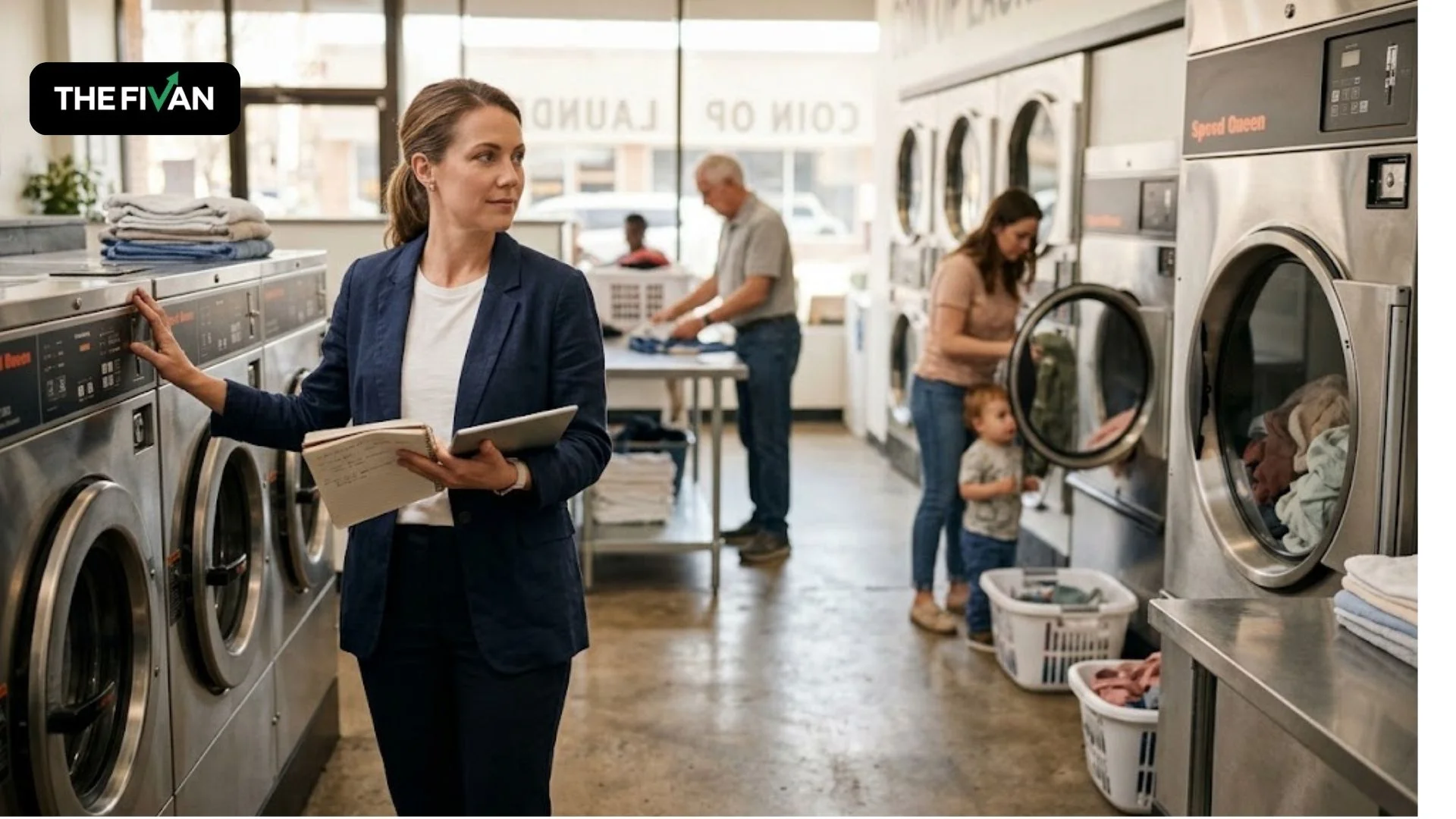
Investing in a laundromat can be a good way to own a business with recurring customer demand. But success depends on more than people needing clean clothes. You must consider the purchase price, utility bills, equipment, rent, financing, and the time needed to manage the business.
For beginners, buying an existing laundromat with verified financial records can be a practical starting point, although it is not always the best choice. A new location or franchise may suit some buyers better. The right decision depends on your budget, local demand, and the business’s ability to generate enough cash after expenses and loan payments.
Before investing, learn how to estimate the full cost, evaluate profits, inspect a location, and identify warning signs that could turn an attractive purchase into an expensive mistake.
Direct Answer
Investing in a laundromat means buying or opening a laundry business. It may be worthwhile when verified earnings cover operating costs, debt payments, repairs, and future equipment needs, but profits and workload vary by location.
Practical Finance Tip
Don’t judge a laundromat by revenue alone. Compare sales with bank deposits, tax returns, utility bills, lease costs, loan payments, and equipment repair needs before trusting the seller’s earnings claims.
Mission Statement
The Fivan — Mission Statement: The Fivan helps readers understand finance, compare money choices, manage their finances wisely, and make informed decisions as they plan for their financial goals.
Is Investing in a Laundromat a Good Investment?
A laundromat can be a worthwhile investment if its documented earnings justify the purchase price and cover operating costs, financing, and future equipment needs. However, not every location is profitable, and no reliable national success rate guarantees that a new owner will make money.
The business has several potential advantages. Customers often need laundry services throughout the year, self-service payments can simplify collections, and modern machines can reduce some routine work.
However, owners still face water and electricity bills, repairs, rent, cleaning, security, insurance, and competition. A store can have steady sales and still leave its owner with little money after these expenses.
Your first question should not be, “How much money does a laundromat make?” Instead, ask, “How much cash could this particular laundromat leave after all its costs?”
Consider three factors before moving forward:
- Your budget: Can you cover the purchase or setup costs without using money needed for household bills or emergencies?
- The business’s financial records: Can the seller prove the sales and earnings being advertised?
- Your ability to manage risk: Can you handle repairs, slower sales, higher utility bills, or unexpected expenses?
A laundromat may fit someone who wants to own and operate a physical business. It may be less suitable for someone who needs immediate income, cannot afford unexpected costs, or wants a completely hands-off investment.
What Are the Different Ways to Invest in a Laundromat?
There are three main routes: buy an existing laundromat, open a new location, or invest through a franchise. Each has different costs, risks, and operating requirements.
1. Buy an Existing Laundromat
Buying an established business can give you access to existing customers, machines, and sales records.
You may also be able to review several years of financial history before making an offer. This helps you estimate whether the business can support its purchase price and any loan payments.
However, an existing store may have old machines, expensive repairs, declining customer traffic, or a lease that will soon expire. Some sellers also ask for prices that are difficult to justify with the business’s actual earnings.
Before buying, request financial records, check the equipment, review the lease, and investigate the reason for the sale.
2. Open a New Laundromat
Opening a new store gives you more control over the location, equipment, layout, and payment systems.
The downside is that you must plan and pay for the setup before the store has an established customer base. Construction, utility connections, commercial machines, and site preparation can consume substantial capital.
You must also estimate demand before signing a lease. A modern store with attractive machines can still struggle when too many competitors serve the same neighborhood.
Building a new laundromat is worth investigating when local demand appears strong and you can fund the setup and operating period while customer traffic develops.
3. Consider a Laundromat Franchise
A franchise lets you operate under an established brand and may provide training, equipment guidance, and business support. In exchange, you agree to the franchisor’s terms, which may include fees, operating standards, and ongoing payments.
For example, Speed Queen advertises a total initial investment of $1,199,663 to $1,983,000 per store, including a $49,500 franchise fee, on its official franchise information page. These are provider-published estimates, not a guaranteed quote for every buyer. Review the current Franchise Disclosure Document (FDD) and agreement for the full financial commitment.
The Federal Trade Commission’s franchise guide explains that buyers generally must receive the FDD at least 14 days before signing a contract or paying the franchisor or its affiliate.
A franchise may appeal to buyers who value structured support. An independent store may offer more freedom, but you may need to arrange more of the planning and operating support yourself.
How Much Does It Cost to Invest in a Laundromat?
The cost can range from tens of thousands of dollars for some smaller opportunities to more than $1 million for a large new build or franchise. The total depends on the existing equipment, location, store size, property arrangements, and work needed before opening.
A 2026 cost guide published by Nav describes a broad range of approximately $50,000 to more than $3 million, reflecting the difference between buying an existing operation and creating a new facility. This is a general estimate, not a quote for a specific store.
For context, BizBuySell’s laundromat valuation benchmarks report a median sale price of $250,000 for 855 reported transactions from 2021 through 2025. The median is the middle value in the dataset: half of the recorded sale prices were above it and half below.
That figure is a historical transaction benchmark, not the total startup cost or the amount every buyer will need.
Costs to include in your budget
| Cost category | What to consider |
| Purchase price | The negotiated price for an existing business |
| Commercial machines | Washers, dryers, installation, and any replacement needs |
| Building and utilities | Plumbing, electrical work, ventilation, water and sewer connections |
| Lease and property costs | Deposit, rent, common-area charges, and any required improvements |
| Payment systems | Coin equipment, card readers, software, or app-based systems |
| Business setup | Applicable permits, licenses, insurance, accounting, and legal costs |
| Working capital | Cash for normal bills and early operating shortfalls |
| Repair reserve | Money set aside for breakdowns and future equipment replacement |
Working capital means money kept available to pay business expenses as they arise. It is especially important if you are opening a new store or taking over a business that needs repairs.
Do not spend every available dollar on the purchase price. An owner who cannot afford to fix a broken washer or pay a large utility bill may struggle even when the business has long-term potential.
Your budget should account for both the upfront investment and the cash needed to keep the doors open.
How Profitable Is a Laundromat?
A laundromat’s profitability depends on its sales, expenses, equipment use, staffing, rent, and financing. There is no single income figure that describes every store.
BizBuySell’s 2021–2025 transaction data reports median annual revenue of $219,878 and median owner earnings of $76,560 among the laundromat businesses it analyzed. The figures describe reported financials for businesses sold through its platform; they are not a promise of what a new owner will earn.
Understanding the difference between revenue and earnings is essential.
Revenue is not the same as profit
Revenue is the total money a business receives from sales before expenses.
Seller’s discretionary earnings, or SDE, is a measure commonly used when valuing a small business. It generally adjusts earnings for an owner’s compensation and certain other expenses or benefits. It is useful when comparing businesses, but it does not automatically represent the money a new owner will take home.
You may still need to account for a new manager’s salary, loan payments, income taxes, and equipment replacement.
Likewise, EBITDA means earnings before interest, taxes, depreciation, and amortization. It is one way to compare operating performance, but it is not the same as cash remaining after debt payments.
Example: Calculate the cash a laundromat might leave
Suppose an existing laundromat has the following hypothetical annual figures:
| Item | Amount |
| Revenue | $240,000 |
| Operating expenses before debt, owner pay, and equipment reserve | $150,000 |
| Cash remaining before those costs | $90,000 |
| Annual loan payments | $45,000 |
| Equipment replacement reserve | $12,000 |
| Remaining before owner pay and taxes | $33,000 |
The calculation is:
$240,000 − $150,000 − $45,000 − $12,000 = $33,000
These numbers are illustrative only, not an industry average or forecast. The $150,000 operating expense figure would need to reflect the actual store’s rent, utilities, staffing, insurance, repairs, and other normal costs.
The example shows why sales alone do not tell you whether a store is affordable. Even a business with $240,000 in annual revenue could leave relatively little cash after financing and equipment reserves.
When evaluating a laundromat, calculate the money left after ordinary business costs, debt payments, and a reasonable reserve for future repairs. Then consider whether the result is worth your capital and time.
How Do You Choose the Right Laundromat Location?
Location is one of the biggest factors affecting customer demand. A store needs enough nearby customers who want its services, can reach it easily, and are not already well served by competing businesses.
Look at these factors before committing to a location:
- Renter density: Apartments and rental housing may create demand where residents lack convenient in-unit laundry.
- Competition: Count nearby laundromats and compare their machine capacity, prices, hours, cleanliness, and services.
- Accessibility: Consider parking, visibility, street access, public transportation, and whether customers can carry laundry into the store conveniently.
- Equipment capacity: The number and sizes of washers and dryers should fit the likely customer base.
- Utility costs: Water, sewer, electricity, and gas can take a meaningful share of revenue.
- Lease terms: The rent, increases, renewal options, and permitted use can affect how long the investment remains viable.
The Coin Laundry Association’s industry overview identifies location, demographics, equipment, lease terms, utility costs, and competition as important factors in business value.
Do not rely only on a busy street or a high local population. Visit the area at different times, check the competing stores, and investigate whether enough customers need another laundromat.
For an existing store, compare actual customer activity and sales with the seller’s claims. For a new location, estimate demand before signing a long-term lease.
How Can You Finance a Laundromat?
You can investigate personal capital, business loans, seller financing, or equipment financing. The suitable route depends on the purchase price, your available funds, the business’s records, and the lender’s requirements.
Personal capital: Using savings can reduce borrowing costs, but putting too much of your money into one business can leave you without funds for household needs or unexpected expenses.
Business loans: A lender may consider the purchase price, documented earnings, your financial position, collateral, and repayment capacity. Approval and terms vary.
Seller financing: The seller agrees to let you pay part of the purchase price over time. This may reduce the amount you need from another lender, but the agreement’s interest, payment schedule, security, and default provisions need careful review.
Equipment financing: A lender or financing company provides funds for eligible machines or equipment. Payments can make the initial purchase easier, but they add to the business’s regular obligations.
Could an SBA loan help?
The US Small Business Administration’s 7(a) loan program can support eligible business ownership changes, equipment purchases, and working capital. The program states a maximum loan amount of $5 million, but that is a program limit, not an indication that a particular buyer will qualify.
Interest rates, fees, collateral requirements, repayment periods, and borrower contributions depend on the applicable rules and lender.
Before borrowing, compare the total repayment cost and monthly obligations, not just the down payment. Test whether the business could still cover its bills if sales fell or a major machine needed repair.
Be particularly cautious about using your home or other essential personal assets to fund a risky purchase. If the business cannot repay its debt, you could put those assets at risk.
What Should You Check Before Buying a Laundromat?
Before paying a deposit or signing a purchase agreement, verify the store’s financial performance and the conditions that allow it to operate.
Use this checklist as a starting point.
- Verify revenue and expenses. Request tax returns, profit-and-loss statements, sales records, and bank statements. Compare the figures rather than relying only on a seller’s spreadsheet. Investigate any unexplained gaps.
- Examine utility bills. Review original water, sewer, gas, and electricity bills for a meaningful period. Compare their amounts with reported sales and identify unusual changes.
- Inspect the equipment. Find out the age, condition, repair history, and expected replacement needs of the washers, dryers, boilers, and other systems. An independent inspection can help reveal costs that are not obvious during a casual visit.
- Review the lease. Check how long remains, whether renewal options exist, how rent can increase, and whether the lease can be transferred to you. A business with a short remaining lease may not justify a long repayment obligation or substantial new equipment spending.
- Check local competition and demand. Visit nearby laundromats, compare services and prices, and look for planned competing locations where information is available.
- Review the purchase agreement. Make sure you understand what is included, which liabilities may transfer, how inventory or equipment is treated, and what happens if important information proves inaccurate.
- Keep cash available after closing. Budget for routine expenses, repairs, and unexpected shortfalls instead of using all your funds for the down payment.
A small-business accountant can help check earnings and adjustments. A business attorney can review the lease and purchase agreement. Their review is particularly useful when the transaction involves substantial debt, a long-term contract, or unclear financial records.
If the seller will not provide reasonable evidence for important claims, reconsider the deal. A lower price does not make undocumented earnings reliable.
What Are the Biggest Risks of Investing in a Laundromat?
A laundromat faces real business risks even when demand for laundry services continues.
Equipment failures: Broken machines can reduce sales and require costly repairs or replacement. Old equipment may also consume more utilities.
Rising operating costs: Higher utility bills, rent, insurance, payroll, or maintenance expenses can reduce the money left for the owner.
Lease problems: Losing the location, facing a large rent increase, or having too little time remaining on the lease can undermine the value of the business.
Weak local demand: Too much competition, a change in neighborhood conditions, or an inaccurate demand forecast can reduce customer traffic.
Excessive borrowing: Large debt payments may leave too little cash to cover normal expenses or unexpected repairs.
Misleading financial claims: Sales estimates, verbal promises, and attractive projections are not substitutes for verifiable records.
Do laundromats have a 95% success rate?
This research did not establish a reliable, representative national dataset proving that laundromats have a 95% success rate. A 2026 analysis by laundromat business broker Jason Taken explains why transaction records, business counts, and voluntary operator surveys do not by themselves establish a national failure rate.
Do not use an unsupported success percentage to justify a purchase. Focus on the risks you can examine before buying: documented revenue, lease terms, equipment condition, local competition, and cash reserves.
How to Get Started With a Laundromat Investment
You do not need to buy a business immediately to find out whether laundromat ownership could work for you. Start with research and low-commitment checks.
- Set a realistic budget. Decide how much capital you could commit without putting essential expenses or emergency savings at risk.
- Study a local market. Compare existing laundromats, local demand, competing services, and likely operating costs.
- Compare ownership routes. Look at existing businesses, new locations, and franchises using the full cost of each option.
- Review actual opportunities. Request financial records and check the asking price against documented earnings and relevant sale data.
- Test the cash flow. Estimate expenses, debt payments, repairs, and equipment reserves. See whether the business can meet those costs under less favorable conditions.
- Get the right help. Arrange independent equipment inspections and appropriate accounting and legal reviews before committing to a purchase.
If the numbers do not work, do not assume you can make up the difference through optimistic sales forecasts. Negotiate based on verified facts, investigate another location, or walk away.
Frequently Asked Questions
Can you own a laundromat while working full-time?
Possibly. Payment automation and hired help can reduce the work you do each day, but the business still needs oversight, cleaning, maintenance, customer support, and financial management. The workload depends on the size and condition of the store, the services offered, and the reliability of the people you hire.
Can you invest in a laundromat with little money upfront?
Some purchases may allow seller financing or outside lending, but no-money-down ownership should not be assumed. Lenders and sellers have their own requirements, and you still need funds for closing costs, working capital, and repairs. Avoid committing to a loan that would be difficult to repay if the business underperforms.
Is buying an existing laundromat better than building a new one?
Buying an existing store can provide sales history and an established location, but it may come with aging machines, hidden costs, or lease problems. Building new lets you choose the design and equipment but requires substantial upfront spending and demand planning. Compare the total cost, risks, and expected cash flow of each option.
How much profit can a laundromat make?
Profit varies by location, sales, rent, utility costs, staffing, equipment, and financing. BizBuySell’s 2021–2025 transaction data reported median annual owner earnings of $76,560 among the laundromat businesses it analyzed, but this is a historical sample benchmark—not a promise of future earnings. Evaluate the financial records of the specific store you are considering.
Make Your Decision Based on the Numbers
Investing in a laundromat can make sense when the purchase price is supported by reliable earnings, the location has enough demand, and the business can cover operating costs, financing, and equipment needs.
Start by comparing real opportunities and checking the financial records. Keep enough cash available for problems, understand your contractual obligations, and seek independent help before making a major commitment. If the evidence does not support the asking price, walking away is a sound financial decision.
Disclaimer
This article provides general financial education, not personalized financial, investment, legal, or tax advice. Costs, business terms, risks, and legal requirements vary by location and individual circumstances, and investment outcomes are not guaranteed. Consider consulting a qualified accountant or business attorney before making a significant purchase.