
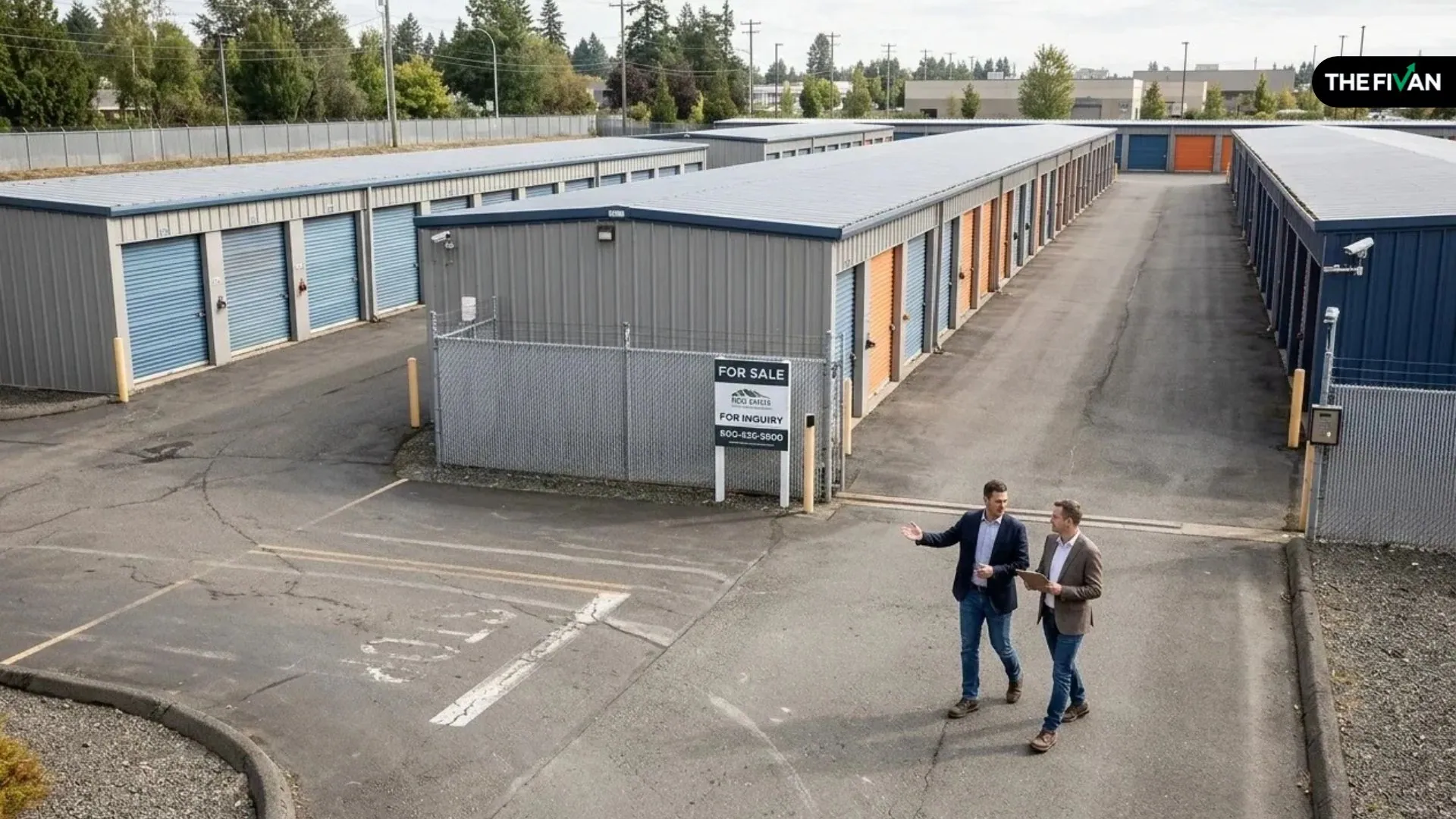
Finding a self storage facility for sale in the United States is easier when you know where to search and what to check before buying. Commercial real estate websites, business-sale marketplaces, and commercial brokers can help you find available properties. But finding a listing is only the first step.
Before making an offer, check the property’s actual rental income, operating expenses, physical condition, local competition, and financing options. A facility with a low asking price may need expensive repairs, while a higher-priced property may have stronger income. The goal is to find a property whose verified financial performance supports its price and whose risks you can reasonably manage.
Direct Answer
To find a self-storage facility for sale, search commercial property marketplaces, business-sale websites, and specialist brokers. Before buying, verify income, expenses, local demand, property condition, and financing costs.
Experience
Compare the seller’s reported income with rent rolls, bank deposits, expense records, and tax returns where available. Then estimate cash left after loan payments and repairs; a strong cap rate alone does not guarantee positive cash flow.
Where Can You Find a Self Storage Facility for Sale?
 Several websites list self-storage properties and related businesses across the country. Each serves a slightly different purpose, so searching more than one can help you compare options.
Commercial real estate marketplaces
Start with commercial property websites that let you search by location, price, building size, and property type.
- LoopNet lists commercial properties for sale and lease, including self-storage facilities, industrial buildings, and mixed-use properties.
- Crexi offers a self-storage property search with location and price filters.
- CityFeet provides commercial property listings across US markets.
- Showcase and Realmo offer additional property listings that can help you compare locations and property types.
Use filters to narrow the results, but read each listing carefully. A page classified as self-storage may include warehouses, parking areas, industrial space, or other businesses.
Business-sale websites
If you want to buy an operating storage business rather than just a building, visit BizBuySell’s storage facilities and warehouses section.
These listings may include asking prices, reported cash flow, revenue, equipment, and information about the business being sold. However, some listings combine storage with transportation, warehousing, or other services.
Reported cash flow is not automatically profit you will receive as the new owner. Check what the seller includes in that figure and request records that support it.
Commercial real estate brokers
A commercial real estate broker who works with self-storage properties can help you find listings, contact sellers, and understand local market conditions.
Ask whether the broker regularly handles storage acquisitions. An agent who mainly sells residential homes may not have the same experience with commercial operating records, property valuations, and business-sale terms.
You can also contact owners directly. A facility owner may consider selling even when the property is not advertised publicly. Still, an owner-direct transaction needs the same financial and legal checks as any other purchase.
How to Narrow Your Search and Compare Listings
Searching the entire United States can produce too many unrelated properties. Start with a location and a realistic purchase budget, then compare facilities that serve a similar market.
Search by location, size, and property type
Suppose you are looking for a small facility that you can manage yourself. A rural property with a limited number of units may fit your budget better than a large climate-controlled complex in a major city. However, the rural facility could have fewer potential customers or less room to raise rents.
Consider these factors when filtering listings:
- Location: Look at nearby homes, apartments, businesses, and population patterns that may create demand for storage.
- Size: Compare the number of rentable units and their sizes, not just the total building area.
- Competition: Check existing facilities, advertised rental rates, occupancy where available, and planned new developments.
- Property condition: Look for signs of deferred maintenance, old gates, damaged roofs, poor drainage, or outdated security systems.
- Expansion potential: Check whether the land, local zoning, utilities, and permits allow additional units. Do not treat a seller’s expansion plan as an approved project.
Searches such as “self storage facility for sale near me,” “self storage for sale Long Island,” or “self storage facility for sale New Jersey” can help you find relevant local results.
Location phrases such as Brooklyn, New York, Florida, Georgia, Ohio, Michigan, and Pennsylvania can also narrow the search. For each location, investigate its own rental market rather than assuming that results in one state apply elsewhere.
Understand what the seller is offering
Not every storage listing represents the same purchase.
A real estate-only sale may include the land and buildings but not the seller’s operating company. A business-and-property sale may include the real estate, equipment, systems, customer records, and operating business, depending on the contract.
A mixed-use property may include storage units alongside a warehouse, repair shop, office, or other business. You need to understand which assets, income streams, liabilities, and operating responsibilities transfer to you.
For a self storage facility for sale by owner, request a written description of everything included in the transaction before comparing its price with other listings.
How Much Does a Self Storage Facility Cost?
There is no single purchase price for every self-storage facility. Cost depends on the location, rentable space, land, condition, unit mix, existing income, and what the seller includes in the transaction.
Two listings can have similar building sizes but very different prices because one has stronger rental income, better access, more land, or fewer repair needs. A low-priced facility may also need substantial investment before it can operate as planned.
Examples of listed properties
The following examples illustrate the range of asking prices shown on commercial marketplaces when checked on October 26, 2026. Listing details and availability can change.
| Property | Listed asking price | Reported size |
| 5255 US Route 11, Pulaski, New York | $850,000 | 9,600 square feet |
| 13552 Sulphur Springs Road, Sackets Harbor, New York | $1,200,000 | 12,704 square feet |
The Pulaski listing on LoopNet describes a mixed-use property with three storage buildings, additional storage containers, and an automotive repair shop. Its asking price therefore should not be compared directly with a property containing only storage units.
The Sackets Harbor listing on LoopNet describes a facility with 107 storage units and 21 vehicle or boat parking spaces. The listing also reports potential for expansion.
These are asking prices, not confirmed transaction prices or independent appraisals. They do not establish a typical US purchase price, and the two properties are not direct comparisons.
Look beyond the asking price
Before deciding whether a property is affordable, estimate the complete amount needed to acquire and operate it.
Consider:
- Purchase price and any required down payment.
- Inspections, legal work, appraisal, and other closing costs.
- Immediate repairs and planned improvements.
- Insurance, property taxes, utilities, and ongoing maintenance.
- Operating cash needed before rental income covers expenses.
- Loan payments and the reserves needed for unexpected costs.
A cheap self storage facility for sale is not necessarily a good investment. A higher initial cost may be justified by stronger verified income or better property condition, but those advantages must be measured rather than assumed.
How to Evaluate a Facility’s Income and Profit Potential
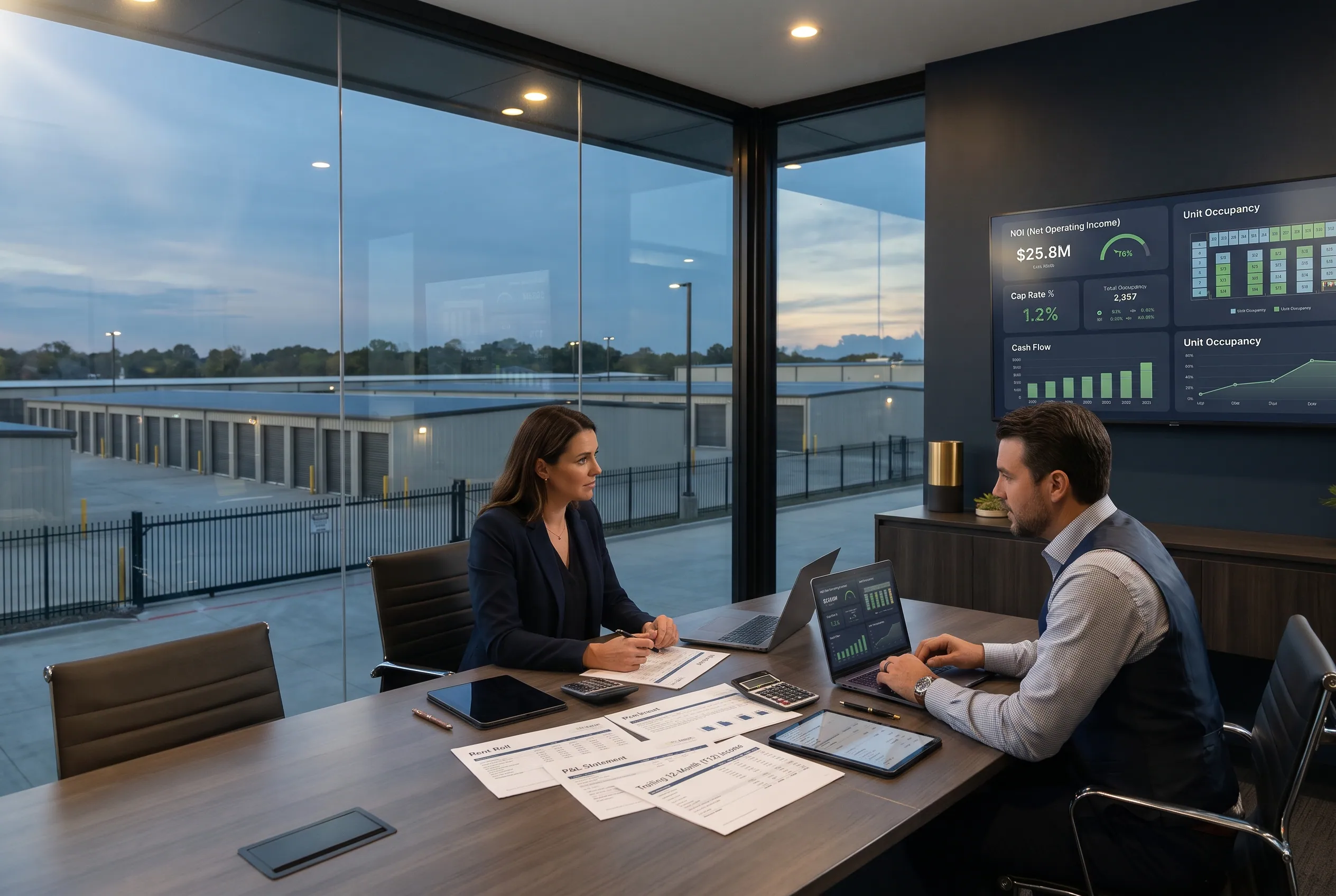 A storage facility is a business as well as a property. To judge its financial potential, examine the money it actually collects, the costs of operating it, and the cash remaining after financing and other obligations.
Verify rental income and occupancy
Start by asking the seller for a current rent roll. This is a record of the rented units, their rental rates, and relevant tenant information.
Request the trailing 12-month income statement, a breakdown of operating expenses, historical occupancy reports, available tax returns, and records that support the reported income. Bank deposits and accounting records can help you check whether reported rental payments were collected.
Pay particular attention to the difference between physical occupancy and economic occupancy.
Physical occupancy measures how much of the available storage space is occupied. Economic occupancy helps show how much of the possible rental income the facility actually earns.
For example, a facility might have most of its units occupied but collect less rent than expected because of discounts, unpaid bills, or below-market rental rates.
Ask the seller:
- How much rent was billed, and how much was collected?
- How many tenants are behind on payments?
- Are discounts or promotional rates reducing income?
- Have rents recently increased, and are those increases reflected in actual collections?
- How often do tenants leave, and how long do units typically remain vacant?
Treat projected rent increases carefully. A seller may claim that raising prices will increase revenue, but existing customers may leave, new competitors may offer lower rates, or local demand may not support the planned changes.
Understand net operating income and cap rate
Two useful measures for comparing properties are net operating income and capitalization rate.
Net operating income (NOI) is the property’s operating income minus its operating expenses, before loan payments and income taxes. Common operating expenses include property taxes, insurance, utilities, maintenance, management, and routine administrative costs.
Capitalization rate (cap rate) compares annual NOI with the property’s purchase price.
The formula is:
Cap rate = Annual NOI ÷ Purchase price × 100
Consider a hypothetical facility priced at $1,200,000. Suppose its verified annual rental income is $180,000 and its annual operating expenses are $75,000.
Its annual NOI would be:
$180,000 − $75,000 = $105,000
Its cap rate at the asking price would be:
$105,000 ÷ $1,200,000 × 100 = 8.75%
This is an educational example, not an estimate of the return from either New York listing.
A cap rate helps compare property income with price, but it does not tell you how much cash you will keep after borrowing costs. It also does not account for every future repair, capital improvement, tax consequence, or change in rental demand.
For a deeper explanation of valuation, review Sofer Advisors’ self-storage facility valuation guide. Use its concepts as guidance, not as a substitute for a property-specific valuation.
Calculate cash flow after financing
NOI and cash flow are different measures.
Suppose the hypothetical facility above has annual NOI of $105,000. Assume, only for illustration, that annual loan payments total $70,000 and that you set aside $15,000 for major repairs and future capital needs.
The simplified cash remaining would be:
$105,000 − $70,000 − $15,000 = $20,000
That is an illustrative amount before income taxes and other costs not included in the assumptions. Actual loan payments, repair needs, and operating results may differ significantly.
The example shows why a property with positive NOI may still produce limited cash for its owner. If the facility needs a new roof, paving, gate system, or other major work, the cost could reduce available cash further.
A buyer should also test what happens if occupancy falls, rents stay flat, insurance costs rise, or a large repair occurs sooner than expected. A deal that only works under optimistic assumptions deserves closer review.
How Can You Finance a Self Storage Facility?
The right financing depends on the purchase price, the borrower’s financial position, the property’s income, the business structure, and the lender’s requirements. Common options include commercial real estate loans, eligible small-business financing, and seller financing when the seller agrees to offer it.
Commercial real estate loans
A commercial lender may assess the property’s income, condition, market value, your available funds, credit history, experience, and ability to repay the debt.
Compare written offers rather than looking only at the monthly payment. Review the interest rate, whether it is fixed or variable, repayment term, fees, collateral requirements, prepayment conditions, and any balloon payment.
A balloon payment is a large amount due at the end of a loan term. If the loan balance becomes due before you can repay or refinance it, you could face a serious funding problem.
SBA 7(a) financing
The US Small Business Administration’s 7(a) loan program can support eligible business acquisitions, real estate transactions, and working capital. Its maximum loan amount is $5 million, but that is a program limit, not a promise that a buyer will qualify for that amount.
Eligibility depends on the business, its income, the borrower, and the transaction. Ask an SBA lender whether your specific self-storage acquisition qualifies and which costs may be financed.
The SBA’s 504 loan program has different requirements and focuses on major fixed assets for eligible operating businesses. SBA rules exclude certain passive businesses owned by landlords and developers, subject to specific exceptions. Do not assume that a property purchased mainly as a rental investment will qualify. Have a lender or Certified Development Company review the proposed ownership and operating arrangement.
Seller financing
With seller financing, the seller agrees to finance part or all of the purchase under negotiated terms. It may give the buyer another option, but its availability depends on the seller’s willingness and the agreement.
Before accepting such an arrangement, review the interest rate, payment schedule, collateral, default terms, balloon payment, and any existing mortgage restrictions. Have a qualified attorney review the agreement.
Whichever financing route you consider, preserve enough working capital for operating expenses, repairs, and unexpected costs. Using every available dollar to close the deal can leave the business unable to handle ordinary setbacks.
What Should You Check Before Making an Offer?
 Due diligence means checking the facts before you commit to buying. For a self-storage acquisition, it should cover the business’s records, the property itself, and the local market.
Review financial and operating records
Request and compare:
- The last 12 months of financial statements and earlier results where available.
- Tax returns and records supporting reported revenue.
- The current rent roll, collected rent, vacancies, discounts, and delinquent accounts.
- Property tax bills, insurance costs, utility bills, maintenance expenses, and management fees.
- Rental agreements, operating contracts, vendor obligations, and relevant tenant records.
- A list of planned repairs, recent capital improvements, and outstanding claims or disputes.
If a seller cannot explain a significant difference between reported income and bank deposits, do not simply accept a verbal explanation. Ask for supporting documents or have an accountant investigate before relying on the figures.
Inspect the building and local market
Arrange an independent property inspection. Check roofs, foundations, doors, locks, gates, drainage, paving, lighting, security systems, and any climate-control equipment.
Ask for estimates for major work identified during the inspection. A repair allowance based only on a seller’s guess can understate the amount you will need.
Next, investigate the market around the facility. Compare competitors’ unit sizes, rental rates, security features, promotional offers, and customer reviews. Check whether new facilities are planned or being built nearby.
A high occupancy figure is more meaningful when local demand appears durable. It may be less reassuring in an area where many new units are about to enter the market.
Check legal, tax, and environmental issues
Before committing, ask a commercial real estate attorney to review title, surveys, zoning, permitted use, permits, contracts, and other transaction-specific legal issues. Confirm that the property’s existing use and any proposed expansion are allowed under applicable local rules.
Environmental review may also be important, particularly if the land previously supported industrial, automotive, fuel-storage, or other activities that could have created contamination risks. The EPA’s All Appropriate Inquiries guidance explains environmental assessment requirements and how they may relate to certain liability protections. A qualified environmental professional can advise whether a Phase I Environmental Site Assessment or further investigation is appropriate.
Tax treatment also deserves attention. Under IRS Publication 946, land is not depreciable, although qualifying buildings and other assets may be. The tax treatment of an acquisition depends on the assets, transaction structure, and rules that apply to the relevant tax year. Ask a qualified tax professional to review the purchase before relying on a projected tax benefit.
State and local requirements can also affect rental agreements, tenant rights, insurance, property taxes, and how unpaid storage rent is handled. Do not assume that rules in one state apply throughout the United States.
Common Mistakes When Buying a Storage Facility
Several avoidable mistakes can turn an attractive listing into a costly purchase.
Trusting projections instead of actual results. A seller may present higher future rents or occupancy as a reason to pay more. Base your initial valuation on supported financial records, then assess whether projected improvements are realistic.
Confusing occupancy with collected income. Many occupied units do not guarantee that all billed rent will be collected. Check payment records, concessions, and delinquent accounts.
Ignoring major repairs. A facility with outdated equipment or deferred maintenance may require substantial spending soon after closing. Get independent inspections and repair estimates.
Assuming financing will be approved. A property may appear affordable while failing the lender’s requirements. Discuss the actual transaction with a lender before making a binding commitment.
Spending the entire budget on the purchase. Storage facilities need operating cash and reserves for repairs, vacancies, and unexpected bills. Plan for these costs before deciding how much you can offer.
Skipping local market research. National industry information cannot tell you whether a specific neighborhood has enough customers at the rental rates you expect.
Frequently Asked Questions
Where can I find self-storage facilities for sale?
Start with commercial real estate websites such as LoopNet, Crexi, CityFeet, Showcase, and Realmo. For operating businesses, check BizBuySell. Commercial brokers who specialize in storage properties and direct-owner contacts can provide additional options.
How much does a self-storage facility cost?
The price varies by location, size, building condition, rental income, land, and what the sale includes. The New York listings discussed above ranged from $850,000 to $1.2 million in asking price, but two examples do not establish a typical US market price.
How do I know if a self-storage facility is profitable?
Review verified rental collections and operating expenses, then calculate NOI and compare it with the asking price using the cap rate. Next, estimate cash remaining after loan payments and major repair needs. Test whether the deal still works under less favorable assumptions.
Can I use an SBA loan to buy a self-storage facility?
Possibly, if the transaction and business meet the applicable program requirements. SBA 7(a) financing can support eligible business acquisitions and real estate transactions, but some passive rental businesses are ineligible. Confirm the structure with an SBA lender rather than assuming approval.
What should I check before buying a storage facility?
Check financial statements, tax records, rent rolls, collected income, operating costs, property condition, local competition, title, zoning, permits, insurance, and relevant environmental concerns. Use independent professionals for the checks that require legal, accounting, lending, or inspection expertise.
Your Next Steps Before Buying
Start by shortlisting facilities that fit your target location and budget. Request financial records for the most promising properties, compare actual income with operating costs, and estimate cash flow under realistic assumptions.
Then discuss financing with suitable lenders and arrange independent legal, financial, and property checks before committing to the purchase.
The strongest candidate is not automatically the cheapest facility or the one with the highest advertised income. It is the property whose price, verified performance, condition, and risks make sense together.
Disclaimer
This article provides general financial education, not personalized financial, investment, legal, or tax advice. Costs, loan terms, local rules, and individual circumstances vary, and outcomes are not guaranteed. Consider qualified legal, tax, lending, or inspection help before completing a specific purchase.