
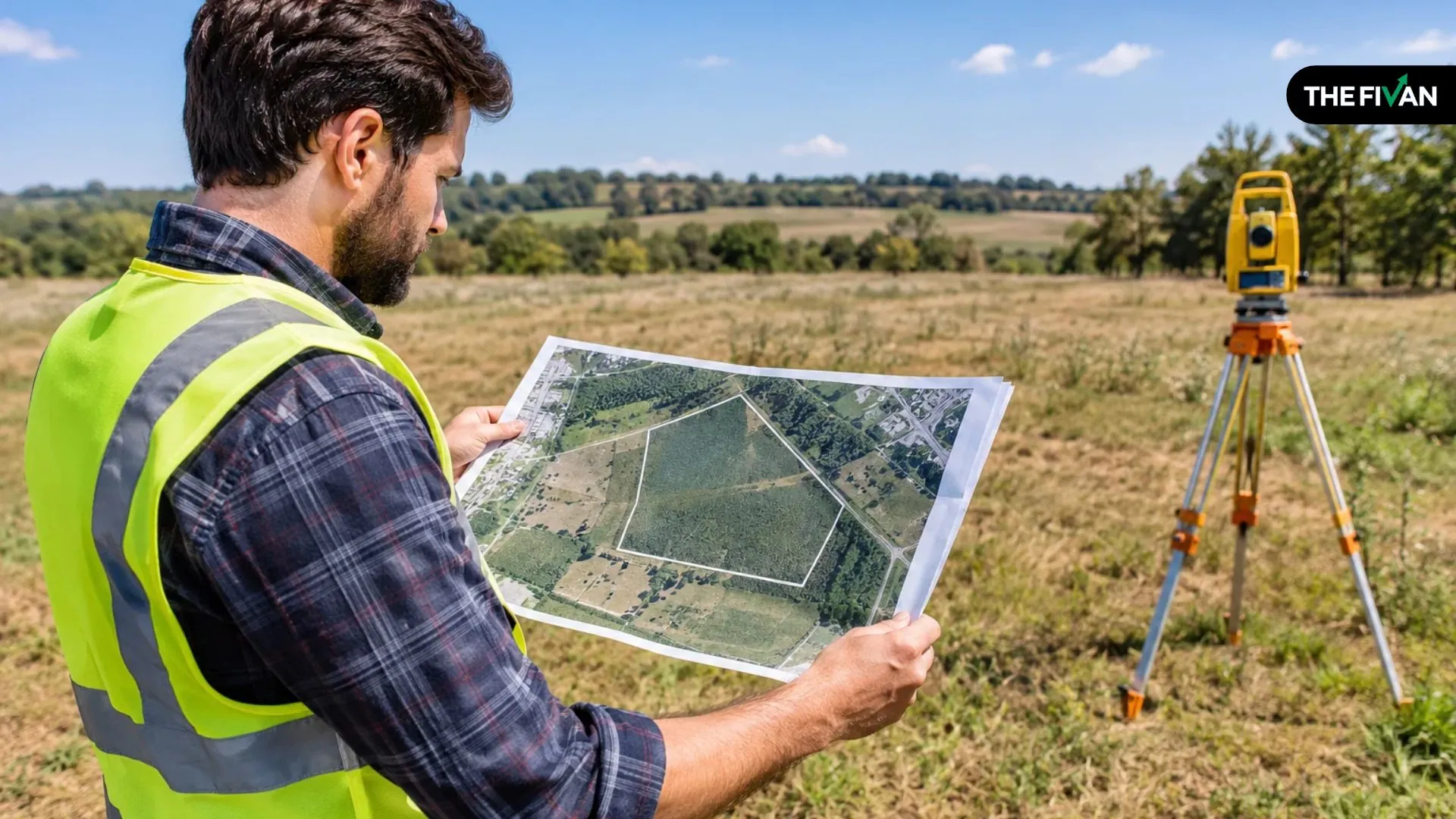
Raw land development can create value, but buying an inexpensive parcel does not guarantee a profitable investment. Before you purchase, you need to know what the land can legally be used for, what improvements it needs, and whether buyers will pay enough to cover your costs.
The most practical approach for small investors is to identify a realistic exit strategy, verify the land’s legal and physical suitability, and calculate the full project cost before committing substantial money. You may be able to create value by obtaining development approvals or dividing a parcel where permitted. You do not always need to build a house or commercial property yourself.
The following nine steps explain how to evaluate a parcel, manage the development process, control risks, and decide when to sell or build.
Direct Answer
Raw land development is the process of making undeveloped property suitable for a planned use through feasibility checks, approvals, infrastructure, site work, or construction. Small investors may sell before building.
What Raw Land Development Means for a Small Investor
Raw land is generally undeveloped property that lacks some or all of the improvements needed for a proposed use. It may have no utility connections, prepared building site, or approved development plan. However, the exact condition of each parcel is different.
Understanding a few basic terms will help you make better decisions.
- Raw land: Undeveloped property that may require planning, approvals, infrastructure, or site preparation.
- Improved land: Property with certain improvements, such as road access, utility connections, or prepared ground.
- Entitled land: Land that has received relevant land-use approvals for a proposed project. The exact approvals required depend on the jurisdiction and project.
- Build-ready land: Land that has satisfied the relevant requirements to begin the intended construction work, subject to any remaining permits, conditions, and inspections.
Small investors can approach land development in several ways. One strategy is to buy a parcel and resell it after confirming its potential. Another is to obtain approvals that make it more attractive to builders. A more involved strategy is to subdivide the property or build on it.
Each option has different costs, timelines, and risks. Your first goal should be to find a strategy that matches the land, local demand, and the money you can afford to commit.
The 9 Steps to Develop Raw Land
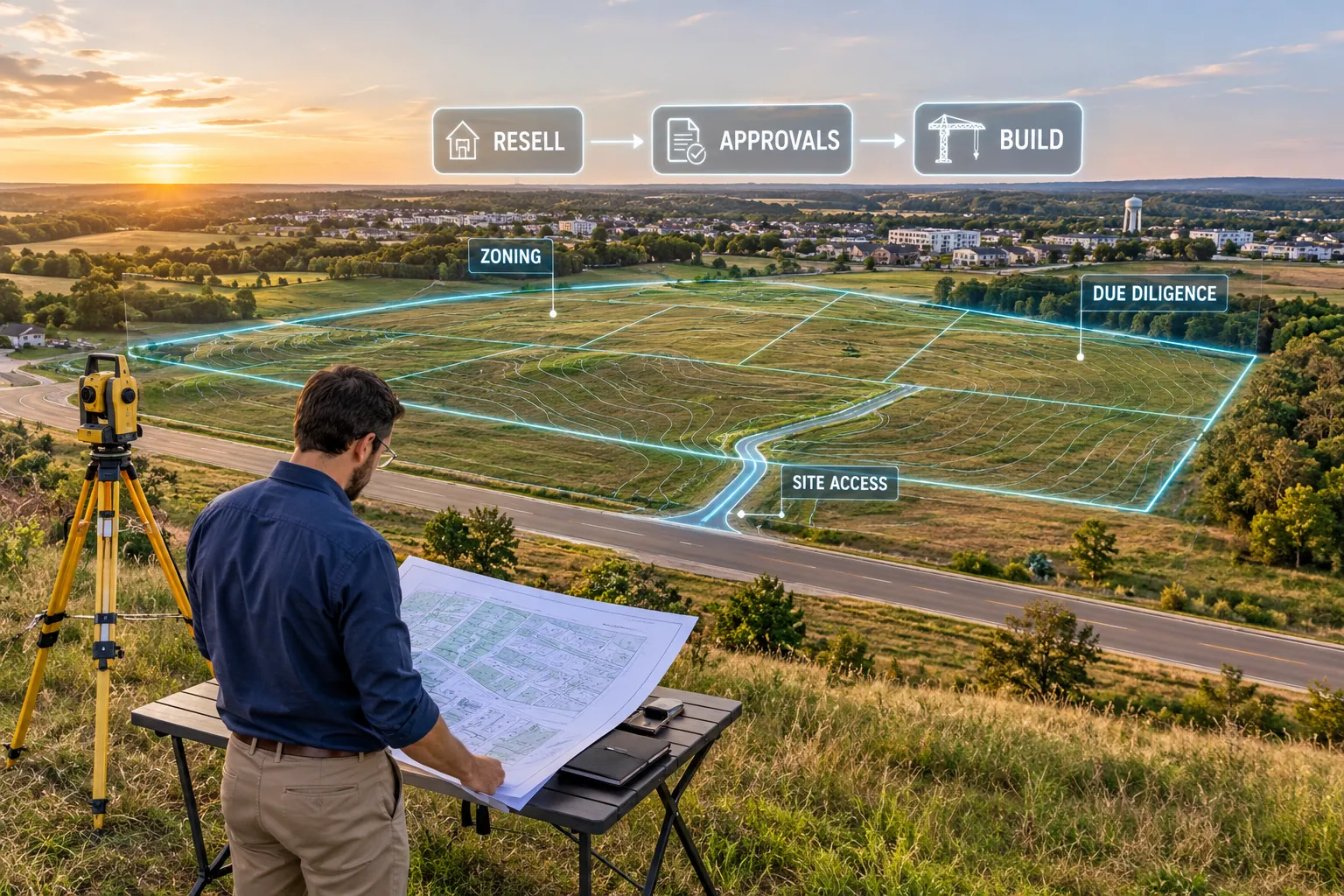
Step 1: Define Your Investment Goal and Exit Strategy
Before searching for properties, decide what you want to achieve.
Are you hoping to resell the land, sell it after obtaining approvals, divide it into smaller lots, or build something that produces income? Each goal requires a different kind of property and a different level of investment.
For example, an investor who wants to sell an approved residential parcel should look for land that local builders may want to buy. Someone planning a small commercial project must investigate demand for that use, along with access, parking, utilities, and local zoning rules.
Your exit strategy is the plan for how you expect to recover your money and complete the investment. Think about it before purchasing rather than after development costs start rising.
Consider three common choices:
- Resell the land: This may require less work than full development, but your return depends on the purchase price, holding expenses, and resale demand.
- Obtain approvals and sell: You may increase the parcel’s usefulness by securing suitable entitlements or subdivision approvals. However, approval costs money and may not produce the expected increase in sale value.
- Develop and build: This offers more control over the finished project but usually requires more capital, professional support, time, and construction management.
Choose the option you can realistically manage. A smaller project with a clear buyer may be more suitable than a large project with uncertain demand.
Step 2: Research the Local Market and Buyer Demand
A parcel can look attractive and still be a poor investment if there is little demand for its intended use.
Start by researching the surrounding area. Look for recent land sales, nearby development projects, road improvements, utility expansion, and changes in local demand. Pay attention to who buys similar parcels and what those buyers need.
Comparable sales are properties with similar characteristics that have recently sold. They provide a better starting point for estimating value than asking prices alone.
Try to compare properties with similar:
- Locations and access conditions
- Sizes and shapes
- Zoning and permitted uses
- Utility availability
- Site conditions and development restrictions
- Approval status
A parcel advertised for $100,000 does not prove that similar land is worth that amount. The seller may have priced it above market value, or the property may have restrictions that reduce its usefulness.
Speak with local land brokers or builders when appropriate. Ask what types of parcels they are buying, which problems make land less attractive, and whether they would consider a property like yours after the planned improvements.
Your success check: You should be able to describe a realistic buyer, the likely intended use, and the evidence supporting your estimated resale price. If you cannot identify a likely buyer, continue researching before making an offer.
Step 3: Verify Zoning, Legal Access, and Property Restrictions
Zoning rules determine which uses a local government permits on a property. Depending on the location, land may be approved for residential, commercial, industrial, agricultural, or other uses.
Contact the relevant city or county planning department. Ask about the parcel’s current zoning, permitted uses, minimum lot size, setbacks, height limits, access requirements, and subdivision rules.
A setback is the required distance between a building and a property line or other feature. It can affect how much of a parcel is actually available for construction.
Also review the property’s legal records. A recorded easement may give another party certain rights over part of the land, such as access or utility use. Deed restrictions or other recorded agreements may impose additional limits.
Check whether the parcel has legal access from a public road or a properly documented private access arrangement. A visible dirt track or neighboring driveway does not automatically establish a legal right to use it.
The City of Austin’s development guidance illustrates how zoning, subdivision review, site plans, and permits can affect a project. Its procedures apply locally, so use the equivalent planning authority for your own property.
Do not assume a zoning change or variance will be approved. A variance is permission for limited relief from a specific rule; it is not a general right to build anything you want.
Your success check: Obtain reliable information showing that the intended use is permitted or that a realistic approval path exists. If legal access or a critical restriction remains unresolved, do not treat the parcel as development-ready.
Step 4: Secure Suitable Purchase and Due-Diligence Terms
Once a property appears promising, negotiate purchase terms that give you a reasonable opportunity to investigate it.
Due diligence means checking the property, its records, its suitability, and its financial risks before completing the purchase. Important checks may include a title review, survey, soil evaluation, zoning confirmation, utility estimates, and environmental screening.
Where appropriate, ask a qualified real estate attorney to help structure the contract. Discuss contingencies, property access, inspection rights, deadlines, and what happens if a critical condition fails.
A contingency is a contract condition that may allow you to cancel or renegotiate if a specified requirement is not met.
Do not assume every purchase contract provides the same protection. Some agreements restrict cancellation, require notice by a deadline, or limit the seller’s responsibility for discovered problems.
You may need time to arrange several professional inspections. A 90- to 120-day investigation period can be considered for a complex project, but it is not a universal standard. The proper period depends on the tests required, local practices, contract terms, and the seller’s willingness to agree.
Before you pay a nonrefundable deposit or waive a protection, understand exactly what financial risk you are accepting.
Your success check: You have enough contractual access and time to complete the important checks, and you understand your cancellation rights and deadlines.
Step 5: Check Soil, Drainage, Flood Risk, and Environmental Limits
Land that looks dry, flat, and empty may still have conditions that make development expensive or unsuitable.
Begin with available public information, then arrange professional testing when the intended use requires it.
Important checks include:
- Soil suitability: Weak, expansive, rocky, or unstable soil can increase foundation, excavation, and site-preparation costs.
- Topography and drainage: Steep slopes or poor drainage may require grading, drainage systems, retaining structures, or changes to the proposed site layout.
- Flood risk: Review the FEMA Flood Map Service Center and ask local authorities about applicable floodplain rules and drainage requirements.
- Soil information: The USDA Natural Resources Conservation Service’s Web Soil Survey provides public soil information useful for early land-use screening.
- Septic feasibility: If public sewer is unavailable, the soil and local health requirements may determine whether an onsite wastewater system is possible.
- Wetlands and contamination: Environmental concerns may restrict development or require additional investigation, approvals, or cleanup.
Public maps are useful screening tools, but they cannot establish every site’s suitability. A qualified geotechnical engineer, septic specialist, or environmental professional may need to assess the actual property.
Wetlands deserve particular attention. Under the applicable provisions of the Clean Water Act, certain discharges of dredged or fill material into regulated waters, including wetlands, require federal authorization unless an exemption applies. The U.S. Environmental Protection Agency’s Section 404 guidance explains the program.
A published REtipster land-entitlement case study describes investors who discovered that wetlands affected a larger part of their proposed development than expected. Their project also faced engineering and sewer-extension problems. The story is self-reported, not a typical investment result, but it shows why early investigation matters.
Your success check: You understand the major physical and environmental constraints, their likely cost, and whether the proposed development remains feasible.
Step 6: Confirm Utilities and Infrastructure Requirements
Utilities and access can have a major effect on a land development budget.
Check whether water, sewer, electricity, and any other required services are available for the intended project. For rural parcels, investigate private wells, septic systems, alternative wastewater arrangements, and access-road requirements where legally permitted.
Do not assume that a utility line near the property guarantees an affordable connection. The provider may require an extension, additional equipment, an easement, or upgrades before service becomes available.
Contact the relevant utility providers and ask for written estimates. Confirm what each estimate includes, how long it remains valid, who must perform the work, and whether additional approval or construction costs could apply.
Also consider internet service if it matters to the intended buyer or business use. For a commercial or residential development, road access, drainage, water capacity, and wastewater arrangements may affect both feasibility and resale value.
Costs vary by location and project scope. For reference, Angi’s July 9, 2026 land-development guide lists estimated water and sewer connection costs of $2,500 to $11,700, with potentially higher costs for rural properties requiring longer connections. It also lists electricity connection estimates of $3,000 to $25,000 and septic-system costs that can range from $500 to $25,000 or more. These are broad consumer estimates, not quotes for a particular parcel. See Angi’s land development cost guide.
Your success check: You have written estimates for the major services and understand the conditions under which those estimates may change.
Step 7: Calculate Total Development Costs and Your Maximum Land Price
Do not decide whether a parcel is affordable based on its purchase price alone.
Your complete project budget may include:
| Cost category | Examples |
| Acquisition | Purchase price, closing expenses, title work |
| Professional services | Survey, engineering, legal advice, environmental testing |
| Site preparation | Clearing, grading, excavation, drainage |
| Infrastructure | Roads, utility connections, water, sewer, electricity |
| Approvals | Relevant application, review, permit, and impact fees |
| Holding costs | Property taxes, insurance, interest, maintenance |
| Exit costs | Marketing, brokerage fees, closing costs, applicable taxes |
| Contingency | A reasonable allowance for unforeseen expenses |
The amount needed depends on the project. Some investors may need only limited inspections and transaction costs. Others may face extensive engineering, infrastructure, environmental, and approval expenses.
Angi reports an estimated average land-development cost of approximately $35,000, with a broad range from $2,000 to $150,000 depending on the property and work involved. That is a general service-cost reference, not an all-in budget for purchasing land and completing every stage of a project.
To test a deal, estimate your likely sale price and subtract the costs that must be covered, along with your required profit and a contingency.
Consider this hypothetical example:
| Item | Example amount |
| Conservative expected sale price | $200,000 |
| Estimated non-land costs, including relevant transaction and holding costs | −$60,000 |
| Desired project profit | −$30,000 |
| Additional contingency allowance | −$10,000 |
| Maximum initial land purchase price | $100,000 |
In this example, $100,000 is the highest initial purchase price that fits the stated assumptions. It is not a market valuation or a prediction that the project will sell for $200,000.
If comparable sales suggest a lower exit value or professional quotes reveal higher costs, the maximum price should fall. If the seller will not accept a price that leaves enough room for costs and risk, walking away may be the sensible decision.
Remember that revenue, profit, and cash flow are different. The sale price is revenue. Profit is what remains after the relevant project expenses. Cash flow concerns when money enters and leaves the project; you may need substantial cash months before a sale brings money back.
Before borrowing, committing to infrastructure work, or buying land, check the financing terms, repayment obligations, and consequences if approvals or sales take longer than expected. Do not assume loan approval. The SBA 7(a) loan program serves eligible operating businesses and is not a general promise of funding for speculative land purchases.
Step 8: Prepare Plans and Obtain Required Approvals
When the property appears feasible and the budget works, move into planning and the approval process required for your intended use.
Depending on the project, you may need a land surveyor, civil engineer, land-use planner, environmental specialist, or attorney familiar with local property rules.
Your work may include preparing a site plan, developing an access and drainage design, applying for rezoning, requesting a variance, seeking subdivision approval, or obtaining relevant permits.
Not every project needs every approval. Requirements depend on local regulations, land conditions, the intended use, and the type of work proposed.
For example, dividing a larger parcel into several lots may require minimum lot sizes, legal road access, utility plans, drainage arrangements, and a recorded subdivision map. Approval of the general idea does not automatically authorize construction or guarantee that every proposed lot can be sold as planned.
Keep records of application fees, professional agreements, submission dates, review comments, and approval conditions. If the local authority asks for changes, assess how those changes affect the budget and exit strategy before proceeding.
Use the planning department as an early point of contact rather than relying only on a seller or contractor’s interpretation of the rules.
Your success check: The necessary approvals are documented, remaining conditions are understood, and the project’s expected costs and timeline remain acceptable.
Step 9: Decide Whether to Sell the Approved Land or Build
Once you understand the property’s feasibility and approval position, choose how far to take the project.
Selling raw land may be appropriate when your original plan was a simple resale and further improvements would add more risk than value.
Selling after approvals may suit an investor who can establish a parcel’s development potential but does not have the capital or experience to manage construction. The buyer may value the reduced uncertainty, although the approvals must be useful to that buyer and the market must support the asking price.
Building can make sense when you have the required resources, construction team, funding, and evidence of demand for the finished property. It can also expose you to more risks, including construction delays, changing costs, and weaker-than-expected sales or rental demand.
Before choosing, compare the additional spending with the likely increase in sale value or operating income. Include the time required, the cost of financing, and what happens if the market weakens.
A successful approval process does not guarantee a buyer. Likewise, completing construction does not guarantee that the finished property will sell or earn the expected income.
The right exit is the one that produces a workable result under realistic assumptions, not necessarily the one involving the most development work.
Common Raw Land Development Mistakes to Avoid
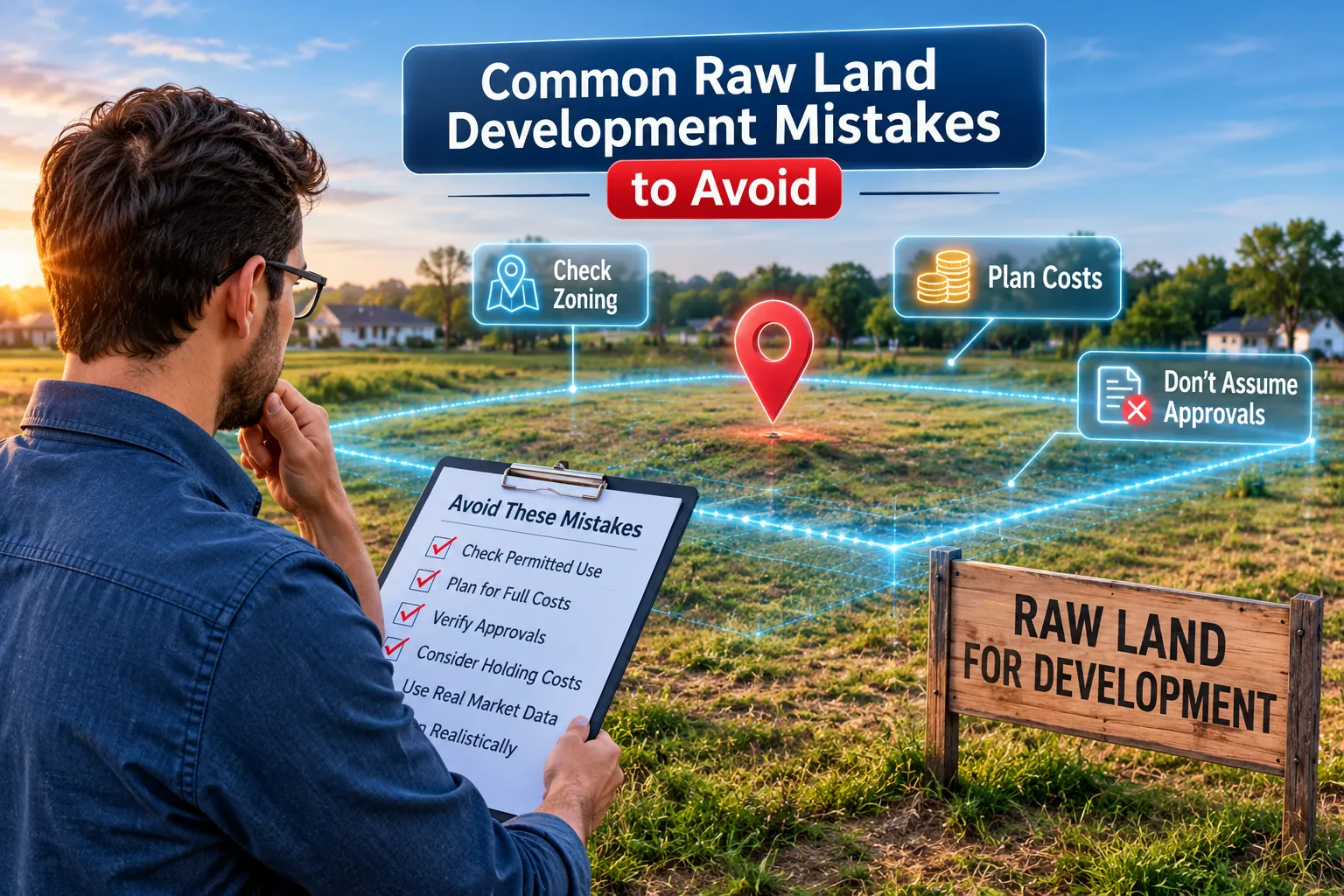
Buying before checking permitted use. A parcel’s appearance or advertised potential does not establish what you can legally build. Ask the appropriate planning authority before committing substantial funds.
Underestimating infrastructure costs. Utility connections, road work, drainage, and site preparation may cost more than expected. Obtain estimates from the responsible providers and qualified contractors.
Relying only on online maps. Public maps are helpful for initial screening, but the actual parcel may need a professional survey, soil evaluation, or environmental assessment.
Assuming approvals will be granted. Rezoning, variances, and subdivision applications can be denied or require changes. Price the opportunity with that uncertainty in mind.
Ignoring holding costs. Taxes, insurance, interest, professional fees, and maintenance can continue while a project waits for approval or a buyer.
Using an optimistic sale price. Base your estimate on relevant comparable sales and a clear buyer profile, not an unsupported prediction about future growth.
Expanding the project without recalculating. If a simple resale turns into a subdivision or construction project, reassess the budget, skills required, contract terms, and financial exposure before continuing.
Frequently Asked Questions About Raw Land Development
How much does it cost to develop raw land?
The cost depends on the property, intended use, utility access, site conditions, approvals, and local labor rates. Angi’s 2026 guide gives a broad land-development estimate of $2,000 to $150,000, but this is not the total cost of buying and completing every kind of development project. Obtain local estimates before setting a budget.
How can small investors make money from raw land?
Common strategies include buying and reselling land, obtaining useful development approvals before selling, subdividing where permitted, leasing land for a suitable use, or building. Each strategy has different capital requirements and risks. Research demand and calculate total costs before choosing one.
Can you sell land after getting development approvals without building?
Yes, where the property and transaction allow it. Investors may sell land after obtaining relevant approvals, but those approvals must support a realistic buyer’s plans. Their value depends on the remaining conditions, approval status, local demand, and the costs already incurred.
What should you check before buying raw land?
Start with zoning, legal access, title and easements, comparable sales, soil and drainage conditions, flood and environmental risks, utilities, and likely development costs. Also confirm whether the intended use needs rezoning, subdivision approval, or additional permits. Contract terms should allow suitable due diligence before you become fully committed.
How long does raw land development take?
There is no single reliable timeline for every parcel. A straightforward resale may require relatively little work, while environmental reviews, rezoning, utility extensions, subdivision, or construction can add substantial time. Ask local authorities and project professionals for realistic estimates based on the actual property and approvals needed.
Choose Your Next Step Before Committing More Capital
Developing raw land as a small investor starts with finding a workable opportunity, not simply a cheap parcel. Identify the likely buyer, verify the intended use, investigate physical and environmental constraints, and calculate the complete project cost before committing significant funds.
Proceed when the evidence supports the plan. Investigate further when essential facts remain uncertain. Renegotiate or walk away when the costs, legal restrictions, or market conditions make the project unsuitable.
Before you purchase, you should be able to explain what you plan to do with the land, how much money the full project may require, and how you expect to exit. If those three answers are still unclear, your next step is further research—not a larger financial commitment.
Disclaimer
This guide provides general educational information, not property-specific legal, engineering, tax, or investment advice. Costs, rules, financing options, and outcomes vary by location and project, and profits are not guaranteed. Consult qualified local professionals for property, engineering, tax, or financing decisions that affect your investment.