
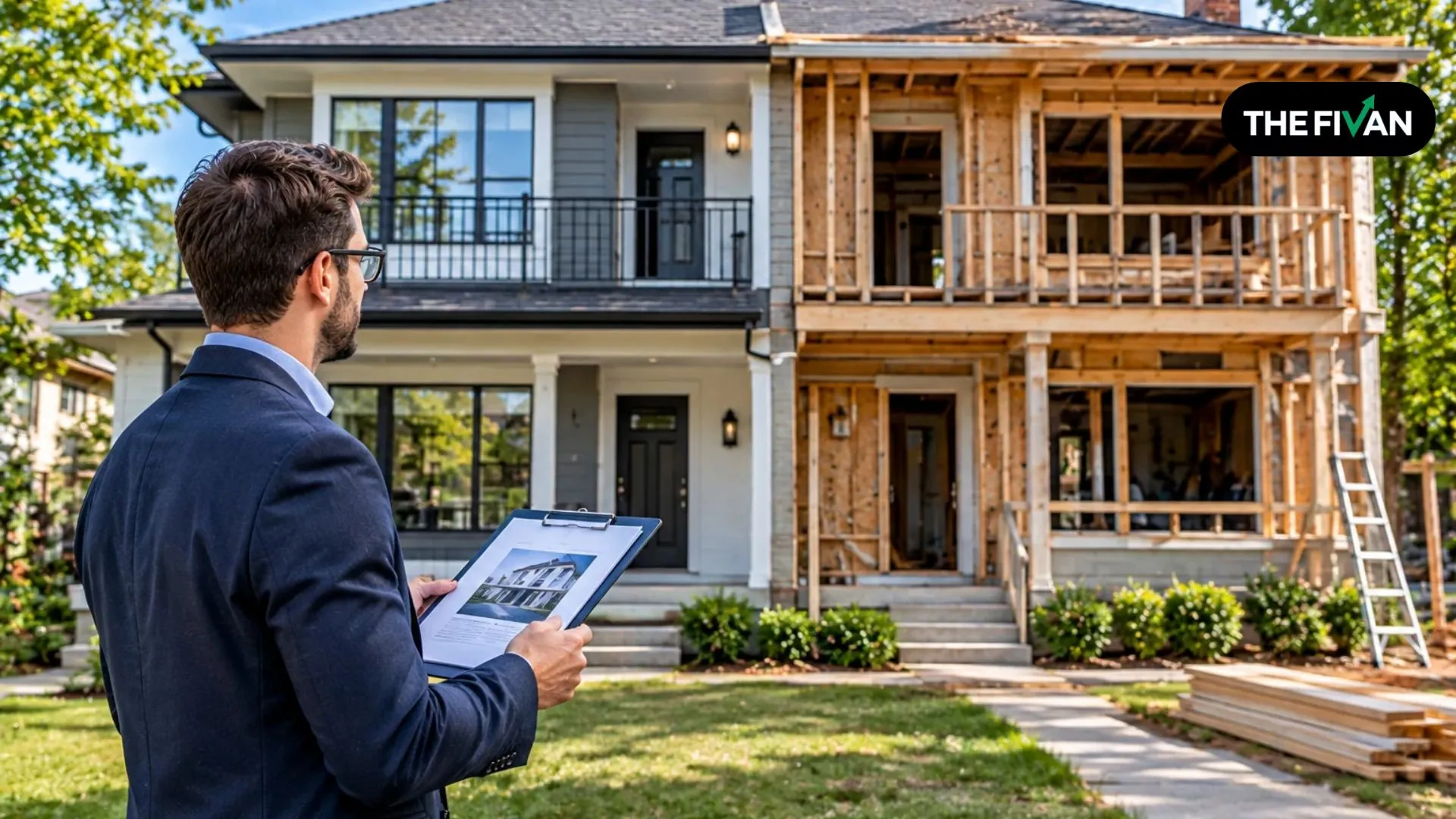
Multi family property flipping strategies for profit start with buying at the right price, not with choosing fancy upgrades. A duplex, triplex, fourplex, or apartment building can offer several ways to create value, but multiple units also mean more systems, tenants, repairs, and costs to manage.
Before making an offer, estimate the property’s realistic value after repairs, list every project cost, and decide who is likely to buy it from you. Then test whether the deal still works if repairs rise, the sale price falls, or the project takes longer than planned. Renovation and rent increases can help, but neither guarantees a profit.
Direct Answer
Multi-family property flipping means buying a building with multiple units, making targeted improvements, and selling it for more than the full cost of acquisition, renovation, financing, holding, and sale. Profit is not guaranteed.
What Makes a Multi-Family Property Worth Flipping?
A good flip is a property you can buy below a well-supported value, improve for a clear reason, and sell to a known type of buyer. The opportunity may be outdated units, neglected common areas, inefficient operations, or repairs that discourage other buyers. Confirm that the expected improvement is worth more than it costs.
First, identify the likely end buyer. An owner-occupant may care about the condition of one unit and the ability to live in the building. A rental investor may focus more on rent, operating costs, tenant stability, and future maintenance. A buyer of a larger apartment property may place greater weight on net operating income and market cap rates.
The number of units also affects the plan. Duplexes, triplexes, and fourplexes may attract residential buyers and small investors, while larger properties are more likely to be evaluated as income-producing real estate. Do not assume one valuation method or loan type fits every building.
Look for evidence of demand before you buy. Review comparable sales, local rents, vacancy, nearby building conditions, and the time similar properties take to sell. A low asking price is not enough if the neighborhood has few buyers or the renovation cost is too high.
How to Screen a Multifamily Deal Before Buying
Estimate the after-repair value
After-repair value (ARV) is the estimated selling price after the planned work is complete. It is an estimate, not a guaranteed sale price. Start with recent sales of similar properties in the same local market. Compare unit count, size, condition, location, parking, and legal status. Compare renovated and unrenovated properties to estimate what buyers pay for the difference.
Asking prices show what sellers hope to receive, not what buyers have paid. A local real estate professional or appraiser can help when suitable comparable sales are hard to find. The Appraisal Institute explains that property valuation can use sales comparison, cost, and income approaches, depending on the property and purpose of the valuation. Read the Appraisal Institute’s overview.
Inspect the building and verify its legal status
Inspect the roof, foundation, plumbing, electrical service, heating and cooling, windows, drainage, and signs of water damage. A shared-system problem can affect several units at once.
Review the current rent roll, leases, deposits, payment history, and unit condition. Confirm the legal unit count with the appropriate local authority or property records. A basement, attic, or converted garage should not be counted as a legal rental unit just because someone has used it that way. Zoning, ceiling height, emergency exits, parking, fire separation, and utility capacity can affect whether a proposed use is allowed.
Get written contractor estimates based on the actual work. Check inclusions, exclusions, permit needs, and timing. Show unresolved issues in your budget instead of treating them as free upside.
How to Calculate Potential Profit and Your Maximum Offer
A property’s sale price is not your profit. Subtract the purchase price, acquisition costs, repairs, permits, financing, holding expenses, selling costs, and a contingency allowance from expected sale proceeds.
Common costs include:
- Acquisition: Purchase price, inspections, appraisal where needed, and buyer closing costs.
- Renovation: Materials, labor, permits, design work, waste removal, and required safety upgrades.
- Holding and financing: Loan interest and fees, property taxes, insurance, utilities, basic maintenance, and other costs while you own the building.
- Selling: Marketing, brokerage if used, seller closing costs, and agreed repairs or concessions.
- Contingency: A reserve for concealed damage, price changes, and work that becomes necessary after demolition.
Do not count loan principal twice: the purchase price is already a project cost. Separately track when deposits, contractor payments, loan payments, and sale proceeds are due. A profitable-looking project can still run short of cash before closing.
Understand the 70% rule
A common investor shortcut is:
Maximum offer ≈ ARV × 70% − estimated repairs
For example, if the estimated ARV is $600,000 and the repair budget is $95,000, the shortcut gives an offer of about $325,000: ($600,000 × 0.70) − $95,000. This is only an initial screen. The 70% figure is a rule of thumb, not a legal requirement or a universal formula for every market and building.
The shortcut may not cover a long holding period, expensive financing, selling costs, major system work, or your target profit. Calculate the full project and adjust assumptions to the local market rather than forcing the property to fit the rule.
A hypothetical profit calculation
Suppose you expect to sell a renovated property for $600,000. The following numbers are illustrative planning assumptions, not current market averages or a price quote.
| Item | Example amount |
| Purchase price | $325,000 |
| Acquisition closing and inspection costs | $8,000 |
| Repairs and renovation | $95,000 |
| Contingency allowance, assumed fully used | $12,000 |
| Financing and holding costs | $35,000 |
| Selling costs allowance | $36,000 |
| Total project cost | $511,000 |
| Expected sale proceeds | $600,000 |
| Estimated profit before income taxes and excluded costs | $89,000 |
The $36,000 selling allowance is an illustrative assumption, not a standard rate. Actual sale costs vary. Income taxes and the opportunity cost of tied-up cash are excluded, so add relevant costs before relying on the result.
Now stress-test the plan. Imagine the sale price falls to $570,000, repairs run $25,000 above the planned budget and contingency, and a delay adds another $8,000 in holding costs. If selling costs fall to an illustrative 6% of the lower sale price ($34,200), total cost rises to about $542,200 and the estimated profit falls to $27,800 before income taxes and other excluded costs. A further problem could erase the remaining margin. This is why a deal should be tested under less favorable conditions, not only the best-case forecast.
Renovation Strategies That May Increase Property Value
Choose work based on the building’s condition and the end buyer’s priorities. Start with safety, water intrusion, structural concerns, and essential systems. New finishes will not make up for a leaking roof or unsafe wiring, and hidden problems can disrupt the schedule after cosmetic work has begun.
Then compare targeted improvements such as paint, flooring, lighting, kitchen surfaces, bathroom fixtures, storage, and common-area cleanup. Luxury upgrades may not pay back in a market where buyers prefer durable materials. Compare contractor quotes with local renovated sales or achievable rents.
For a rental investor, lower maintenance or realistic rent may matter most. An owner-occupant may value layout, privacy, light, parking, and the unit they will live in. A rent increase is not the same as a resale-price increase.
Converting a basement, dividing a large unit, adding an accessory dwelling unit, or changing the number of units may look attractive on paper. Before budgeting for it, verify zoning, permits, fire safety, exits, parking, utility capacity, and any required upgrades with the local authority and qualified professionals. If the project is not legally permitted, its expected extra value may not exist.
Control the scope with a written work list, itemized bids, a payment schedule, and regular budget checks. Record changes in writing and assess their cost and schedule impact before approving them.
How NOI and Cap Rates Affect Multifamily Property Value
For a larger income-producing property, buyers may judge value partly by how much operating income the building can reliably produce. Net operating income (NOI) is the property’s income after vacancy and operating expenses, before debt payments and income taxes. Expense definitions can vary between reports, so make sure you compare like with like.
Income may include collected rent and other property income. Expenses can include repairs, management, insurance, property taxes, owner-paid utilities, and common-area costs. Verify rent records and bills, and allow for vacancy instead of assuming every unit stays occupied and every tenant pays on time.
The capitalization rate, or cap rate, relates annual NOI to property value. A simplified estimate is:
Estimated value ≈ annual stabilized NOI ÷ market-supported cap rate
For example, suppose a building could support annual NOI of $90,000 after a realistic stabilization period. At an assumed 6% cap rate, the simplified indicated value is $1.5 million ($90,000 ÷ 0.06). The 6% figure is hypothetical, not a current market quote. A suitable cap rate depends on the location, asset type, condition, income risk, and current market evidence.
The Office of the Comptroller of the Currency describes the importance of assessing income, expenses, debt-service capacity, and value assumptions when underwriting commercial real estate. Its guidance is useful for understanding why buyers and lenders test income and expenses rather than relying on a seller’s best-case forecast. Read the OCC’s Commercial Real Estate Lending handbook.
Published operator case studies can illustrate how value-add plans work, but they are not benchmarks for a first-time flip. Gray Capital’s company-published Oakdale Square example involved a 200-unit property, making it very different from a duplex. Breneman Capital reported buying one property for $1,997,500 and later selling it for $2,535,000. That $537,500 difference is a gross price difference, not net profit; it does not by itself account for renovation, financing, holding, or transaction costs. See the Gray Capital case study and Breneman Capital case study.
Income-based valuation does not replace every other method. A duplex may be compared with similar sales, while a larger apartment building may need deeper income analysis. Match the method to the likely buyer and market.
Should You Rent a Multifamily Property Before Selling?
Renting units while you prepare to sell can offset some holding costs, but it also changes the project. You may need time to advertise vacancies, screen tenants, manage repairs, collect rent, and meet landlord obligations. Existing leases can affect when and how the property may be sold or renovated.
Test temporary rental when units are safe and legally rentable, demand is supported, and net rent may cover meaningful costs after vacancy, utilities, maintenance, and management. Model only the holding period you expect.
A direct flip may be simpler if major work requires vacant units or rental income would be small. Phased renovations may preserve income but can slow work. Follow leases and local tenant rules; renovation plans do not automatically let you remove tenants or change terms.
Choose the route that fits the cash-flow model and exit plan. Rental income is a possible offset, not a reason to buy a property whose resale economics do not work.
Financing, Tenants, and Local Compliance
Match financing to the property and exit plan
Loan eligibility depends on the property, intended use, occupancy, borrower qualifications, lender rules, and program terms. Some 1–4 unit properties may fit residential mortgages, while larger buildings may require commercial financing. These are broad patterns, not guarantees. FHA loans have occupancy and other requirements and should not be assumed available for a pure investment flip. Check current terms with the lender and official guidance. HUD provides an overview of its loan programs.
HUD
Compare interest, fees, required cash, repair-draw procedures, repayment deadlines, extensions, prepayment conditions, and what happens if the sale is delayed. Bridge and hard-money loans may suit short projects, but costly extensions or tight deadlines can pressure the exit plan. Do not rely on unconfirmed refinancing.
For residential mortgages, the Consumer Financial Protection Bureau explains how to compare Loan Estimates. Commercial and short-term loans may use different documents, so review the actual term sheet and agreement. See the CFPB’s loan comparison guidance.
Plan around tenants, permits, and safety rules
Review leases and deposits before closing. Tenant protections, notice periods, relocation duties, rent rules, and renovation practices differ by jurisdiction. Ask a local real estate attorney when leases or planned work could affect your rights or timeline.
Confirm permits and legal unit count with the city or county. Structural, electrical, plumbing, fire-separation, exit, or occupancy changes may require permits or inspections. A long rental history does not prove previous work was approved.
For housing built before 1978, certain renovation or repair work that disturbs lead-based paint can trigger federal Renovation, Repair and Painting (RRP) requirements. Whether a rule applies depends on the property and work. Review the EPA’s guidance for house flippers before work begins.
Tax treatment depends on how the property is held and used. Property held mainly for sale as part of a business may be treated differently from rental or investment property, and depreciation may affect a later sale. Do not assume every flip qualifies for capital-gains treatment. Review the relevant IRS guidance on property sales and residential rental property with a qualified tax professional when needed.
Common Multifamily Flipping Mistakes and How to Stress-Test a Deal
Common mistakes include:
- Optimistic ARV: Use comparable sales, not the highest asking price.
- Missed repairs: Inspect shared systems and get estimates before finalizing the offer.
- Unverified units: Confirm legal status before assigning value to a conversion.
- Gross rent mistaken for profit: Subtract vacancy, operating expenses, financing, and project costs.
- Forgotten holding time: Delays add interest, insurance, taxes, and utilities.
- Over-improvement: Match work to local buyer expectations.
- No backup exit: Plan for a slower sale or lower price.
Before committing, build at least three scenarios: expected, downside, and severe downside. Change the sale price, repair cost, and time to sell. Check the cash you must contribute and the profit left in each case. If a small cost increase or delay wipes out the margin, consider offering less, getting better evidence, changing the scope, or walking away.
For larger properties, also test lower rent collections, higher expenses, and the cap rate a future buyer may require. With NOI unchanged, a higher cap rate means a lower indicated value. The deal should not depend on rents rising and cap rates falling at the same time.
Frequently Asked Questions
What is the 70% rule in multifamily flipping?
The 70% rule is a quick screening shortcut: multiply the estimated after-repair value by 70%, then subtract estimated repairs. It does not fully account for every cost or guarantee a profit. Use a complete project budget before making an offer.
What is the 1% rule for multifamily properties?
The 1% rule is an informal screen that compares a property’s monthly gross rent with 1% of its purchase price. For example, a $500,000 property would need $5,000 in monthly gross rent to meet that screen. It does not show net cash flow and ignores expenses, financing, vacancy, capital repairs, and local market differences. It should not replace a full analysis.
How do you calculate profit on a multifamily flip?
Subtract all project costs from expected sale proceeds. Include the purchase price, acquisition costs, repairs, financing, holding expenses, permits, contingency, and selling costs. State any excluded taxes or other costs clearly, and test lower sale prices and delays before relying on the estimate.
Should you rent a multifamily property before selling it?
Only if the units can be rented lawfully and the expected net income is worth the extra management, vacancy, repair, and lease risks. Compare the likely rent over your actual holding period with the costs of keeping the property and the effect on your sale plan.
What permits should you check before renovating a multifamily property?
Requirements depend on the city, county, state, building, and planned work. Verify legal unit count, zoning, building permits, occupancy rules, fire and egress requirements, and any applicable lead-safe renovation rules before starting work. Local authorities and qualified professionals can confirm which requirements apply.
Choose Your Next Step Before Making an Offer
Choose one potential property and build a conservative deal sheet before you commit. Confirm its legal status, estimate resale value from comparable evidence, obtain repair quotes, include every major cost, and test what happens if the sale is delayed or the price is lower than expected. A deal is worth pursuing only when the numbers and the practical plan still make sense under realistic conditions.
Disclaimer
This article provides general educational information, not property-specific financial, legal, or tax advice. Costs, financing, rules, and market conditions vary by property and jurisdiction, and returns are not guaranteed. Consult a qualified local professional for significant legal, tax, accounting, or financing decisions.