
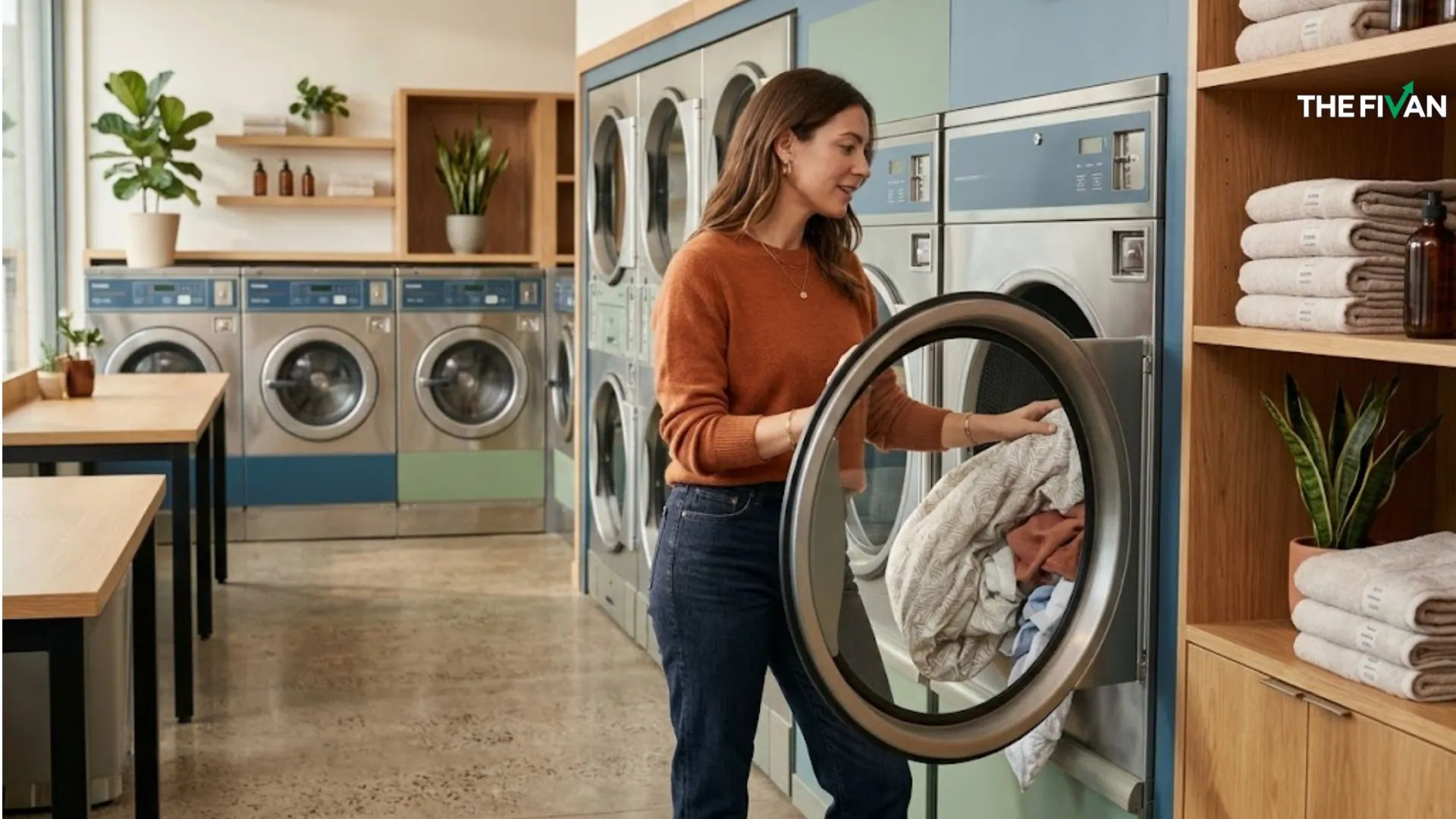
A typical laundromat dryer takes about 30–45 minutes to dry an ordinary load of clothes. However, some loads may dry in 20 minutes, while thick towels, jeans, and bulky comforters can take an hour or longer. The exact time depends on the amount of laundry, fabric type, moisture level, and dryer settings.
Commercial laundromat dryers can handle larger loads than many home dryers, but that does not mean every load will dry quickly. If you’re paying for each cycle or extra minutes, knowing what affects drying time can help you plan your visit and avoid unnecessary costs.
This guide explains how long different types of laundry usually take, how to dry clothes efficiently, and how to tell when you need more drying time.
Direct Answer
A laundromat dryer usually takes about 30–45 minutes for an ordinary load. Lightweight clothes may dry sooner, while towels and comforters often need more time depending on moisture, load size, and machine settings.
Experience
Practical Finance Tip: Check your clothes before paying for more dryer time; a few damp towels may not require another cycle for the entire load. Follow garment care labels and compare the machine’s posted price and time increments.
How Long Does a Laundromat Dryer Usually Take?
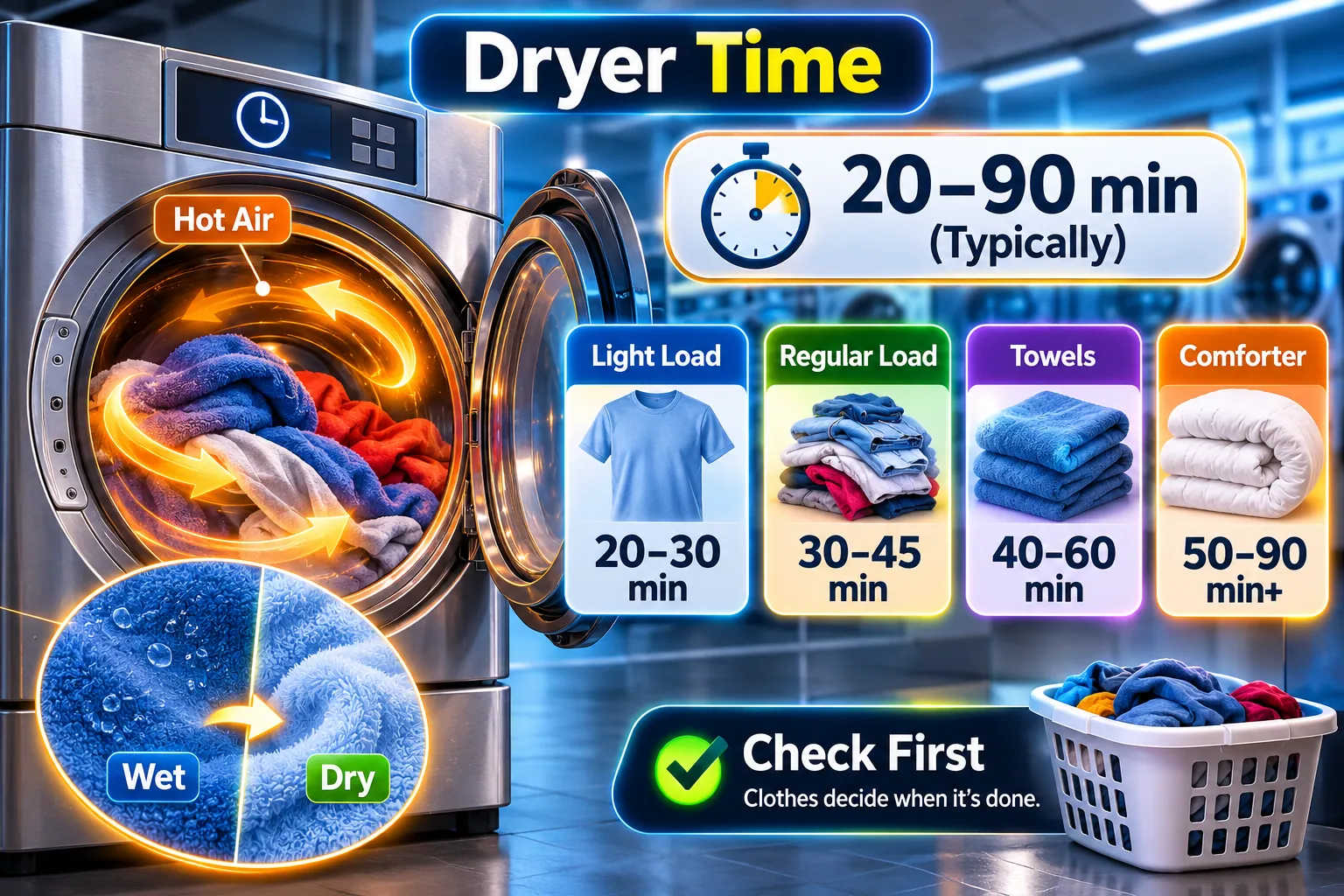 For many everyday loads, 30–45 minutes is a reasonable starting estimate. The time can vary depending on how wet the clothes are when they enter the dryer, how much space they have to tumble, and which heat setting you choose.
Maytag’s dryer-time guide gives a broader estimate of about 20–60 minutes for laundromat drying. This range is a useful reminder that there is no single drying time for every machine and load.
Here are some general examples:
- A small load of lightweight shirts and underwear may dry in around 20–30 minutes.
- An ordinary load of mixed clothing may need about 30–45 minutes.
- Thick towels and heavy cotton clothing may require 40–60 minutes.
- Bulky items, such as comforters, may need 50–90 minutes or longer, depending on their size and construction.
These are planning estimates, not guaranteed cycle times or results from a standardized test. Your laundromat’s equipment and the condition of your clothes may produce different results.
The important distinction is that a dryer cycle has a set running time, but the clothes determine when drying is complete. A machine can finish a 45-minute cycle while the center of a thick blanket is still damp.
If you’re unsure how much time your load needs, start with the machine’s instructions and choose a reasonable cycle. Check the clothes before purchasing more time.
Laundromat Drying Times by Type of Clothing
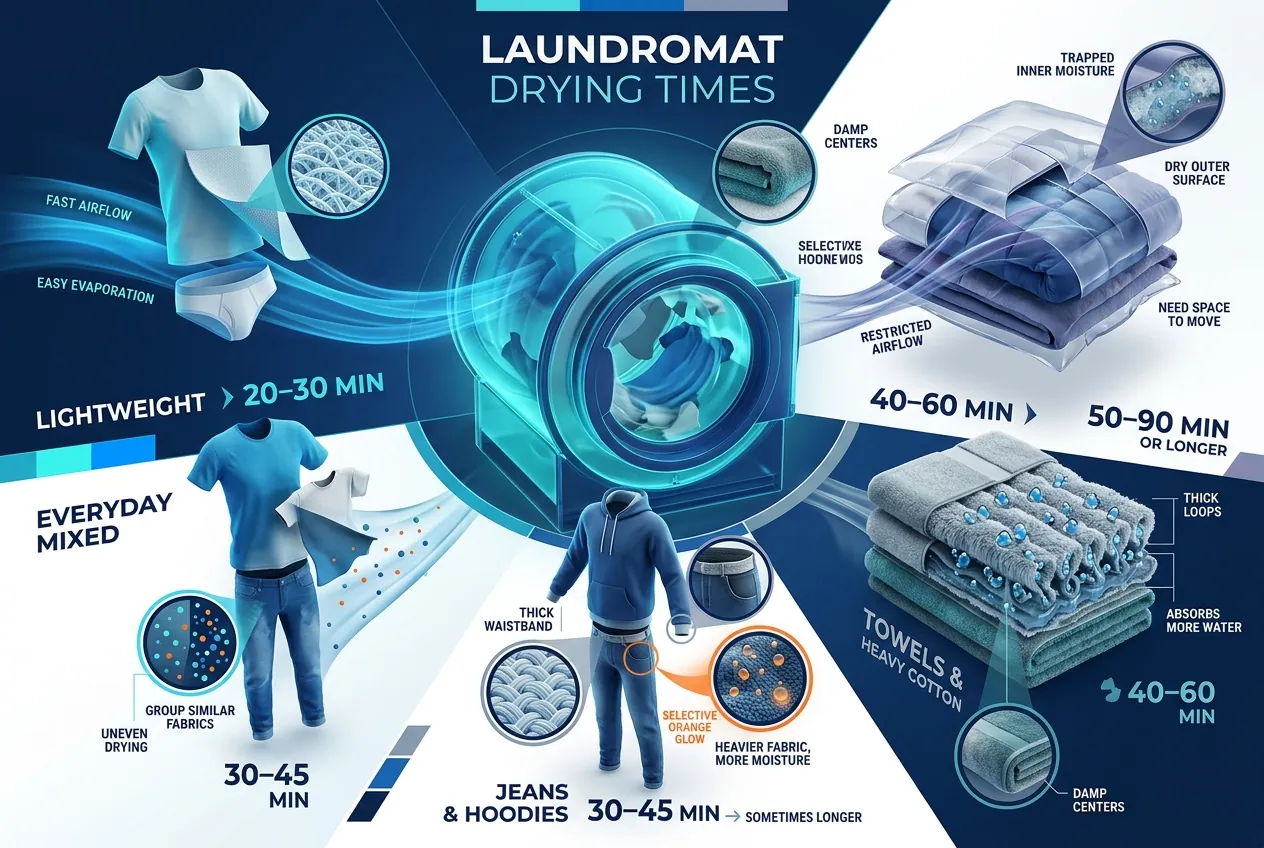
Different fabrics release moisture at different speeds. A thin T-shirt may dry well before a pair of jeans, even when both enter the dryer together.
Use the following table to estimate how much time to allow.
| Type of laundry | Approximate drying time |
| Lightweight shirts, underwear, and thin fabrics | 20–30 minutes |
| Everyday mixed clothing | 30–45 minutes |
| Jeans, hoodies, and sweatshirts | 30–45 minutes, sometimes longer |
| Towels and heavy cotton clothing | 40–60 minutes |
| Comforters, blankets, and bulky bedding | 50–90 minutes or longer |
The ranges overlap because fabric thickness, load size, dryer capacity, and heat settings all matter. A small load of jeans may finish sooner than a crowded load of thin shirts.
Lightweight clothes
Lightweight items usually take less time because they hold less water and allow warm air to pass around them easily.
T-shirts, underwear, thin sleepwear, and similar clothing may dry in 20–30 minutes under suitable conditions. A small load that has been spun well in the washer may finish sooner than a larger or wetter one.
Check waistbands, pockets, and folded sections before stopping the dryer. These areas can remain damp after the outer fabric feels dry.
Jeans, hoodies, and everyday clothing
Jeans, thick sweatshirts, and hoodies usually need more attention because their heavier fabric holds more moisture.
An ordinary load may take around 30–45 minutes, but thick waistbands, pockets, cuffs, and layered fabric can stay damp longer. Mixing these items with thin shirts can also create uneven drying: the lighter clothes may become dry before the heavier ones.
When practical, group clothes with similar drying needs. This makes it easier to check the load and avoid continuing to dry everything just because a few thick items need more time.
Towels and heavy cotton
Towels often take longer than lightweight clothing because their thick loops absorb and hold water.
Maytag Commercial Laundry’s commercial dryer FAQ estimates about 40–50 minutes for six bath towels weighing 5 pounds, including a brief cooldown period. That example relates to a specified load and equipment guidance; it is not a universal time for all towels.
If your towels remain damp after the first cycle, check that the drum is not overcrowded and that the towels have room to move freely. A packed dryer can make moisture removal less efficient.
Comforters and bulky bedding
Comforters, duvets, and thick blankets present a different challenge. Their outer surfaces may feel dry while moisture remains trapped inside.
A bulky item may need 50–90 minutes or longer, but the time depends heavily on its size, filling, fabric, and care instructions. Some items may not be suitable for ordinary tumble drying at all.
Choose a machine with enough drum space for the item to move freely. Follow the care label, reposition the comforter when appropriate, and check the middle carefully before taking it home.
For more guidance on handling bulky bedding, see Whirlpool’s comforter care guide.
What Makes a Laundromat Dryer Take Longer?
When clothes need more time than expected, the cause is not always a weak dryer. Several conditions can slow the process.
1. The load is too large
An overloaded dryer leaves less room for clothes to tumble. Items can form a tight bundle, preventing warm air from reaching every surface.
This can cause uneven drying. Some pieces may feel hot and dry while others remain damp.
Use a drum that allows the clothes to move freely rather than filling it to the limit. If one washer load seems too crowded in the dryer, splitting it into two loads may work better.
However, using two cycles can also cost more. Compare the machine’s capacity and posted prices before deciding whether to split the laundry.
2. The clothes enter the dryer too wet
The dryer has to remove the water that remains in your clothes after washing. If the washer’s final spin does not remove enough water, drying will take longer.
Check whether the laundry feels unusually heavy or wet after the wash. If your laundromat washer has a clearly available additional spin option, using it may reduce the water the dryer must remove. Follow the machine’s instructions and the garment care labels.
Do not assume a dryer is faulty simply because wet clothes need extra time. The amount of moisture entering the machine makes a meaningful difference.
3. Thick and thin fabrics are mixed together
A load containing thin shirts, jeans, and heavy towels may not dry evenly.
The lighter pieces can become dry while the towels and jeans still contain moisture. Continuing the cycle for the entire load may expose the lighter items to more heat than necessary.
When practical, separate heavy items from lightweight clothing. This allows you to check each group according to its needs.
4. The dryer has an airflow or heating problem
A dryer may take unusually long if it is not heating properly or air cannot move through it as intended.
Warning signs include little or no warmth, unusual operating behavior, or repeated cycles that leave the clothes very damp despite a suitable load size. A machine that appears faulty should be reported to laundromat staff.
Do not open panels or attempt electrical repairs yourself. You are using shared equipment, and internal repairs can create safety risks.
For additional troubleshooting guidance, see Whirlpool’s dryer troubleshooting information.
How to Dry Clothes Faster Without Wasting Money
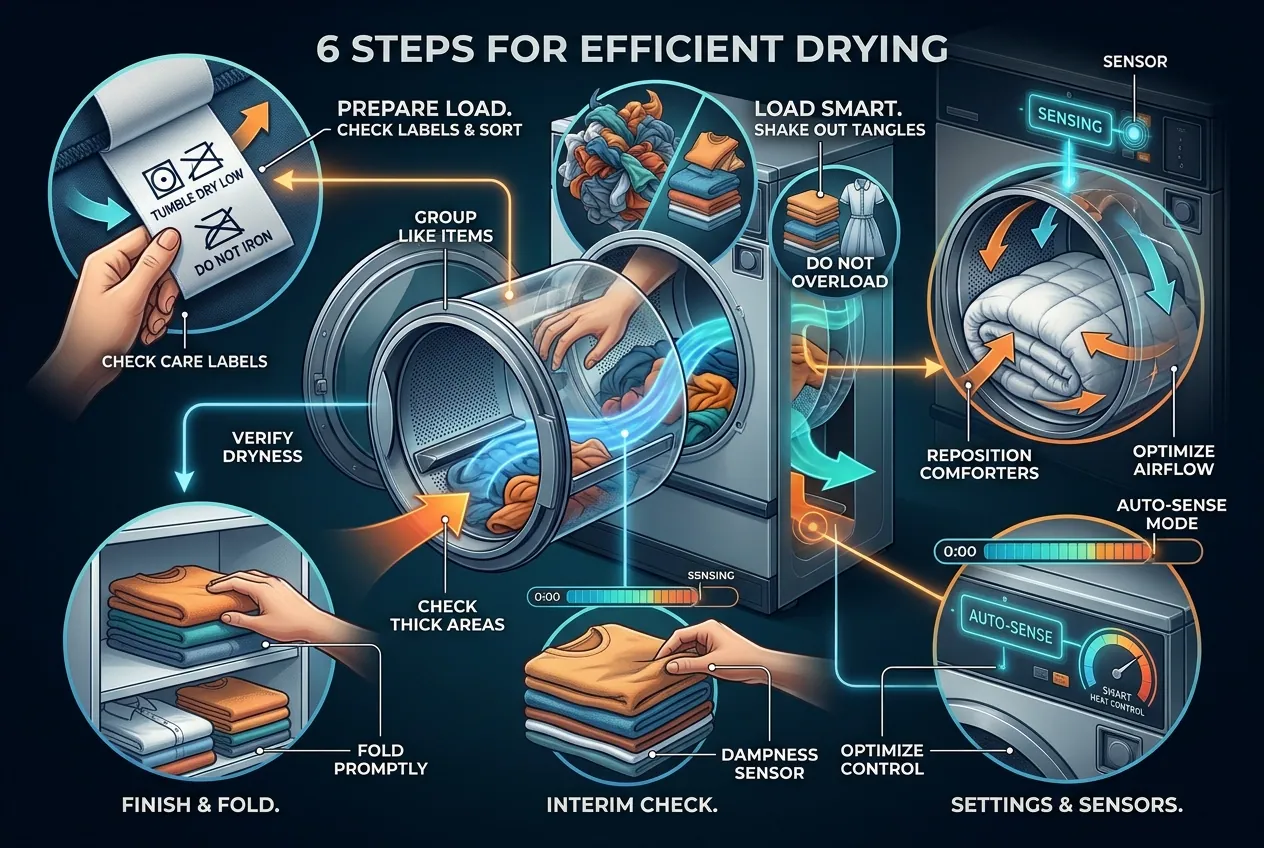
The goal is not to make every load finish in the shortest possible time. It is to get the clothes dry without paying for unnecessary minutes or exposing the fabric to unsuitable heat.
These practical steps can help.
1. Check care labels before choosing a heat setting
Clothing labels explain whether an item can be tumble-dried and may indicate a suitable heat level.
Some fabrics need low heat or special handling to reduce the risk of shrinking or damage. The hottest setting is not automatically the best choice.
Follow the care label even when a higher setting appears faster. Saving a few minutes is not worthwhile if it damages clothing you need to replace.
The American Cleaning Institute’s laundry basics guide provides additional guidance on reading fabric-care labels and choosing suitable laundry methods.
2. Match the load to the dryer size
Choose a dryer that gives your clothes enough room to tumble. This matters especially for blankets, towels, and bulky clothing.
A larger commercial dryer may cost more per cycle, but it can be a more suitable option for a large load. That does not mean you should automatically choose the biggest machine.
Consider the load’s size, the posted cost, and whether you can dry the items together without crowding them. The least expensive cycle is not always the cheapest way to finish the whole load.
3. Shake out tangled clothing
Before placing clothes in the dryer, separate tangled items and shake out shirts, sleeves, and trousers.
Sheets and blankets can also wrap around smaller items during drying. Untangling them helps the load move more freely and makes it easier to assess whether everything is dry.
This step is simple and costs nothing.
4. Separate heavy items when practical
If thick towels and jeans are mixed with lightweight clothes, the load may finish unevenly.
Separating heavy items can make it easier to stop drying one group once it is dry. However, splitting a load into several paid cycles is not automatically cheaper.
Use the approach that fits your load, the machine’s capacity, and the actual cost of each cycle.
5. Check the clothes before buying more time
This is one of the most useful ways to avoid paying for drying time you may not need.
When the cycle ends, check several items rather than judging the load by one shirt. Feel the seams, waistbands, pockets, and the thicker areas of towels or jeans.
If everything is dry, you do not need another cycle. If only a few thick items remain damp, consider separating those items and drying them for additional time, if the machine and garment care instructions allow it.
The exact choice depends on the machine’s pricing and the condition of the load. Never assume that an extra cycle is necessary merely because the timer has reached zero.
6. Reposition bulky bedding during drying
Large comforters and blankets may fold over themselves, leaving moisture trapped in the center.
If the care instructions allow tumble drying, pause to redistribute or reposition the item when appropriate. Whirlpool’s comforter guidance recommends periodic checks and repositioning for suitable bulky bedding.
Check the center and thickest areas again before removing the item. If the comforter remains damp, another short drying period may be needed.
Avoid using excessive heat to force bulky bedding to dry faster. The suitable setting depends on the item’s care instructions and construction.
How to Tell Whether Your Clothes Are Fully Dry
The timer is a guide, not proof that your laundry is finished. A quick check can help you decide whether to stop, add time, or address a problem.
Use this simple process:
- Check several items. Do not judge the entire load by one lightweight shirt.
- Feel the thick areas. Check waistbands, pockets, cuffs, seams, and folded fabric.
- Inspect towels carefully. Their thicker sections can hold moisture even when the surface feels dry.
- Check bulky bedding from the inside. Feel the center of the comforter or blanket, not only the outside.
- Decide whether more time is needed. If only a few items remain damp, consider whether they can be dried separately.
Warm clothes can sometimes feel different from cool, dry clothes, so focus on remaining moisture rather than temperature alone. Follow the care label and avoid continuing to heat items unnecessarily.
If the load is still wet after a reasonable cycle, check the load size and the amount of water the washer left behind. If the dryer shows signs of a heating or airflow problem, contact the attendant rather than continuing to pay for repeated cycles.
Are Laundromat Dryers Only for 7 Minutes?
No. Seven minutes is not a universal laundromat dryer cycle. The duration depends on the machine and its payment system.
Some commercial dryers use a preset cycle. Others let customers buy additional time in set increments. A number shown on a display may refer to the remaining time or the additional minutes purchased, depending on the machine.
For example, GE Appliances’ commercial dryer guidance explains that its coin-slide models are typically factory-set to run for 45 minutes. That is an example of a particular type of equipment, not a rule for every laundromat dryer.
Before paying, check three things:
- The total cycle time or the time added by a payment.
- The price of the selected cycle or additional minutes.
- The machine’s instructions for starting, pausing, and ending the cycle.
If the display is unclear, ask the laundromat attendant. This is better than guessing how many minutes your payment will purchase.
How Long Does a Washer and Dryer Take at a Laundromat?
A typical laundromat visit may take around one to one and a half hours, but the total depends on more than the dryer.
You may need time to wait for an available washer, load the machine, finish the wash, transfer the clothes, dry them, check for moisture, and fold everything.
Drying often takes around 30–45 minutes for an ordinary load, while the washing cycle and the other steps add time. A large load, several washing machines, an extra drying cycle, or bulky bedding can extend the visit.
The machine’s running time is also different from the time you spend at the laundromat. If you plan to leave and return, check the machine’s instructions and the laundromat’s policies rather than assuming it will be safe or convenient to leave laundry unattended.
For a smoother visit, estimate time for the entire process instead of planning around the dryer alone. If you have a work shift, appointment, or other commitment afterward, allow extra time for a machine delay or a load that needs another check.
Frequently Asked Questions
Can a laundromat dryer dry clothes in 20 minutes?
Yes, some small loads of lightweight clothing may dry in about 20 minutes under suitable conditions. Items that have been spun well in the washer may need less time than heavy, wet, or crowded loads. Twenty minutes is possible, but it is not a reliable estimate for every load.
Do laundromat dryers dry clothes faster than home dryers?
They can. Commercial machines may offer larger drums, strong airflow, and high drying capacity. However, actual performance varies by machine, load size, fabric type, and settings. A well-maintained home dryer with a small load may dry faster than an overloaded or poorly working commercial machine.
How long does a laundromat dryer take to dry a comforter?
A comforter may need 50–90 minutes or longer, depending on its size, filling, moisture level, and the dryer capacity. This is only a planning estimate. Check the care label, choose a suitable machine, reposition the comforter when appropriate, and make sure its center is dry before taking it home.
Should you pay for another dryer cycle if clothes still feel damp?
First, check which items are damp and whether the dryer has enough room and is working properly. If only a few thick items remain wet, separating them may be more sensible than drying the whole load again. Compare the available time and price, follow care instructions, and contact staff if the machine appears faulty.
A Simple Way to Plan Your Next Laundromat Visit
Allow about 30–45 minutes for an ordinary load, then adjust your expectations for thick fabrics, bulky bedding, and unusually wet laundry. Check the machine’s actual timing and price, follow garment care instructions, and inspect your clothes before paying for more time.
The most useful rule is simple: plan around the type of laundry you have, but let the actual dryness of the clothes determine when you stop. That approach helps you manage your time, avoid unnecessary payments, and take home laundry that is ready to use.
Disclaimer
This article provides general educational information, not personalized financial, investment, legal, or tax advice. Costs, product terms, local rules, and individual circumstances vary, and results are not guaranteed; check the laundromat’s posted pricing, machine instructions, and garment care labels before making decisions.