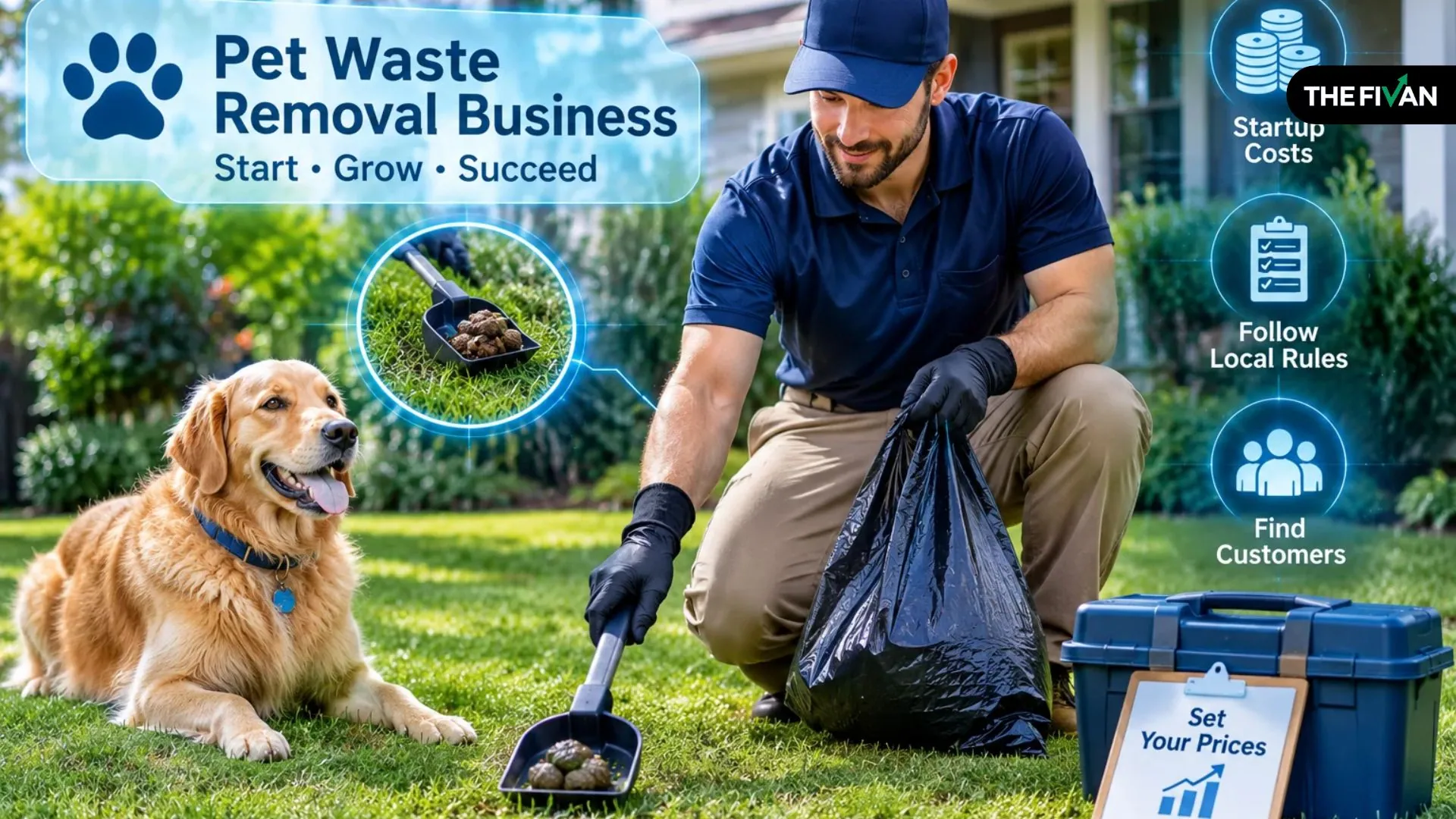
Starting a pet waste removal business can be a practical way to enter the service industry without renting a shop or buying expensive equipment. You collect dog waste from customers’ yards, dispose of it properly, and charge for each visit or a recurring service plan.
To start, choose a small service area, buy basic cleanup tools, check your local business and waste-disposal requirements, arrange suitable insurance, and find your first paying customers. You can begin with residential yards and add commercial properties later. The key is to keep costs under control and make sure your prices cover the time, travel, and expenses involved.
Direct answer
A pet waste removal business cleans dog waste from residential yards or shared properties for a fee. To start, buy basic tools, check local rules, arrange suitable insurance, set prices, and secure customers.
1. What Do You Need to Start a Pet Waste Removal Business?
A pet waste removal business, sometimes called a dog poop removal business, provides a simple service that many dog owners would rather pay someone else to handle.
Most beginners can start with five essentials:
- A scooper or rake and collection pan.
- Heavy-duty bags, gloves, and cleaning supplies.
- A suitable vehicle and secure container for transporting waste.
- Appropriate insurance and any required registrations or permits.
- A simple way to schedule visits, communicate with customers, and collect payments.
You also need a clear plan for collecting and disposing of the waste. Check local rules before deciding whether to leave bagged waste in a customer’s outdoor trash bin or transport it elsewhere.
The most practical starting model is recurring residential service. Customers pay for weekly or biweekly yard cleanups, giving you a more predictable schedule than one-time jobs alone.
You do not need to hire employees or buy a dedicated work vehicle on day one. Start with the tools and resources you already have, provided they are suitable for the work.
2. How Much Does It Cost to Start a Pet Waste Removal Business?
Your startup cost depends on your location, business setup, insurance, transportation, and the services you plan to offer. The cost of basic equipment is only one part of the budget.
Basic equipment costs
The industry guide The Scoop System publishes the following starter-kit estimates:
| Item | Published estimated cost |
| Scooper or rake-and-pan set | 20–50 |
| Heavy-duty bags or covered collection bucket | 15–40 |
| Disposable gloves | 10–15 |
| Hand sanitizer and tool disinfectant | 10–20 |
| Basic equipment subtotal | 55–125 |
These are published estimates from an industry guide, not verified retail quotes for every market. Prices may change, and the subtotal does not include registration, insurance, transportation, or marketing.
Optional boot covers and deodorizing spray can add another estimated 30–60. Buy deodorizing products only if you plan to offer that service, and check their suitability for the surfaces and pets involved.
Other startup expenses
Plan separately for the following:
| Expense | What to check |
| Business registration | State and local filing requirements and fees, if applicable |
| Insurance | Quotes for appropriate general liability coverage and any relevant vehicle coverage |
| Transportation | Fuel, vehicle maintenance, and secure waste storage |
| Marketing | Flyers, business cards, a website, or limited local advertising |
| Payment processing | Transaction fees and any monthly charges |
| Scheduling | A spreadsheet or calendar initially; paid software when justified |
| Waste disposal | Bags, collection containers, and any applicable disposal charges |
The U.S. Small Business Administration’s startup guidance notes that registration costs vary by location and structure. It says many small-business registration costs are below $300, but this is not a universal fee or a complete launch budget.
For a lean launch, use the following approach: price the essential equipment, check the registration requirements in your area, obtain insurance quotes, and calculate your expected first month’s operating costs. Add those figures together before deciding how much money you need.
Do not assume that a published equipment estimate represents the amount required to open a fully compliant and insured business.
Which expenses can you delay?
You may be able to delay a dedicated vehicle, a paid website, expensive scheduling software, and employee wages.
An existing vehicle may work if you can keep it clean and transport waste securely. A basic business page, local referrals, and a simple scheduling system may also be enough to test demand.
However, do not delay required permits, appropriate coverage, or necessary safety and disposal arrangements.
3. How to Check Demand in Your Local Market

Before buying more equipment or paying for advertising, find out whether people in your area will pay for the service.
Begin with a small, clearly defined service area. Choose nearby neighborhoods where traveling between customers should be manageable.
Research existing businesses
Search online for local pet waste removal companies. Review their published prices, service frequency, customer reviews, and service areas.
Pay attention to what they include. One company might remove waste and leave it in the customer’s bin, while another might haul it away and offer deodorizing treatments.
These differences matter when you compare prices.
Also look for gaps in the current market. Existing companies may not serve certain neighborhoods, offer convenient visit times, or provide commercial pet waste station maintenance.
Talk to potential customers
Speak with dog owners in your proposed area. Ask whether they handle yard cleanup themselves, how often they need it, and what would make them consider a paid service.
You can also share a simple, clearly priced offer in appropriate neighborhood groups, following their rules.
Track how many people ask for details, request quotes, and actually book a service. Interest is useful, but paid bookings offer stronger evidence that people will spend money.
Practical Business Tip: Start with a small group of customers before expanding your service area. Their actual booking patterns and cleanup times will help you decide whether your pricing and route are workable.
4. Register Your Business and Check Local Requirements
Your legal setup depends on where you operate and how you structure the business. There is no single registration process or pet waste removal license that applies identically across the United States.
Choose a business structure and name
A sole proprietorship is a simple structure for an individual operating a business. If you conduct business without forming another legal entity, you may be treated as a sole proprietor. However, you generally remain personally responsible for the business’s debts and obligations.
A limited liability company (LLC) is a separate legal entity that can provide liability protection, subject to applicable law and circumstances. It also involves formation requirements and may have ongoing filing fees or other obligations.
A DBA, or “doing business as” name, allows a business to operate under a name different from its legal name where permitted. A DBA is not a separate business structure and does not, by itself, provide liability protection.
Compare these choices before registering. The SBA’s business structure and registration guidance explains the main options and why requirements vary.
Check licenses, taxes, and insurance
Contact the relevant state, county, and city offices to determine which registrations, permits, or local business licenses apply. Ask specifically whether your intended waste collection and transportation activities have additional requirements.
You may also need tax registrations based on your business structure and activities.
An Employer Identification Number (EIN) is a federal tax ID for businesses. Eligible applicants can obtain one directly from the IRS at no charge. Be cautious of third-party websites that charge simply to submit the application.
Consider general liability insurance for risks such as accidental property damage or a third-party injury. Ask an insurance agent about your actual work, where you operate, and whether your vehicle and equipment are covered appropriately. A business structure does not replace insurance.
Open a separate business bank account when eligible and appropriate, and keep records of income and expenses. Good records make it easier to understand profitability and prepare tax information.
Establish a safe waste-disposal process
Before accepting customers, confirm exactly how you will handle collected waste.
Some customers may prefer it placed in their outdoor trash receptacle. Others may expect you to haul it away. Your choice affects equipment, time, cost, and pricing.
Do not assume that every municipality permits the same disposal methods. Check local waste rules and any applicable requirements for transporting or storing waste.
The EPA’s pet waste management guidance explains how pet waste can contribute to bacteria and nutrient pollution when it enters waterways through stormwater runoff.
Your service should collect waste promptly, contain it securely, and prevent it from entering storm drains or other waterways.
5. Buy the Right Equipment and Set Up Safe Work Practices
Once you understand your service model and local requirements, purchase the equipment needed to complete the work safely and reliably.
A beginner’s kit generally includes:
- A durable scooper, rake, or collection pan.
- Heavy-duty bags or another suitable collection system.
- Disposable gloves and cleaning supplies.
- A covered, leak-resistant container for waste.
- Suitable work shoes or boots.
- A reliable way to transport equipment and waste.
Choose tools that are comfortable to use and easy to clean. You may prefer a long-handled scooper for routine yard work, while a rake-and-pan set can help with some surfaces and cleanup conditions.
Keep waste separate from clean equipment and other items in your vehicle. Establish a routine for cleaning tools after service, removing waste safely, and washing your hands.
Before each visit, review the customer’s access instructions. Check that the gate is secure when you leave, and follow the owner’s instructions for dogs in the yard. If a dog is aggressive or the yard cannot be accessed safely, contact the customer rather than taking an unnecessary risk.
You should also define your service limits. For example, a regular visit might cover accessible yard areas but exclude heavily overgrown sections or unusually large accumulations unless you have agreed on an additional fee.
Clear expectations help prevent disputes and protect your time.
6. How to Price Pet Waste Removal Services
Your rates should cover the work required, not simply match another company’s prices.
Start by deciding what your standard service includes. Then set prices based on factors such as the number of dogs, yard size, visit frequency, cleanup condition, travel time, and waste-disposal method.
Compare published prices carefully
Two US providers illustrate the differences between local pricing models.
Tidy Turf Tails lists weekly maintenance at $15 for one dog, $20 for two, $25 for three, and $30 for four dogs. It also lists a possible additional charge for first visits and gaps between weekly cleanups.
Easy Scoops’ pricing page, accessed October 22, 2026, lists individual weekly service starting at $17 per visit for one dog. Its displayed full-service plans cost $97 or $137 per month and include waste hauling, with different sanitizing and deodorizing frequencies. Promotional terms and first-cleanup offers may change.
These are individual providers’ published prices, not a verified national average. Their service areas, inclusions, customer mix, and costs differ.
Use them as examples of how companies structure their offers, then research businesses serving your own market.
Create simple service packages
A beginner could offer three options:
| Package | Possible inclusions |
| Weekly maintenance | Routine cleanup for an agreed number of dogs |
| Biweekly maintenance | Cleanup every other week, priced according to the additional buildup and time involved |
| Initial or one-time cleanup | A separately quoted service based on yard condition and accumulated waste |
Additional services might include deodorizing or pet waste station maintenance, but offer them only when you can perform them properly and price them profitably.
Make any first-cleanup surcharge clear before the customer books. A yard that has not been cleaned for several months may take far longer than a routine weekly visit.
Calculate a workable price
Estimate the time needed to complete the cleanup, travel to the property, handle disposal, and manage the appointment. Add the cost of bags, cleaning supplies, transportation, insurance, and other business expenses.
For example, suppose you estimate that a visit requires 15 minutes of yard work and 10 minutes of travel and related tasks. That is 25 minutes per customer before accounting for other business duties.
At $20 per visit, the service generates $48 in revenue per hour of that estimated time. This is not profit: vehicle expenses, supplies, insurance, marketing, unpaid administration, taxes, and other costs still need to be considered.
Use your actual route and expense records to check whether the price works. If visits consistently take longer than expected, adjust your service area, scope, or rate for new customers rather than quietly accepting an unprofitable workload.
Put the final price and service terms in writing so customers understand what they will receive.
7. How to Find Your First Pet Waste Removal Customers
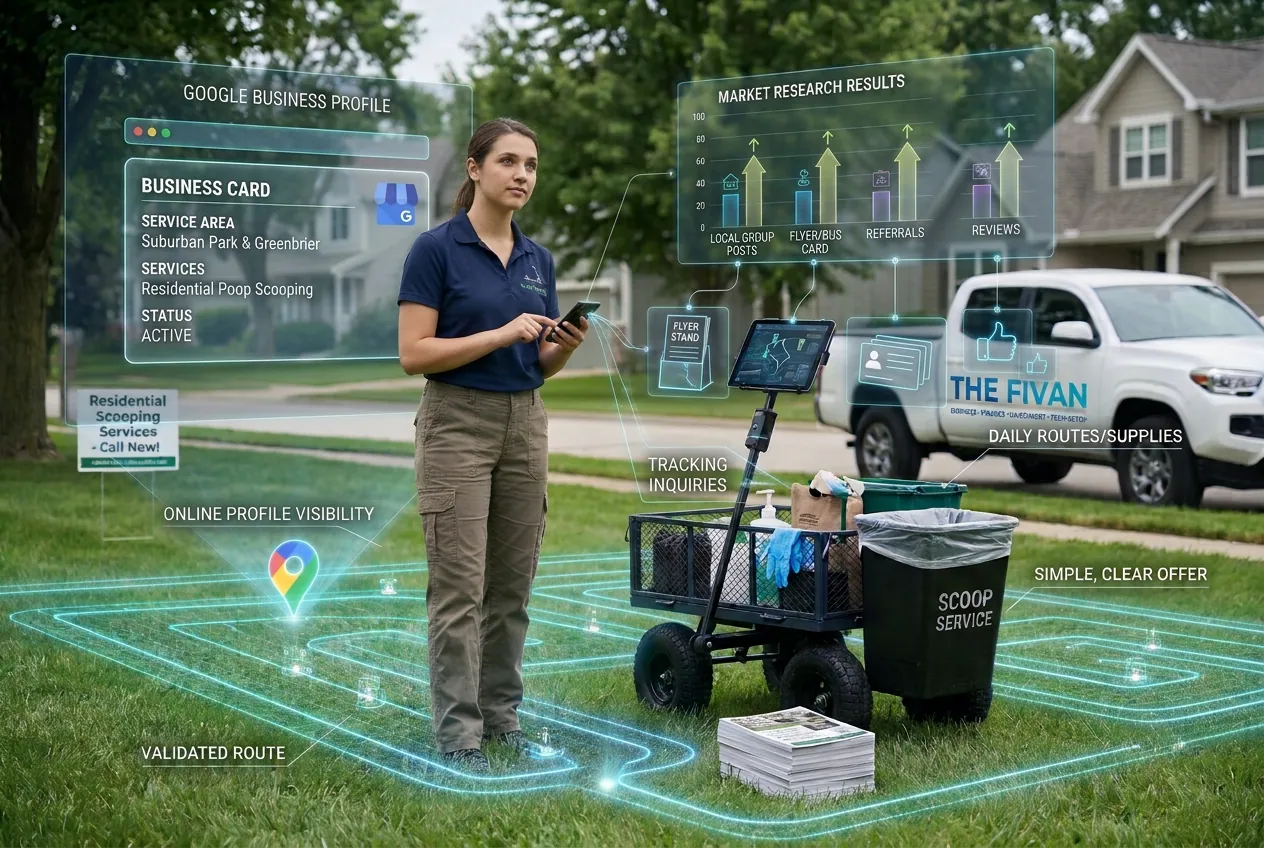
You do not need a large advertising budget to begin testing local marketing. Focus first on methods that can reach people in your intended service area.
Set up a local online presence
Create an accurate business profile on Google if your business meets its eligibility rules. A company that visits customers instead of serving them at its own storefront may qualify as a service-area business.
Follow Google’s Business Profile guidelines. Service-area businesses without a customer-facing storefront should not present a virtual office as a real business location.
Your profile should use accurate business information and clearly describe the services you offer. A basic website or business page can also explain pricing, coverage, visit frequency, and how to request a quote.
Use neighborhood marketing
Try a few practical channels:
- Local community and neighborhood groups that allow business posts.
- Flyers or business cards at suitable local businesses, with permission.
- Referrals from existing customers.
- Relationships with groomers, pet stores, dog walkers, or pet daycares.
- Honest customer reviews after completed service.
Your message should explain the practical benefit: customers can keep their yards cleaner without handling every cleanup themselves.
Avoid paying heavily for advertising before you understand how much a new customer is worth. Record where inquiries come from, how many become paying customers, and how much you spend to acquire them.
If a marketing method generates attention but no bookings, review your target area, offer, price, and message before spending more.
8. Build Efficient Routes and Manage Daily Operations
A pet waste removal business can lose money through wasted travel time even when customers are paying reasonable prices.
Try to group appointments by neighborhood and assign recurring service days. Twenty customers close together may be easier to serve than the same number scattered across a wide area.
For each customer, record the service address, agreed frequency, price, access instructions, payment status, and any special requests. Keep customer information secure and available only to people who need it for the work.
A simple spreadsheet and calendar may be enough at first. Paid field-service software can become useful when scheduling, billing, reminders, or route management take too much time. Compare the full cost and features before subscribing.
After each visit, confirm completion, close the gate, and follow the agreed communication process. Review the route regularly to see whether the actual time and cost match your estimates.
Commercial properties offer another possible growth path. Apartment communities, homeowners’ associations, dog parks, and other shared spaces may need regular cleaning or pet waste station servicing.
However, commercial work can involve larger areas, formal contracts, additional insurance requirements, and more complex schedules. Understand those obligations before pursuing a contract or buying specialized equipment.
9. Is a Pet Waste Removal Business Profitable?
A pet waste removal business can generate revenue from recurring customers, but profitability depends on pricing, visit frequency, route efficiency, and operating costs.
The important question is not simply how many customers you can sign. It is how much money remains after you account for the work and expenses required to serve them.
A hypothetical monthly example
Suppose a solo operator has 25 weekly customers who pay an average of $20 per visit.
The monthly revenue calculation is:
25 customers × $20 × 52 weeks ÷ 12 months = approximately $2,167 per month.
Now suppose the operator uses the following illustrative monthly expense budget:
| Expense | Hypothetical monthly amount |
| Fuel and vehicle costs | $250 |
| Bags and other supplies | $100 |
| Insurance | $100 |
| Marketing | $100 |
| Phone, software, and payment fees | $100 |
| Other operating costs | $100 |
| Total operating expenses | $750 |
| Revenue remaining before tax and owner compensation | $1,417 |
These expense amounts are assumptions for the example, not current market quotes or a prediction. Actual insurance prices, travel costs, disposal charges, and other expenses may be higher or lower. The example also excludes startup-cost recovery, unexpected expenses, and income or self-employment taxes.
The operator must still consider the value of their own time. If the route and administration take about 49 hours per month, the remaining $1,417 works out to approximately $29 per hour before taxes under these assumptions.
That result is not guaranteed. Longer routes, extra cleanup time, missed payments, cancellations, or higher costs can reduce it quickly.
How to judge your own results
Track four things each month:
- Revenue: What customers actually paid.
- Operating expenses: What you spent on travel, supplies, insurance, marketing, and other business needs.
- Working hours: Time spent cleaning, driving, scheduling, billing, and handling customer issues.
- Cash flow: Whether money arrives in time to cover upcoming bills.
Once you have real records, use them to adjust prices, improve routes, and decide whether to add customers. If demand is weak or costs are too high, fix those issues before hiring staff or committing to expensive equipment.
The goal is not merely to build a large customer list. It is to create a service that customers value and that pays fairly for the time and money it requires.
10. Common Mistakes to Avoid When Starting
Underpricing the work: A low rate may attract bookings but leave little money after travel, supplies, and administration. Calculate your costs before setting prices.
Serving too wide an area: Long drives waste time and fuel. Begin in a compact area and expand when nearby demand supports it.
Ignoring local requirements: Confirm registration, licensing, insurance, and disposal arrangements before taking customers. Do not assume that a rule from another city applies to yours.
Buying too much too soon: Start with essential tools. Delay a dedicated vehicle, expensive software, or employees until the actual workload justifies the commitment.
Leaving service terms unclear: Tell customers what the fee includes, how often visits occur, how waste will be handled, and when extra charges apply.
Confusing revenue with profit: A busy schedule does not guarantee good earnings. Review both expenses and working hours to understand the value of the business.
Frequently Asked Questions
Is a pet waste removal business profitable?
It can be profitable when local demand, pricing, route efficiency, and operating costs work together. Calculate expected revenue, subtract your business expenses, and account for the hours you spend working before deciding whether the business is worth expanding.
What do you need to start a dog poop removal business?
You need basic cleanup tools, bags, gloves, a suitable transport and disposal plan, appropriate insurance, and any required registrations or permits. You also need a clear service offer, a way to manage appointments and payments, and a plan to find customers.
How much should you charge for pet waste removal?
Prices depend on the number of dogs, yard size, visit frequency, travel time, and cleanup condition. Compare local provider prices, calculate your own costs, and charge extra for clearly defined services that require additional work.
Do you need a license to start a pet waste removal business?
There is no single nationwide license rule that covers every business in the same way. Requirements depend on your state, county, city, business structure, and activities. Contact the relevant local authorities to confirm what applies before operating.
Your First Steps Before Launch
Start by checking local requirements and deciding how you will handle collected waste. Price a basic equipment kit, obtain insurance quotes, and research existing providers in one service area.
Next, create a simple offer, test interest among local dog owners, and track actual bookings. Begin with equipment and operating methods you can afford, then use your real costs and service records to guide pricing and growth.
A small, well-planned launch gives you a better chance to discover whether the business works in your area before you make larger financial commitments.
Disclaimer
Startup costs, pricing, legal requirements, and profitability vary by location and business circumstances. This article provides general educational information, not a guarantee of business results. Consult a qualified legal or tax professional when you need guidance on specific registration, compliance, or tax decisions.