
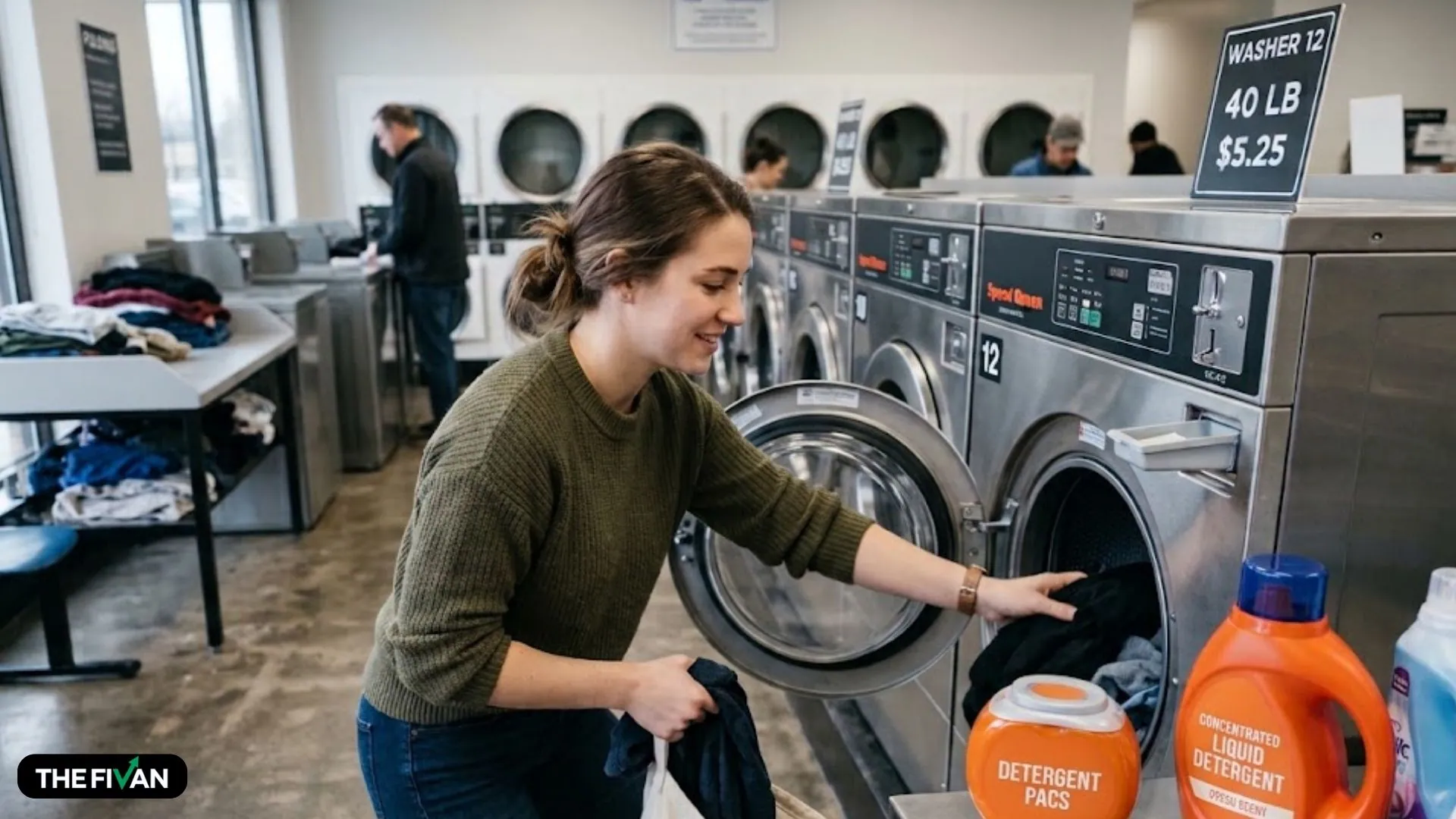
Using a laundromat is simple once you know the order of the steps. You sort your clothes, bring detergent and an accepted payment method, choose a washing machine, wash your clothes, transfer them to a dryer, and fold everything before leaving.
If this is your first visit, check the laundromat’s prices and payment options before you go. You may need quarters, a payment card, or a mobile app, depending on the location. You should also check clothing care labels and follow the machine’s instructions to avoid damaging your clothes or paying for unnecessary cycles.
This guide explains how to use laundromat machines, how to add liquid detergent or laundry pods, what to expect when paying, and how to estimate your total cost in the United States.
Direct Answer
To use a laundromat, sort your clothes, bring detergent and an accepted payment method, wash them in a suitable machine, transfer them to a dryer, and fold them before leaving.
Experience
Check both washer and dryer prices before starting, because they may be charged separately. Bring your own detergent when practical, and check whether your clothes are dry before paying for extra drying time.
SERP Enhancement Elements
First Laundromat Visit Checklist
- Sort clothes and check care labels.
- Bring detergent, a laundry bag, and an accepted payment method.
- Check washer capacity and the posted price.
- Add detergent according to product and machine instructions.
- Choose a suitable wash cycle and temperature.
- Transfer clothes to an appropriate dryer.
- Check dryness before paying for extra time.
- Fold clothes, collect belongings, and check your total spending.
What Is a Laundromat and How Does It Work?
A laundromat is a business where people pay to use shared washing machines and dryers. It is also called a self-service laundry because customers usually wash and dry their own clothes.
The process has two main stages. First, you pay to wash your clothes in a washer. Then, you move the wet clothes into a dryer and pay for drying if it is charged separately.
Most self-service laundromats provide several machine sizes. Smaller machines suit everyday clothing, while larger machines can handle bigger loads, towels, bedding, and some comforters.
Payment systems vary. Some laundromats accept quarters directly, while others use a payment kiosk, a store card, a debit or credit card, or a mobile app.
Some locations also offer wash-and-fold services. With this option, you drop off your laundry and pay someone to wash, dry, and fold it. This service costs extra and follows the provider’s own rules.
For a first visit, self-service is often the easiest way to understand how laundromats work and what your laundry routine will cost.
What Should You Bring to a Laundromat?
Preparing at home can save time and help you avoid unnecessary purchases. Before leaving, gather your supplies and check that you can pay for both washing and drying.
Here is a practical checklist.
- Dirty clothes: Put them in a laundry basket, backpack, or sturdy laundry bag.
- Laundry detergent: Bring liquid detergent, powder detergent, or suitable laundry pods.
- Payment: Check whether the laundromat accepts quarters, cards, a store payment card, or an app.
- Dryer sheets: Bring them if you use them and they suit your clothes. They are optional.
- A small stain remover: This can help with specific stains if the product is suitable for the fabric.
- A clean bag for finished laundry: Keep clean clothes separate from dirty laundry.
- Your phone: Use it to track wash and dry times, if needed.
You do not always have to bring detergent. Some laundromats sell detergent, pods, and dryer sheets. However, these supplies may cost more than buying them from a regular store.
Sort Your Clothes Before Leaving
Separate clothing according to color, fabric, and care instructions. For example, keep whites separate from dark clothes, and set delicate fabrics aside when they need special care.
Check the labels inside your clothing. These labels explain whether an item can be machine-washed, which temperatures are suitable, and whether it can go in a dryer.
Also, empty every pocket. Keys, earbuds, cash, paper, and other small items can cause problems if they go through a wash cycle.
The American Cleaning Institute’s laundry guide provides further advice on sorting clothes, treating stains, and choosing detergent.
How Do You Use a Laundromat Step by Step?
The exact controls differ between laundromats, but the general process remains similar. Follow these steps from selecting a washer to packing your clean clothes.
1. Choose a Suitable Washing Machine
When you arrive, look for an empty washer that can handle your load.
Check three things before choosing:
- Capacity: The drum should have enough room for your clothes to move.
- Price: Look for the washing charge on the machine, a nearby sign, or the payment screen.
- Condition: Choose a machine that appears clean and has no obvious problem, such as standing water or a strong unpleasant smell.
Machine size matters because a washer that is too small may leave your clothes crowded. A larger washer can be useful for bulky bedding or several items that need more room.
However, choosing the largest machine does not always save money. Compare its price with the cost of a smaller machine that can comfortably handle your load.
If you need to wash a comforter, check whether it fits comfortably and whether the care label allows machine washing. Some bulky or delicate items require a different cleaning method.
Before paying, check that you have chosen the correct machine and understand how it starts. This is especially important when payment activates the machine immediately.
2. Load Your Clothes and Add Detergent
Open the washer and place your sorted clothes inside. Spread them around the drum instead of pushing everything into one tight pile.
Leave enough room for clothes to move during washing. An overloaded washer may clean poorly, and excess clothing can prevent detergent and water from moving through the load properly.
Next, add your detergent. The correct method depends on the product and the machine.
If you use liquid or powder detergent:
- Read the detergent label for the recommended amount.
- Check whether the washer has a detergent drawer or dispenser.
- Add the detergent according to the machine’s instructions.
- Avoid pouring more detergent simply because the load looks large.
Some machines allow detergent to go directly into the drum, while others have a designated dispenser. Follow the instructions on the machine rather than guessing.
Using too much detergent does not guarantee cleaner clothes. It can leave residue on fabrics and create unnecessary waste.
If you use laundry pods:
Laundry pods are small packets containing concentrated detergent. Some products also include other cleaning ingredients, depending on the brand.
For Tide PODS, the manufacturer’s current US instructions say to place the pod in the empty washer drum before adding clothes. Do not put these pods into the detergent drawer.
Tide’s product guide gives different quantities for small, standard, and large loads. Follow the directions on your specific package because recommendations can vary by product.
You should not need to add a second detergent when using a pod that already provides the required detergent for your load.
Read the instructions on the Tide PODS guide if you use that product.
Keep laundry pods in their original closed container and away from children and pets.
3. Pay and Select the Wash Cycle
Once your clothes and detergent are ready, choose the appropriate cycle and pay according to the machine’s instructions.
Depending on the laundromat, you may need to insert quarters, tap a card, use a store payment card, or select a machine through an app.
If the machine requires you to pay before choosing a cycle, follow its displayed steps. Other machines let you choose a setting first.
Next, choose a wash cycle that suits your clothing.
- Normal: Suitable for many everyday clothes that can be machine-washed normally.
- Delicate or gentle: Intended for fabrics that need less vigorous washing.
- Heavy-duty: May suit sturdy, heavily soiled items when their care labels allow it.
- Quick wash: Can suit lightly soiled clothes when the machine and garment instructions permit it.
Now choose the water temperature. Cold water works well for many ordinary loads and can help reduce fading or shrinking in suitable fabrics. Some stains and heavily soiled items may need a different treatment.
Do not automatically choose hot water for every white item or towel. Check the garment instructions and detergent directions first.
Once you have selected the settings and paid, start the machine. Check the displayed cycle time so you know when to return.
4. Transfer Your Clothes to the Dryer
When the wash finishes, open the washer and move your clothes into a suitable dryer.
Try to transfer them promptly. Leaving wet clothes sitting in a closed washer for a long time may cause an unpleasant smell, and other customers may need the machine.
Choose a dryer with enough space for your load to tumble. Clothes should not be packed tightly because airflow helps them dry.
Before starting, check the clothes’ care labels and choose an appropriate heat setting.
- Low heat: Useful for many delicate or heat-sensitive items.
- Medium heat: Suitable for many everyday clothes when their labels permit it.
- High heat: May suit some durable cotton items and towels, but it can shrink or damage certain fabrics.
Do not assume that every garment in a mixed load can handle the same temperature. Remove delicate items that need to air-dry or require a different setting.
Next, check how the dryer charges. Some machines charge for a set block of time, while others use another pricing system. Make sure you understand the cost before starting.
If you need to add payment for more drying time, follow the machine’s instructions. Avoid paying for a long period without checking whether your clothes actually need it.
5. Check Dryness, Fold, and Pack Your Clothes
When the dryer stops, check whether the clothes are fully dry.
Feel a few items, especially thick areas such as waistbands, pockets, and the centers of towels. These areas may remain damp after thinner fabrics have dried.
If clothes are still damp, consider a short additional drying period if the fabric can tolerate more heat. Avoid repeatedly paying for extra time without checking the load first.
If you discover a stain on a garment, consider treating it before drying it further. Heat can make some stains harder to remove.
Once everything is dry, use the folding tables if the laundromat provides them. Fold your clothes before packing them into your clean bag.
Before leaving, check that you have collected all your clothes, detergent, personal belongings, and any items you placed on nearby tables.
A simple final check can prevent you from leaving a favorite shirt, a sock, or an essential item behind.
How Much Does It Cost to Use a Laundromat?
The cost depends on your location, the size of the washer, the drying time, and whether you need to buy supplies.
Two US price guides published in 2026 provide useful examples, although neither establishes a verified national average. Laundromat By Me’s 2026 price guide lists these typical washer prices:
| Machine type | Published example price per wash |
| Top-load washer | 2.00–3.50 |
| Small front-load washer | 3.00–4.50 |
| Large front-load washer | 5.00–7.50 |
| Extra-large washer | 7.00–11.00 |
The same guide estimates that drying a typical load may cost 1.50–3.00 for around 36–45 minutes. Heavy items may need longer.
A second guide from The Wash House, published in January 2026, gives a broad washer estimate of 2–10 depending on size and a dryer estimate of 1.50–3.00 per load.
These figures are guides for budgeting, not prices you are guaranteed to find at your local laundromat. Your local machine display should take priority.
Example: Estimate the Cost of a Visit
Imagine you need to wash two loads of clothes. Your chosen laundromat charges $3.50 per wash and $2.25 for each assumed drying period.
Your estimated cost would be:
| Expense | Calculation | Total |
| Washing | 2 × $3.50 | $7.00 |
| Drying | 2 × $2.25 | $4.50 |
| Total | $7.00 + $4.50 | $11.50 |
This is a hypothetical example, not a current quote from a specific laundromat. It assumes two separate wash charges and two drying periods. It excludes detergent, transport, and any extra drying time.
Your actual total may be lower or higher depending on how much laundry you have, machine capacity, and local prices.
How Can You Keep Laundromat Costs Under Control?
A few simple choices may help reduce waste:
Choose the right machine size. Avoid paying for a large machine when a smaller one comfortably fits your clothes. For a large load, compare the cost of one large washer with the cost of several small ones.
Bring your own detergent. Buying detergent at a grocery store may cost less than buying a single-use product from a laundromat vending machine.
Avoid overloading. Clothes need room to move in both the washer and the dryer. Crowded machines may clean or dry less effectively.
Check clothes before paying for more drying time. Some items dry faster than others. Remove dry, heat-sensitive pieces when appropriate, and continue drying the remaining items only if needed and practical.
Plan for the full visit. Include the washer, dryer, detergent, and any other supplies you expect to buy. Looking only at the washing price can leave you with an incomplete budget.
If you use a laundromat regularly, keep a simple record of what you spend on a typical visit. After several visits, you will have a more useful estimate for your own routine than a general price guide can provide.
How Can You Avoid Common Laundromat Mistakes?
Most laundromat mistakes are avoidable when you prepare before starting the machine.
Using Too Much Detergent
More detergent does not necessarily mean cleaner clothes. Follow the product directions for your load size and soil level.
If clothes feel stiff or have visible residue after washing, excess detergent may be one possible cause. Check the product and machine instructions before changing the amount.
Overloading the Washer or Dryer
Crowded clothing cannot move freely, which may interfere with washing and drying.
Leave enough room for the load to move. If a large comforter or several towels do not fit comfortably, consider a larger machine.
Ignoring Care Labels
Hot water and high dryer heat can damage some clothing. Check the label before selecting settings, especially for delicate fabrics, stretchy garments, and items that may shrink.
Forgetting to Check Payment Requirements
Do not assume every laundromat accepts quarters or bank cards. Some require a store card or mobile app.
Check the payment method before you go, and look at the price before loading the machine.
Paying for Unnecessary Drying Time
A dryer may not need to run for the same length of time for every load. Check clothes before adding more time, and separate items that dry at different speeds when practical.
Leaving Important Items in Your Laundry
Check pockets before washing and check the surrounding area before leaving. Keep your wallet, phone, keys, and important documents with you rather than leaving them unattended near the machines.
These checks help protect your belongings and make the visit easier to manage.
Do You Have to Stay at a Laundromat While Your Clothes Wash?
You do not necessarily have to remain beside your machine for the entire wash cycle, but you should follow the laundromat’s rules and make a plan to return promptly.
Check the displayed cycle time and set a phone reminder. If you leave the premises, consider how long it will take to return if the machine finishes earlier than expected.
Leaving clothes unattended for a long time can inconvenience other customers, especially in a busy location. Customers or staff may move finished laundry according to the laundromat’s rules, so it is better not to depend on someone else to handle your clothes.
For your first visit, staying nearby is a practical choice because you can learn how the machines work, check for payment problems, and handle any unexpected issues.
Keep personal belongings secure, and leave if the location feels unsafe.
Frequently Asked Questions
1. How do you use a laundromat for the first time?
Sort your clothes at home, bring detergent and an accepted payment method, choose a suitable washer, and follow the machine instructions. After washing, move your clothes to a dryer, check that they are dry, and fold them before leaving.
2. How much money should you bring to the laundromat?
Check the local washer and dryer prices before your visit. As a broad planning reference, published US price guides in 2026 show many ordinary wash-and-dry visits costing several dollars, with larger or multiple loads costing more. Bring enough for both services, necessary supplies, and a practical backup payment option.
3. Do you have to stay at a laundromat while your clothes wash?
Not necessarily. Follow the location’s rules, monitor your cycle time, and return promptly when the machine finishes. Staying nearby during your first visit can make the process easier and help you handle unexpected issues.
4. Are you supposed to bring your own detergent to a laundromat?
Bringing your own detergent is usually convenient, but it is not always required. Some laundromats sell detergent and other supplies on-site. Check availability before leaving, because buying individual products at the laundromat may cost more than bringing them from home.
5. How do you use Tide Pods at a laundromat?
For Tide PODS, place the pod in the empty washer drum before adding clothes, following the manufacturer’s instructions. Use the amount recommended for your load and specific product, avoid overloading the washer, and select an appropriate cycle. Do not put the pod in a detergent drawer unless your product and machine instructions specifically direct you to do so.
Your First Laundromat Visit: A Simple Plan
Using a laundromat gets easier when you know what to do before arriving. Sort your clothes, bring the right supplies, check payment options, and read the machine instructions before spending money.
Pay attention to washer size, detergent directions, and the separate cost of drying. These small checks help you complete your laundry without unnecessary expenses or avoidable mistakes.
For your first visit, choose a convenient location, allow enough time for washing and drying, and keep track of the total cost. Once you understand the process, planning future visits becomes much simpler.
Disclaimer
Laundry costs, payment methods, machine settings, and available services vary by location and provider. This article provides general educational information; follow the instructions on your specific machine and laundry products, as individual results may vary.