

Car wash machinery ranges from self-service equipment to automatic washing machines and large conveyor tunnel systems. The right choice depends on your business model, available space, expected customer demand, and budget.
In the United States, published equipment-price estimates range from roughly $15,000 for some basic commercial systems to more than $1 million for complete tunnel equipment packages. These figures describe different types of purchases, so they are not directly comparable. Installation, site preparation, utilities, and other supporting equipment can add substantially to the total cost.
Before buying, decide which type of car wash you plan to operate. Then compare the complete equipment package, installation needs, maintenance expenses, and supplier support. This approach helps you avoid choosing a machine based on price alone.
Direct Answer
Car wash machinery includes self-service bay equipment, in-bay automatic systems, and conveyor tunnel machines. Costs vary by capacity, package contents, site preparation, installation, and ongoing operating needs.
Experience
Practical Finance Tip: Before paying a deposit, ask for an itemized quote that separates the machine, included components, delivery, installation, warranty, and excluded work. Compare it with a site assessment and a realistic budget for utilities, repairs, and downtime.
What Types of Car Wash Machinery Are Available?
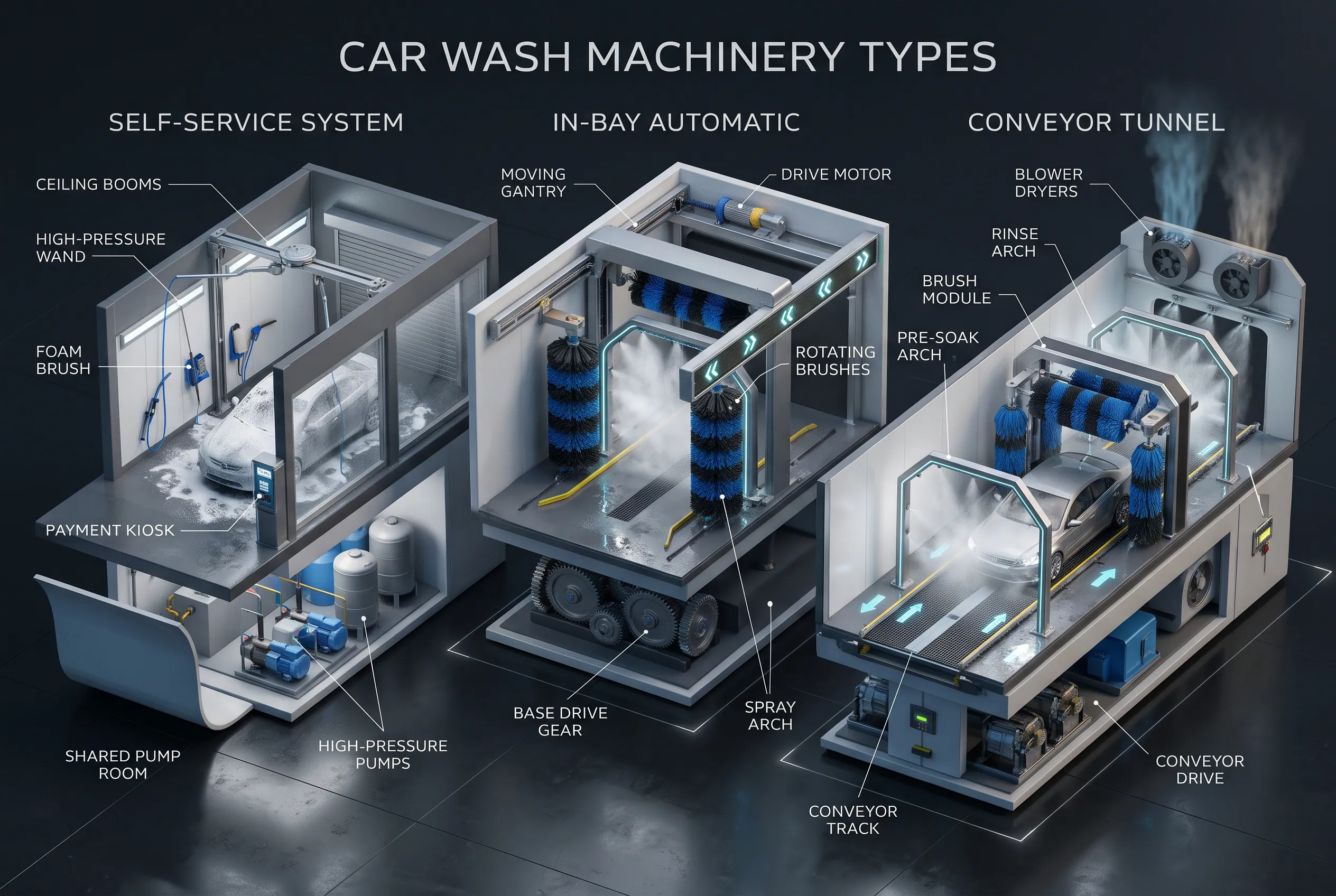 Car wash machinery generally falls into three main categories: self-service systems, in-bay automatic systems, and conveyor tunnel systems. Each serves a different operating model.
1. Self-Service Car Wash Equipment
A self-service car wash lets customers wash their own vehicles using equipment supplied at each bay.
Common equipment includes:
- High-pressure pumps and spray guns
- Hoses, booms, and spray wands
- Foam brushes and chemical dispensers
- Pre-soak and rinse systems
- Coin or card payment controls
- Vacuums for interior cleaning
Some facilities use a shared pump room to serve several bays. This can reduce the need for separate major equipment at each bay, but the system must be sized for expected demand.
Self-service machinery may suit business owners who want to offer several washing bays without installing a fully automatic machine in every space.
However, the purchase price is only one part of the decision. You must also consider water supply, drainage, chemical storage, payment systems, repairs, and the cost of keeping each bay available.
2. In-Bay Automatic and Touchless Systems
An in-bay automatic car wash cleans a vehicle while it remains in a wash bay. Depending on the system, the washing equipment moves around the vehicle or uses automated spray systems to clean it.
There are two common approaches.
Soft-cloth or friction systems use brushes or fabric components together with water and cleaning products. They physically contact the vehicle, helping remove dirt that may remain after a high-pressure rinse.
Touchless systems use high-pressure water and cleaning chemicals without brushes contacting the vehicle. They may appeal to customers who prefer a wash without direct brush contact. However, results depend on the machine, cleaning products, cycle settings, and how dirty the vehicle is.
In-bay automatic equipment can suit gas stations, convenience stores, and standalone washes with limited space. It can also be an option for an existing business that wants to add automatic washing without building a long tunnel.
Before choosing a system, compare washing performance, cycle time, drying ability, chemical use, and access to replacement parts.
3. Conveyor Tunnel Systems
A conveyor tunnel moves vehicles through a series of washing stages. Depending on its design, a system may include pre-soaking, high-pressure washing, brushes, rinsing, protective treatments, and drying.
Typical equipment includes:
- A conveyor and vehicle-positioning equipment
- Wash arches, brushes, or other cleaning components
- Chemical application and pump systems
- Rinse and drying equipment
- Automated controls and safety devices
- Payment systems and supporting equipment
Tunnel systems can handle higher vehicle volumes than a single self-service bay, but actual capacity depends on tunnel length, conveyor design, staffing, customer choices, and operating conditions.
They also require careful planning. The machinery must fit the building, vehicle path, utilities, drainage, and supporting systems. A tunnel that looks affordable on an equipment quote can become a much larger investment once the full project is included.
How Much Does Car Wash Machinery Cost?
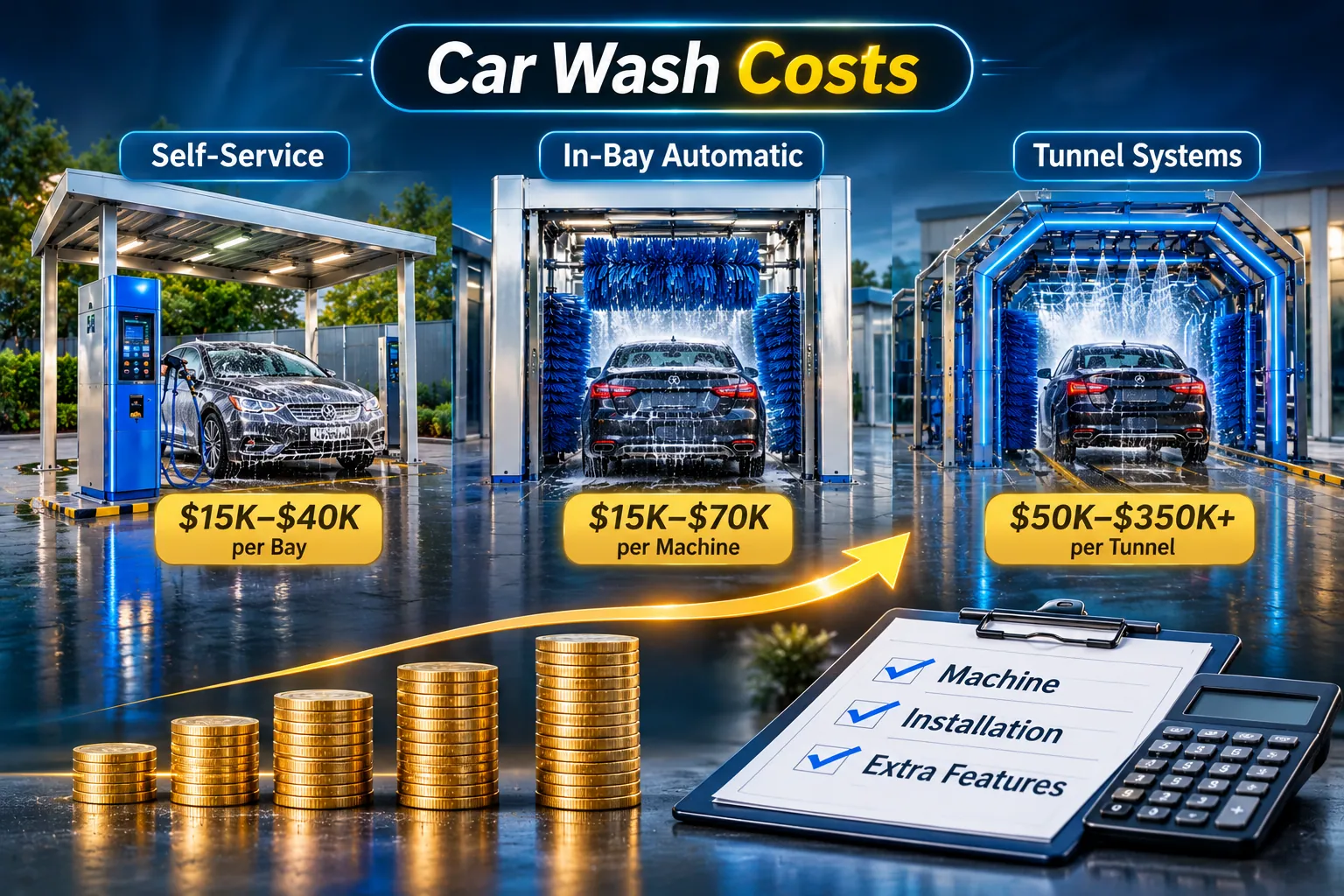 Car wash machinery costs depend on the system, its capacity, included components, and whether the price covers only the main machine or a complete package.
The following table summarizes published U.S. and U.S.-oriented equipment estimates available in 2026. These are planning references, not current binding supplier quotes.
| Equipment type | Published indicative price | Important limitation |
| Self-service bay equipment | 15,000–40,000 per bay | Package contents and shared equipment vary |
| Touchless in-bay automatic machine | 15,000–55,000 | Machine price before installation and site work |
| Rollover or gantry automatic machine | 20,000–70,000 | Configuration and included features affect price |
| In-bay automatic equipment package | 40,000–150,000 | A broader estimate covering differing package scopes |
| Conveyor tunnel machinery | 50,000–350,000+ | Scope varies by tunnel design and included equipment |
| Complete express tunnel equipment package | 400,000–1 million or more | Larger packages may include substantial supporting equipment |
The ranges come from published guides by HyTian and Equipment Finance HQ. Another 2026 buying guide gives different estimates for self-service and in-bay systems, which shows why buyers should compare exact package details rather than assume one universal market price.
What Do These Prices Mean in Practice?
Consider a few hypothetical buying situations.
A person updating one existing self-service bay may need pumps, hoses, a payment control, and some replacement components. The project could be much smaller than opening a new facility, especially if the existing plumbing and electrical systems remain suitable.
A business adding an in-bay automatic machine needs to consider the machine, chemical system, controls, drying equipment, installation, and compatibility with the existing site.
A new conveyor tunnel needs a broader package. The conveyor, wash equipment, dryers, pump systems, controls, and other supporting components must operate together.
A published Sonny’s/PECO price sheet dated 2024 illustrates the difference between machine-only figures and larger packages. It listed two 60-foot conveyor tunnel configurations at $625,490 and $645,059, including tunnel and specified support equipment. The sheet excluded optional support equipment, installation, and powder coating, and warned that prices could change without notice. These are historical examples, not current quotations.
Use these figures to build an initial budget, not to approve a purchase. Ask suppliers for current written quotes that identify the exact model, included components, delivery terms, installation responsibilities, warranty, and exclusions.
What Does a Complete Car Wash Equipment Package Include?
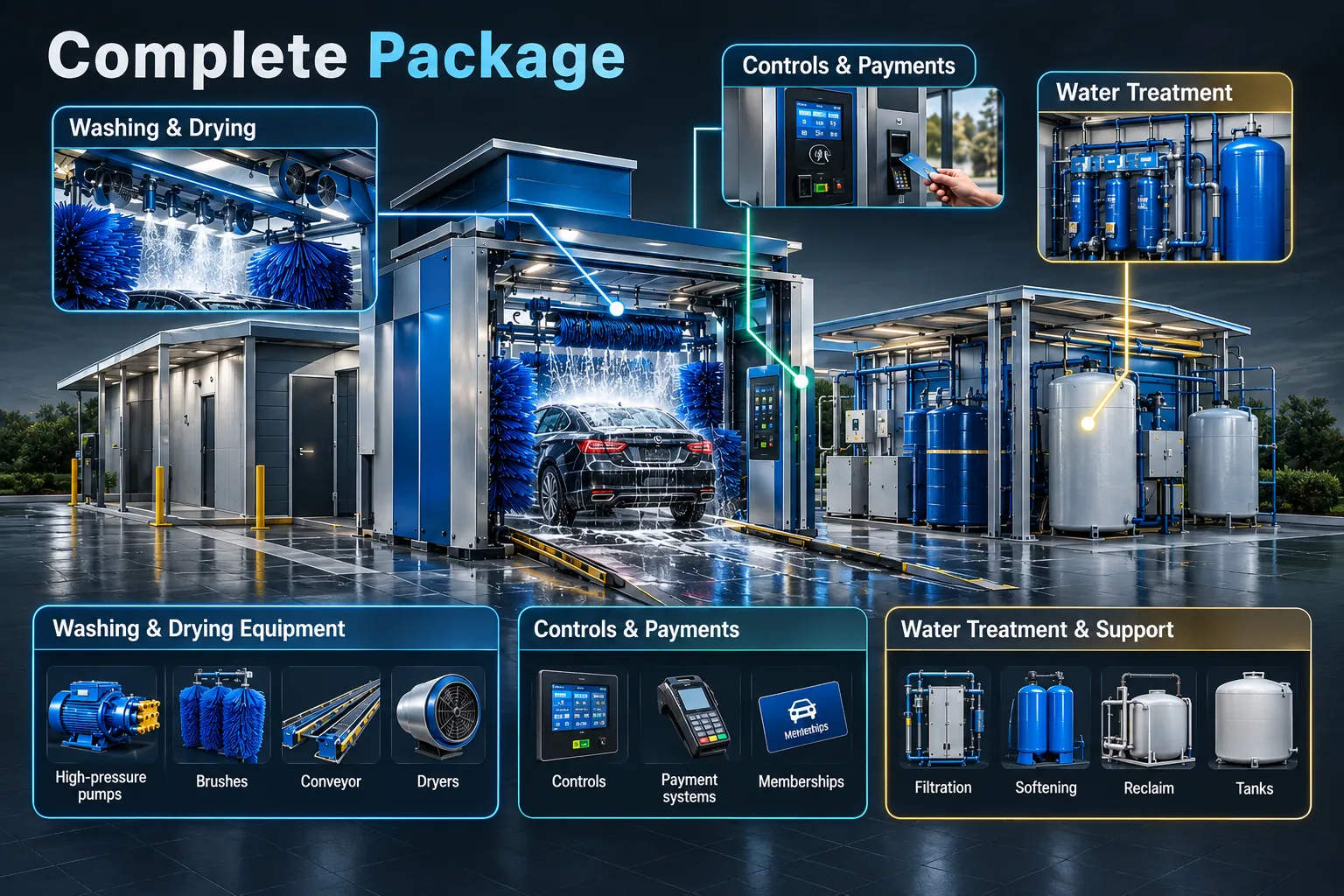 The main washing machine does not always provide everything needed to operate a commercial car wash. Supporting systems can affect the cost, performance, and reliability of the whole facility.
Washing and Drying Equipment
Depending on the wash type, a package may include high-pressure pumps, spray arches, brushes, conveyors, chemical applicators, rinsing equipment, and dryers.
Ask whether the quoted price includes all equipment needed to complete the intended wash cycle. A machine that cleans well but lacks suitable drying equipment may not meet your customers’ expectations.
Controls and Customer Payments
Controls manage washing cycles, chemical application, water pressure, and other operations. Payment equipment allows customers to start and pay for a wash.
Available systems may accept coins, bank cards, or other payment methods. Some facilities also use prepaid accounts or memberships.
Check whether payment hardware, software licenses, installation, and ongoing service fees are included. A low initial quote may exclude equipment that you will need before opening.
Water Treatment and Supporting Equipment
Commercial systems may need filtration, water softening, reclaim equipment, tanks, or other water-treatment components. The exact requirements depend on the site, water quality, equipment design, and local rules.
A water-reclaim system collects and treats suitable wash water for reuse. Its cost and benefits depend on the system design, local water and sewer charges, maintenance, and how the facility operates.
Do not assume that every reclaim system will deliver the same savings. Ask the supplier for its expected performance under your operating conditions, along with maintenance needs and replacement costs.
What Other Costs Should You Budget For?
A machinery budget should include more than the purchase price. Installation and operating expenses can make a major difference to the amount of money a business needs.
Installation and Site Preparation
Possible expenses include:
- Building work and concrete preparation
- Plumbing, drainage, and electrical upgrades
- Equipment delivery and installation
- Water storage, treatment, and reclaim systems
- Safety equipment, signs, and lighting
- Initial testing and staff training
Not every site requires every item. An existing wash with suitable infrastructure may need fewer changes than a new facility built from the ground up.
Before paying a deposit, arrange a site assessment. Ask the equipment supplier and relevant contractors to document what the property already supports and what must change.
Utilities and Operating Expenses
A running car wash may pay for water, sewer services, electricity, cleaning chemicals, labor, insurance, routine maintenance, and payment processing.
These expenses vary by location and equipment type. The cost of washing one vehicle also depends on the wash cycle, chemical use, local utility prices, and the amount of maintenance required.
Ask suppliers for practical operating estimates and confirm the assumptions behind them. For example, an estimate based on a short cycle and low daily volume may not fit a busy facility.
Maintenance and Downtime
Equipment needs regular inspection, cleaning, and replacement of worn parts. Pumps, hoses, sensors, brushes, conveyor components, and dryers may all require attention.
Downtime can create two costs: repair expenses and lost sales while the machine is unavailable. This makes local technical support and access to spare parts important buying factors.
Ask how quickly the supplier can provide service, which parts it keeps available, and whether ordinary repairs can be completed by trained staff. A cheaper machine may be a poor financial choice if parts are difficult to obtain.
Water and Wastewater Requirements
Car washing can send detergents, oil, dirt, and other pollutants into storm drains. The U.S. Environmental Protection Agency explains that commercial facilities may reduce these impacts by recycling water or treating wash water before release into the sanitary sewer system. Actual requirements depend on the applicable rules and site. Read the EPA’s vehicle maintenance and washing guidance.
Before installing machinery, check local plumbing, wastewater discharge, stormwater, and building requirements with the relevant authorities and qualified contractors.
Working Cash for the First Months
Do not spend the entire available budget on the equipment itself. A business also needs money to cover bills while customer demand develops or repairs arise.
Prepare a simple monthly estimate for utilities, chemicals, payroll, insurance, repairs, financing payments, and other recurring expenses. Keep a reasonable reserve based on the expected costs and uncertainty of the project.
The right reserve will depend on the business. A new facility with uncertain demand may need a different cash plan from an existing operation replacing one machine.
How Do You Choose the Right Machinery for Your Business?
The best system is the one that fits your service model, site, expected volume, and ability to operate and maintain it.
Use these factors to compare options.
Customer demand: Estimate how many vehicles you realistically expect to serve. Do not buy high-capacity equipment simply because it can process more vehicles per hour. Actual demand must support the cost.
Available space: Self-service bays need room for customers and their vehicles. In-bay automatic systems need suitable clearance and utilities. Tunnels require space for the conveyor, washing stages, queues, and vehicle exit.
Cleaning requirements: Touchless systems avoid brush contact but rely heavily on pressure and cleaning chemicals. Soft-cloth systems add physical cleaning contact. Compare actual washing results and supplier specifications instead of assuming one method is always better.
Staffing: Some facilities rely heavily on automated equipment, while others need staff for preparation, customer assistance, or additional services. Include realistic labor costs in your comparison.
Maintenance support: Check whether the equipment supplier or distributor can provide timely technical help. Confirm spare-parts availability and the expected maintenance schedule.
Room for expansion: Consider whether you may later add payment options, extra bays, vacuums, or other services. Expansion should not be the main reason to overspend today, but buying equipment that cannot meet a realistic near-term need can also be expensive.
Which Option Fits Different Business Goals?
Imagine a business owner operating an existing gas station with limited room. An in-bay automatic machine may fit the site better than a tunnel, provided the property supports the necessary installation.
Now imagine someone planning several self-service bays in an area where customers prefer to wash their own vehicles. A shared pump station and well-designed bay equipment may be more suitable than buying automatic machinery for every bay.
A higher-volume operator planning an express tunnel may need a complete conveyor system and coordinated supporting equipment. In that case, comparing throughput, service contracts, maintenance, and total project costs becomes especially important.
These are illustrative situations, not predictions of demand or profit. The appropriate choice depends on the actual property, customers, budget, and costs.
Should You Buy New or Used Car Wash Machinery?
New machinery may offer current controls, a new equipment warranty, and clearer access to the manufacturer’s support. However, it can require a substantial upfront investment.
Used equipment may cost less initially and can suit an existing facility that needs a replacement or upgrade. But the purchase price does not show how much useful life remains or what repairs may be needed.
Before buying used equipment, check:
- The model, age, serial number, and maintenance records
- The condition of pumps, motors, hoses, brushes, conveyors, sensors, and controls
- Whether replacement parts are still available
- Whether the machine fits your site’s electrical, plumbing, and control systems
- The seller’s written description of included and excluded components
- The cost of removal, transport, reinstallation, and testing
- Any remaining warranty and who can provide service
Before committing to a used machine, arrange an inspection by a qualified technician familiar with that equipment. A low purchase price is not worth much if major parts are worn or the machine cannot be installed safely.
How Should You Compare Suppliers?
Get itemized written quotations from at least two suitable suppliers when possible. Compare the exact machine model, included components, delivery, installation, training, warranty, service coverage, and expected maintenance needs.
Check the supplier’s legal business identity and references. For equipment purchased from an overseas manufacturer, confirm who will handle import requirements, installation, warranty claims, and replacement parts in the United States.
A supplier’s product catalog alone does not establish that its equipment meets your site’s requirements or that local support will be available.
Ask for written answers before sending a deposit. Keep the quotation, payment terms, warranty, delivery commitments, and installation responsibilities together so you can check whether the final offer matches what you agreed to buy.
Should You Pay Cash or Finance Car Wash Machinery?
Paying cash avoids loan interest and scheduled debt payments, but it can reduce the money available for installation, operating expenses, and unexpected repairs.
Financing can spread the cost over time. However, it creates a repayment obligation even if sales are lower than expected or machinery needs repairs.
Compare the following before choosing:
- The amount you must pay upfront
- The interest rate, fees, and loan term
- The total amount repayable over the loan
- Any security or collateral requirements
- Early repayment conditions and other restrictions
- Whether expected cash flow can cover payments during slower periods
A lower monthly payment is not always the cheaper option if the longer term increases the total cost.
Some U.S. businesses may qualify for Small Business Administration-backed financing. The SBA 7(a) loan program permits eligible uses such as buying and installing machinery and equipment. The SBA 504 loan program supports qualifying long-term fixed assets, including eligible machinery. Each program has specific requirements, and approval is not guaranteed.
Review actual loan terms with a participating lender before committing. Keep enough cash for ordinary operations rather than using every available dollar for the deposit or down payment.
Is a Car Wash Business Profitable?
A car wash can generate revenue, but buying machinery does not guarantee a profitable business. Results depend on customer demand, pricing, operating costs, competition, equipment reliability, and financing obligations.
Start by estimating the number of vehicles you realistically expect to serve and the average amount customers may pay. Then estimate recurring expenses, including labor, water, electricity, chemicals, insurance, maintenance, and loan payments.
Keep three financial measures separate:
- Revenue: Money received from washing vehicles and selling related services.
- Profit: What remains after the relevant business expenses are deducted.
- Cash flow: Money coming into and leaving the business during a period.
A business can report sales while still struggling to pay bills. For example, a slow month may reduce incoming cash while loan payments and utility bills remain due.
Build a conservative forecast using realistic assumptions. Test what happens if vehicle volume is lower than expected, utility costs rise, or equipment remains out of service for repairs.
Do not rely on a supplier’s projected payback period without checking the assumptions. A machine that appears affordable at high customer volume may be unsuitable for a site with limited demand.
Car Wash Machinery Buying Checklist
Before making a purchase, work through these steps:
- Define the business model. Decide whether you need self-service bays, an in-bay automatic system, or a conveyor tunnel.
- Set a full project budget. Include machinery, site preparation, installation, supporting systems, and initial operating cash.
- Request itemized quotations. Make sure competing suppliers are quoting comparable systems.
- Inspect equipment and supplier support. Check warranty terms, maintenance needs, replacement parts, and local technical service.
- Confirm site requirements. Verify utilities, drainage, building needs, and applicable local wastewater rules.
- Review financing, if needed. Compare total repayment, monthly obligations, and available cash for operations.
- Check the final written agreement. Confirm exactly what will be delivered, installed, tested, and supported before making the payment.
If a supplier cannot explain what its quote includes, request clarification before comparing prices or signing the order.
Frequently Asked Questions
How much do car wash machines cost?
Published estimates range from about $15,000 for some self-service or touchless equipment to $1 million or more for complete express tunnel packages. Actual costs depend on the system, package contents, capacity, and installation needs. Always request a current written quote.
What is the best equipment for a car wash?
There is no single best system for every business. Self-service equipment may suit a multi-bay operation, in-bay automatic machinery may fit a space-limited site, and conveyor tunnels may suit higher-volume facilities. Compare demand, site conditions, costs, cleaning performance, and maintenance support.
Is used car wash machinery worth buying?
Used equipment may be worthwhile when it is in good condition, fits the site, and has reliable parts and service support. Obtain maintenance records and an independent technical inspection. Include transport, installation, repairs, and any required upgrades in the total purchase cost.
What should a car wash equipment quote include?
A useful quote should identify the machine model, included components, price, delivery, installation responsibilities, utility requirements, warranty, training, service options, and exclusions. Ask suppliers to state which costs are separate so you can compare offers fairly.
Choose Machinery Based on Total Cost, Not Just Price
Before buying car wash machinery, identify the service you want to offer and the customer volume your site can reasonably support. Compare equipment packages, verify installation requirements, and calculate the main operating expenses.
Then obtain written quotes from suitable suppliers and check their warranty, maintenance, and spare-parts support. A careful comparison may take more work upfront, but it gives you a clearer view of the amount you need to invest and the costs you will face after installation.
The goal is not to purchase the most expensive machine or the cheapest one. It is to choose equipment that fits your business needs, works with your site, and remains financially manageable over time.
Disclaimer
Equipment costs, supplier terms, local requirements, and business needs vary, so estimates may not match every purchase. Business results and profits are not guaranteed. This article provides general financial education, not personalized financial, investment, legal, or tax advice; consult an appropriately qualified professional for site-specific, financing, or tax decisions.


